





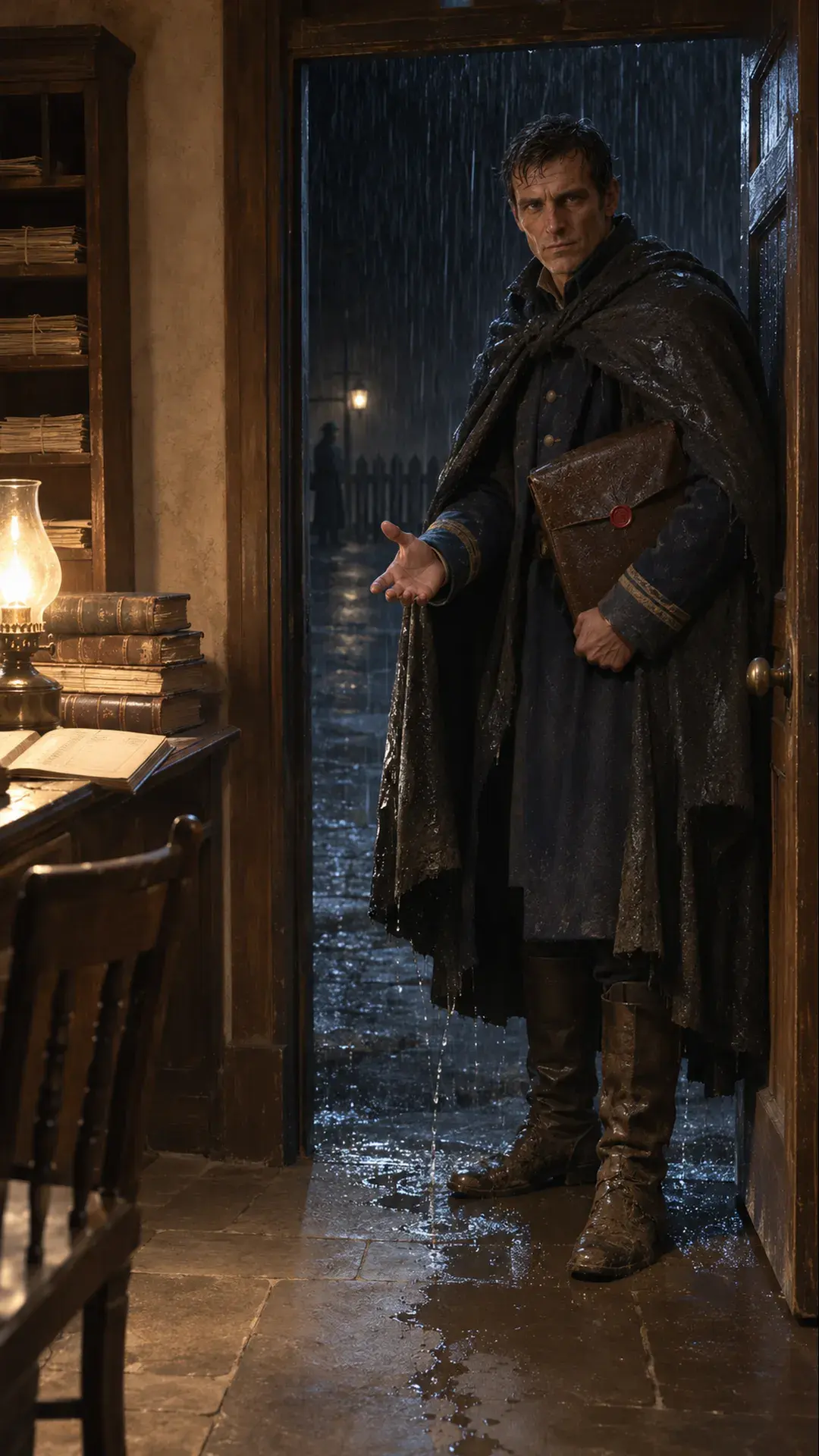




Rain comes off his cloak in a steady drip onto your counting-house floor, a line of wet along every slate tile. Commander Varn stands in the doorway with his hands where you can see them — empty, and deliberately so.
Your gatekeeper took my sword,
he says.
Good. That means someone in this house still thinks clear.
Outside, Dunmoor Crossing is quiet enough that you can hear the belt of the watchman who followed him up the lane and is now waiting by the fence. Varn does not turn to check.
Six weeks you've been paying my tolls under protest and calling it theft in open court. I read the writs. You're not wrong to call it what you call it.
He shifts his weight, boot soles squeaking on the wet stone. Something stiff in a wax-sealed dispatch case rides under his arm — he keeps his elbow clamped over it as though it might walk off.
I'm not here to withdraw the decree. I can't.
The admission costs him; you can hear it in how flat he says it.
But the levy was raised to buy powder and grain for the northern line, and the account I was given is moving. I need someone who reads contracts better than I do, and who isn't on my payroll — because mine are the ones I can't trust.
He looks past you into the counting room, at the ledgers stacked beside the lamp, and then back at you.
So. Do we talk in the dry, or do I carry this to someone with less grievance and more incentive to lie to me?