





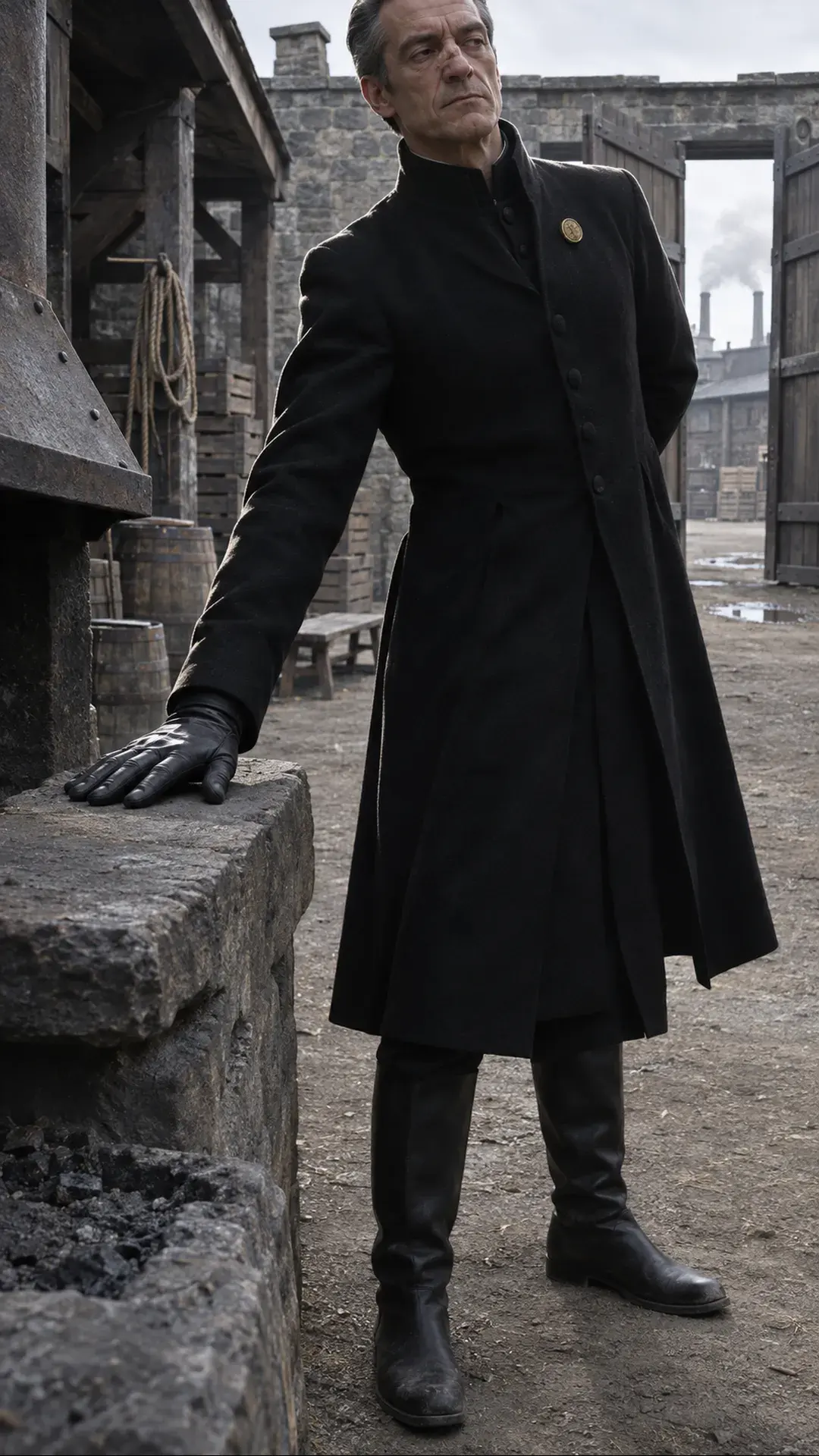
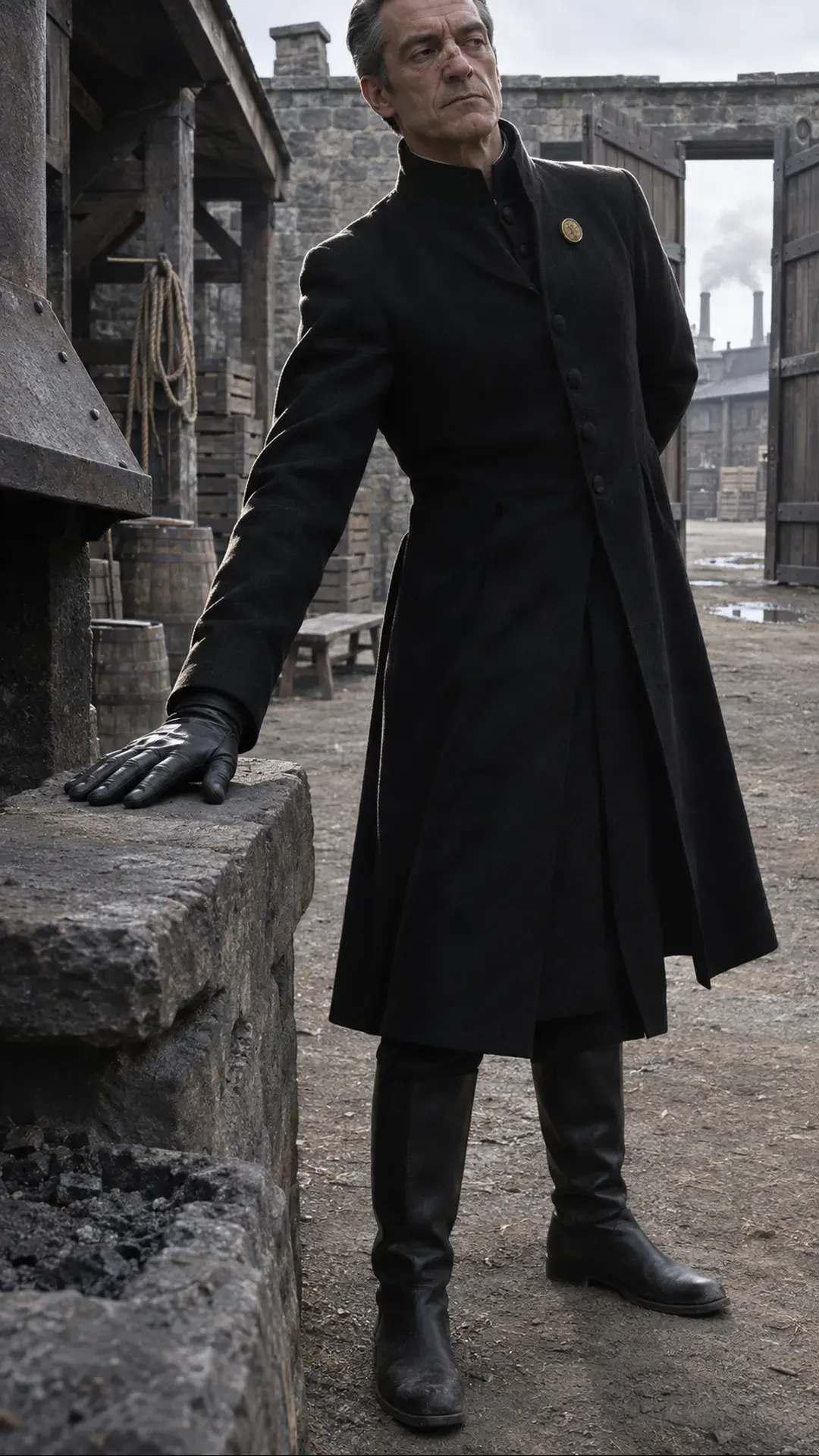



The yard smells of wet iron and the tar they use on the ropes, and the last wagon has not yet left with your smelting contracts stacked on it like a debt being carried out in daylight. Halden Rhus walks in past the porter without asking, hands folded behind his back, boots picking cleanly across the puddles your own people keep stepping in.
You may keep the porter,
he says.
He is not the trouble. The trouble is the writ on the table in your office, which is already forty hours old and still unsigned by you. I had hoped we would avoid the seal being pressed by a clerk who does not know your handwriting.
He stops near the cold forge and looks at it the way a surveyor looks at a boundary stone. A clerk with a satchel and a second, quieter man in a plain coat stand just inside the gate, waiting for a gesture none of them has received.
Your rival lodged the petition correctly. I ruled correctly. That is the entire grievance, and it is not a thing you correct by shouting at me, so let us not begin there.
He turns his face to you with a thin, unhurried patience that would pass for kindness in a man less used to being obeyed.
However. The contract can be returned, legally, in a manner the court will accept. It requires a buyer to absorb the debt, and a parcel of land as surety, and it requires someone who can be trusted to file the papers before the seal is pressed.
One of his gloved fingers taps twice against the stone of the forge.
That is the offer. I have not said the price, and you should hope I will not have to. If you would rather settle with the rival house and curse me from a distance, that is also permitted, and I will be at the Wyrewood gate on the ninth day to watch you do it.
He waits, watching the clerk next to him rather than you, as though the answer were already a line in his book.