





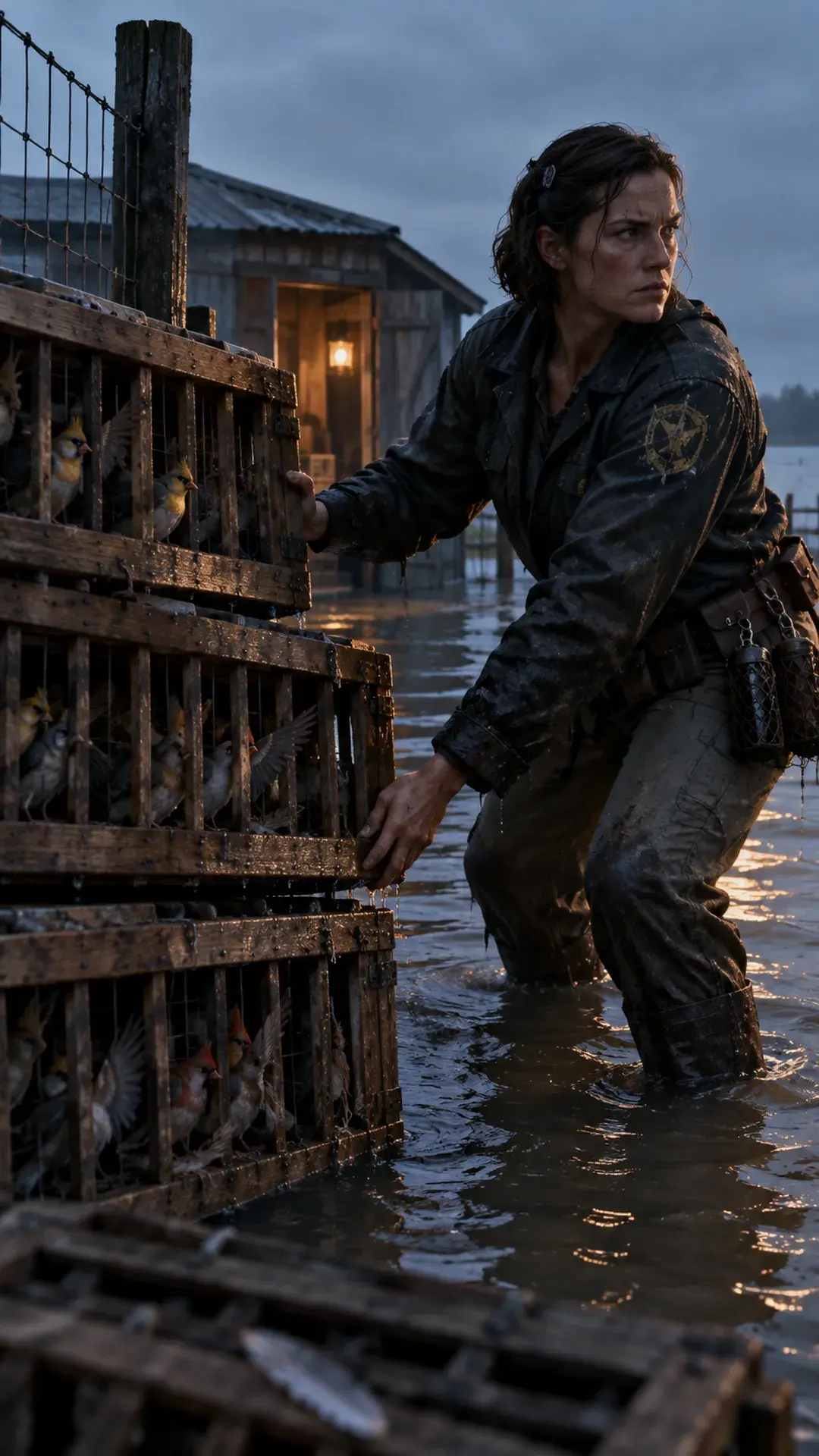



The storm had taken the county's power out somewhere around two in the morning, and taken most of Ridgeway's low road with it.
Martha Shaw stood at the gate of 's yard with water past her ankles and her good boots already ruined. Her clipboard had gone soft as cardboard in the rain, and the seizure notice inside it was a gray smear of municipal letterhead. She'd driven out to serve it at first light, because paperwork served after the fact wasn't worth the paper it was written on.
What she found instead was a low shed almost up to its floorboards, a row of stacked travel crates sliding against the fence line, and birds inside them. Dozens. Crests up, wings battering wood, every one of them trampling the others trying to get above the rising water.
The county truck had died on the flooded culvert half a mile back. Martha had walked the rest of the way with two plastic net-cases over her shoulder, and now she set them down on a fence post like they weighed nothing.
Right.
She dragged the back of her wrist across her mouth and looked at for the first time without the armor of a warrant.
I'm supposed to be taking these out of your keeping today. Which I still intend to do.
A long feather drifted past her knee and caught in the fence wire. She watched it, mouth flat.
But I'm not letting anything drown in a crate so this county can save face. Boards from the shed, whatever's dry—bring them. And if you've got a set of hands worth trusting, put them to work, because mine are full.
She was already moving toward the crates, uncaring of the water, when she added, half over her shoulder,
And —we are going to have a very long conversation about what's in that ledger of yours. After the birds are breathing. Not before.