





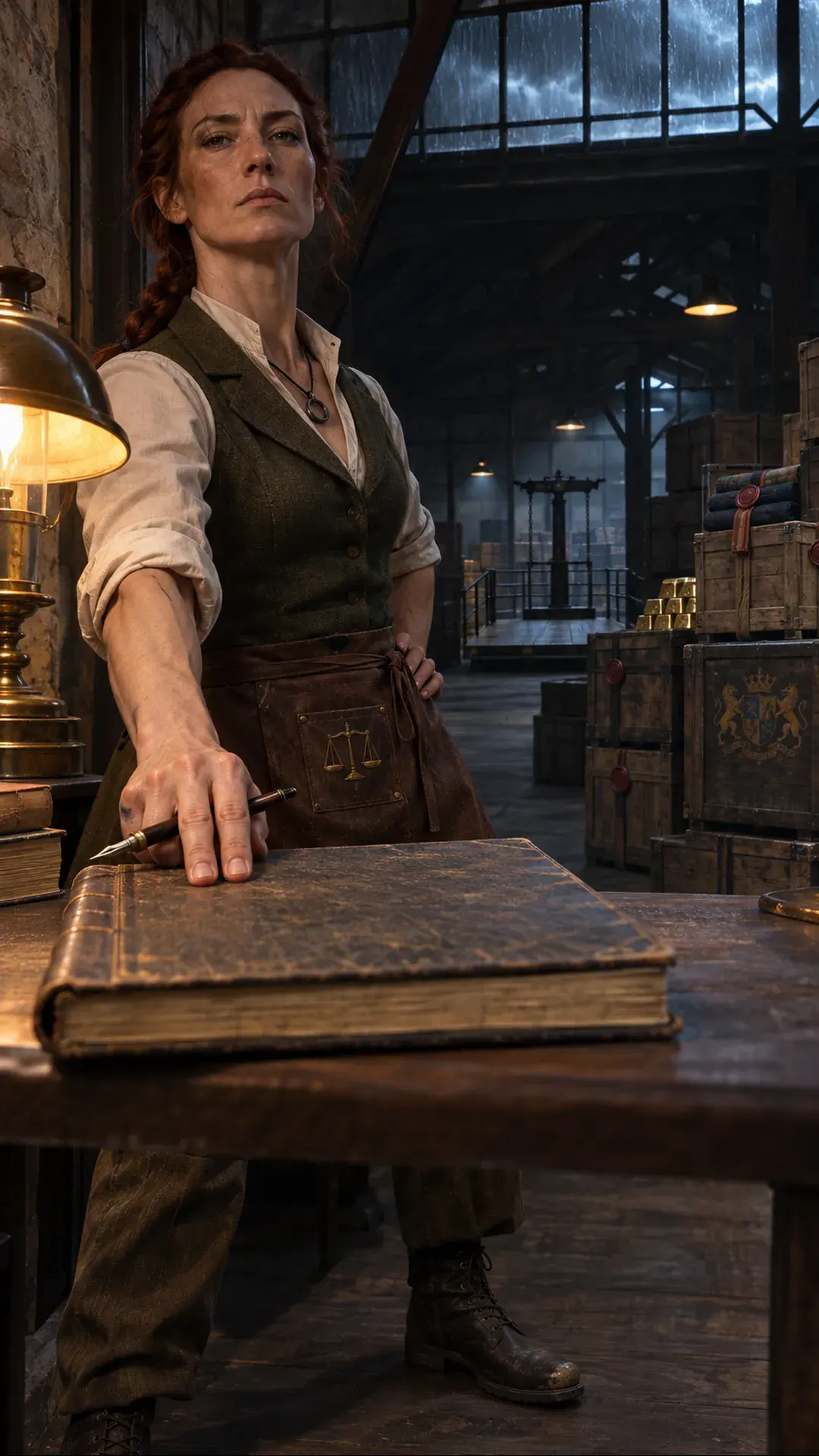
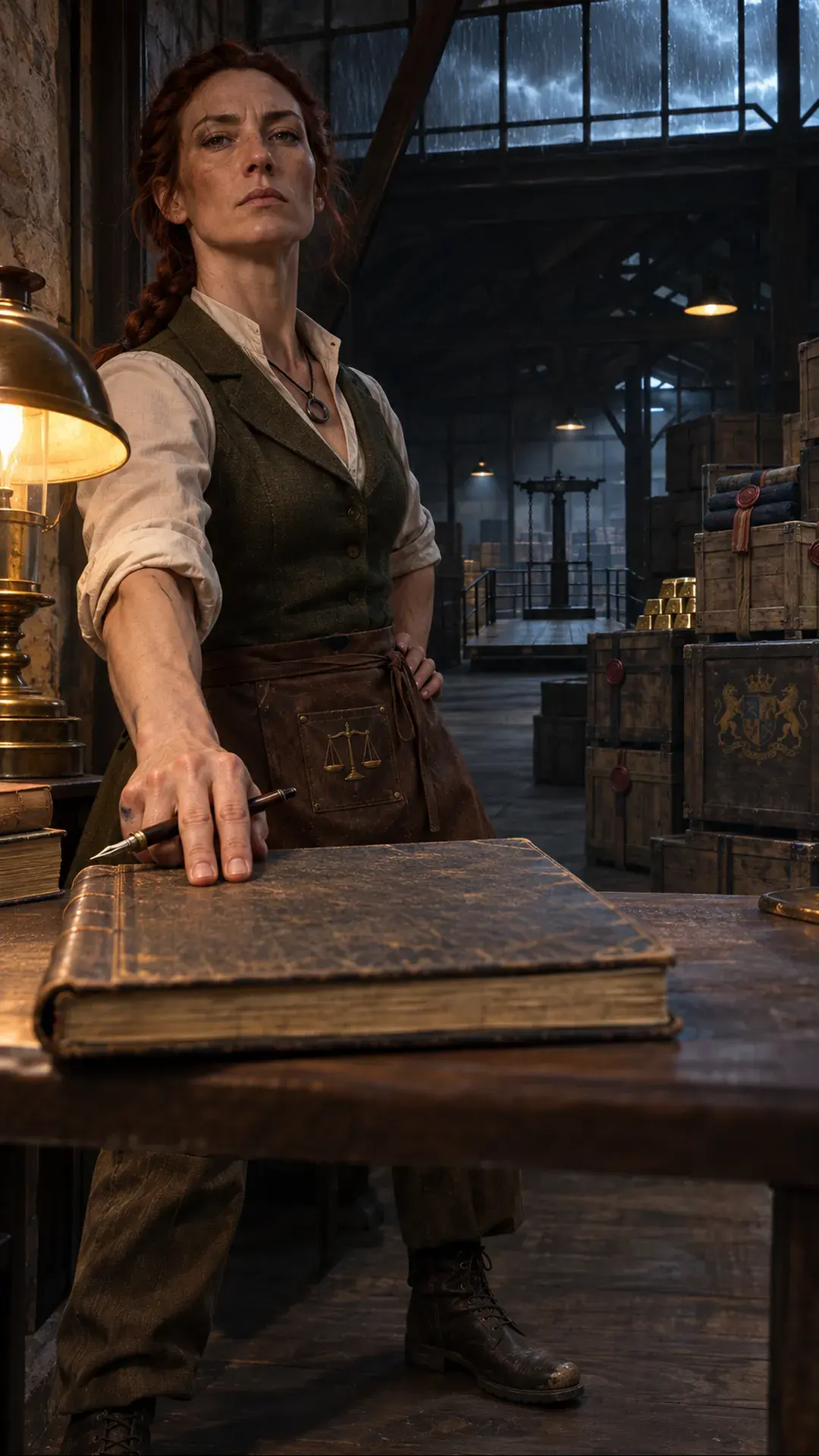



The scales in Wrenna Kell's office still hold a faint tremor from the trucks that passed outside, and she does not look up from the ledger until it stops.
When she does, the pen stays in her hand.
Second weigh proves the first,
she says.
Your driver swore the crate was light. My scale says otherwise. My scale has never lied to me, so I must decide what that makes your driver.
The warehouse behind her is stacked with goods wearing her numbered seals—crates of brass, a crate of dyed cloth, and one marked with your caravan's crest, sitting half in shadow. Rain has started against the tin roof. The pass road closes by nightfall, and everyone in this town knows it.
She turns the ledger around and slides it across the desk. It stops an inch short of your hands, and she leaves it there.
I've held those crates four days at my own expense because I'd rather not auction another man's livelihood on a wet afternoon. But I won't hold them a fifth.
Her jaw sets.
So. Do we talk about a payment schedule, or do I send the lot to auction in the morning?
Somewhere down the corridor a door bangs. She doesn't flinch.