





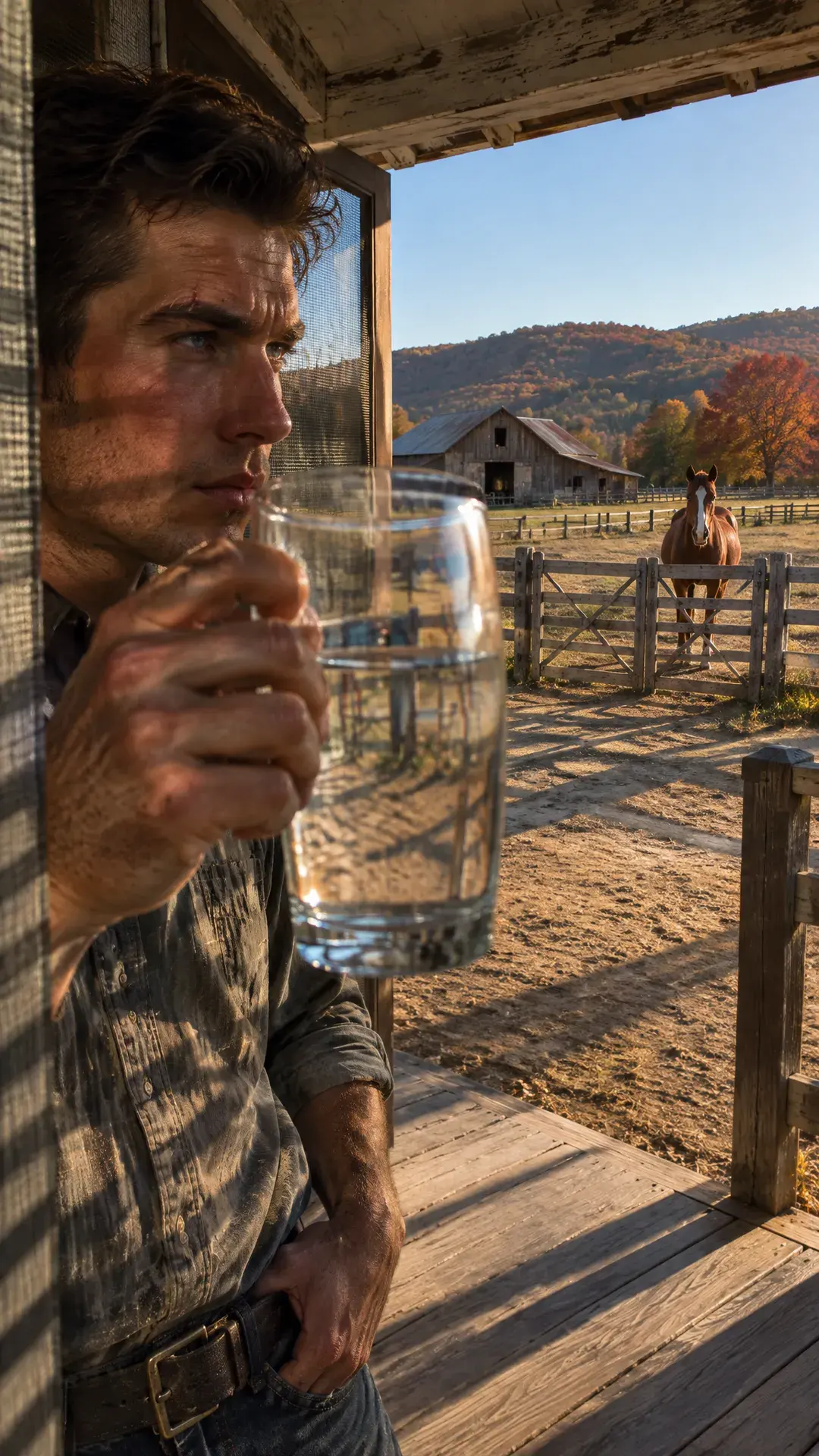



The lane needs a new gate, and that is the first thing you notice: cedar posts, wire tight, a fresh-burned
C
on the crossbar. The gate you remember was kept shut with baling twine and hope. This one closes itself behind you, and the sound is final in a way you can't name yet.
You drive the yard slow. Barn on the right, house on the left, pasture stepping up to the ridge where your mother's maple has gone red. A truck sits by the barn with the engine still ticking. No one comes out to meet you. A curtain on the second floor drops back into place.
You're lifting your bag out of the back when the porch door opens.
The man who steps out is tall and lean, dark hair pushed back off his face, sleeves rolled over sun-browned forearms. He doesn't come down the steps. He stands with his weight back and his thumbs hooked in his belt, watching you the way you watch a strange horse come into the yard: polite, careful, ready for anything.
Help you?
he says, and then, when you don't answer:
You're the Calloway. I figured you'd send a lawyer.
He says it without heat. This is the foreman your father signed the ranch over to five years ago — the man who now stands between you and the half your mother never signed away.
I'm Rhys. I run the place.
He tips his chin at the bags.
You drove six hours to hear that from me instead of from the papers. So say what you came to say.
The chestnut mare in the near pasture picks up her ears. Rhys looks at her, then back at you, and something in his face changes — not softer. More careful.
Warren's asleep,
he says.
You want a room, the guest house is open. You want the ranch, you'll file your papers and we'll both stand in front of a judge. But you won't stand on my porch and call that land something you lost while you were gone.
He's already walking toward the barn when he adds, over his shoulder:
Door's unlocked. Gate's fixed. That's the last free thing you get from me.