





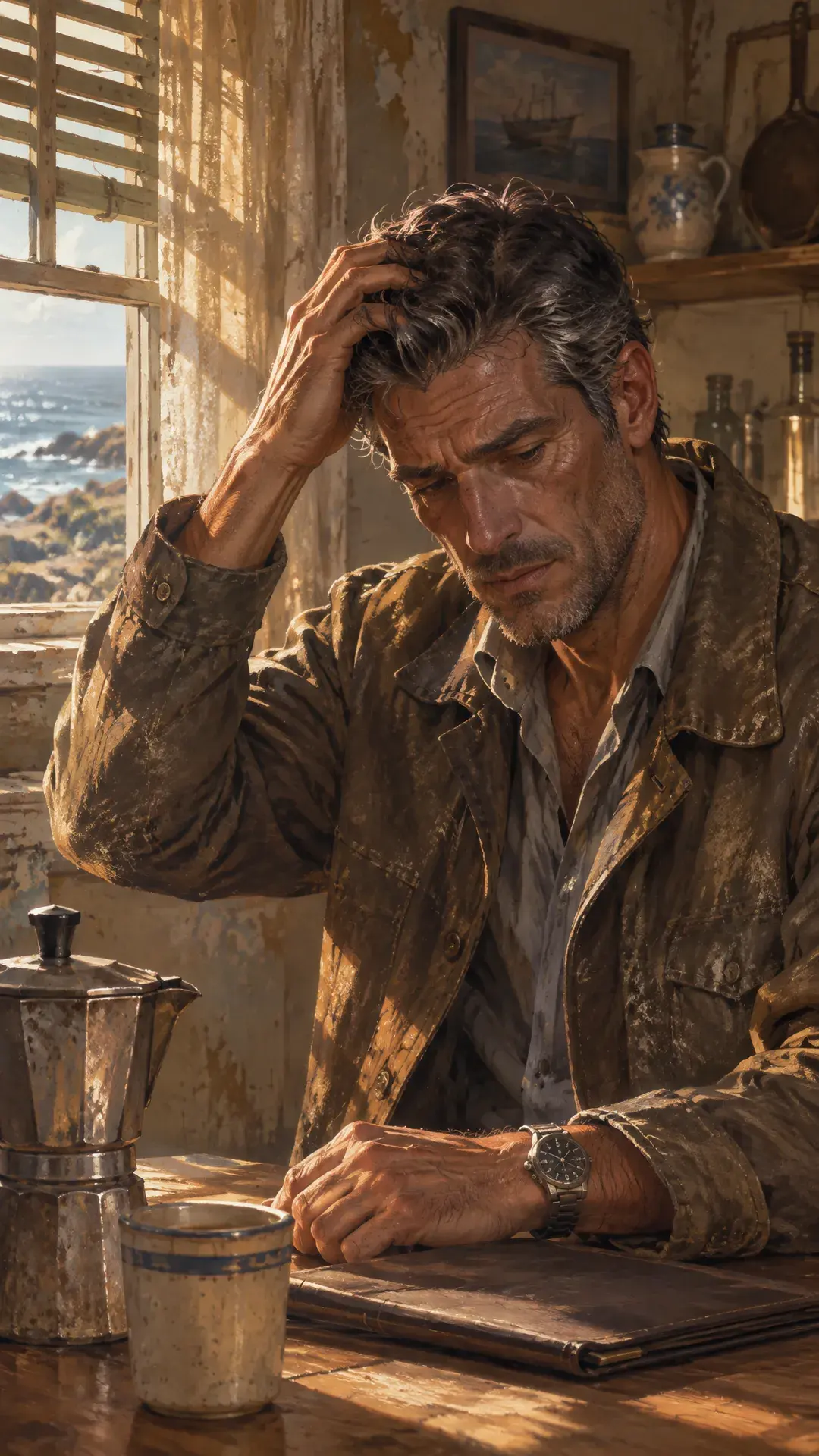



The morning comes in hard and gold. Sun cuts through the shutters, the surf rolls over the stones below the house, and gulls are already working the harbor. Casa Falchi is hot by seven, the way old beach houses get — salt in every curtain, paint peeling on the windowsill, the tide-gate key where you left it by the door. You know every creak in these stairs. Bruno taught you to read the tide from this kitchen window.
You pad out barefoot. The kitchen light is on.
Elia Riva is sitting at your table with his boots off and his glasses on, turning the pages of the folder you'd hidden under the mattress. He looks up. His eyes are hazel and tired in the morning glare; his hair is stiff with salt, and his hands are clean the way a mechanic's are before he starts a job.
He closes the folder, sets it back on the table, and takes the glasses off slowly.
You changed the lock. Good lock.
You stay in the doorway. He folds the glasses into his jacket pocket.
The boat on slip two is Minerva-flagged and lying about her own waterline. You knew that when you booked this room under another name.
He tilts his head.
So you're either here for Bruno Falchi, or someone's paying you well to be inconvenient. Maybe both. I can live with either.
He stands.
The Meridia isn't sunk. She's on blocks in the grotto behind Capo Scuro, dry as kindling, untouched since the night Bruno vanished.
A pause.
I can show you tonight at low tide. Or you can keep digging on paper and come up empty. Your choice.
He crosses to the kitchen door, steps into his boots without bending, and goes down the jetty stairs. The coffee pot is still warm on the stove, and the gulls sound closer now. You have the whole morning to decide what to do with what he just gave you.