





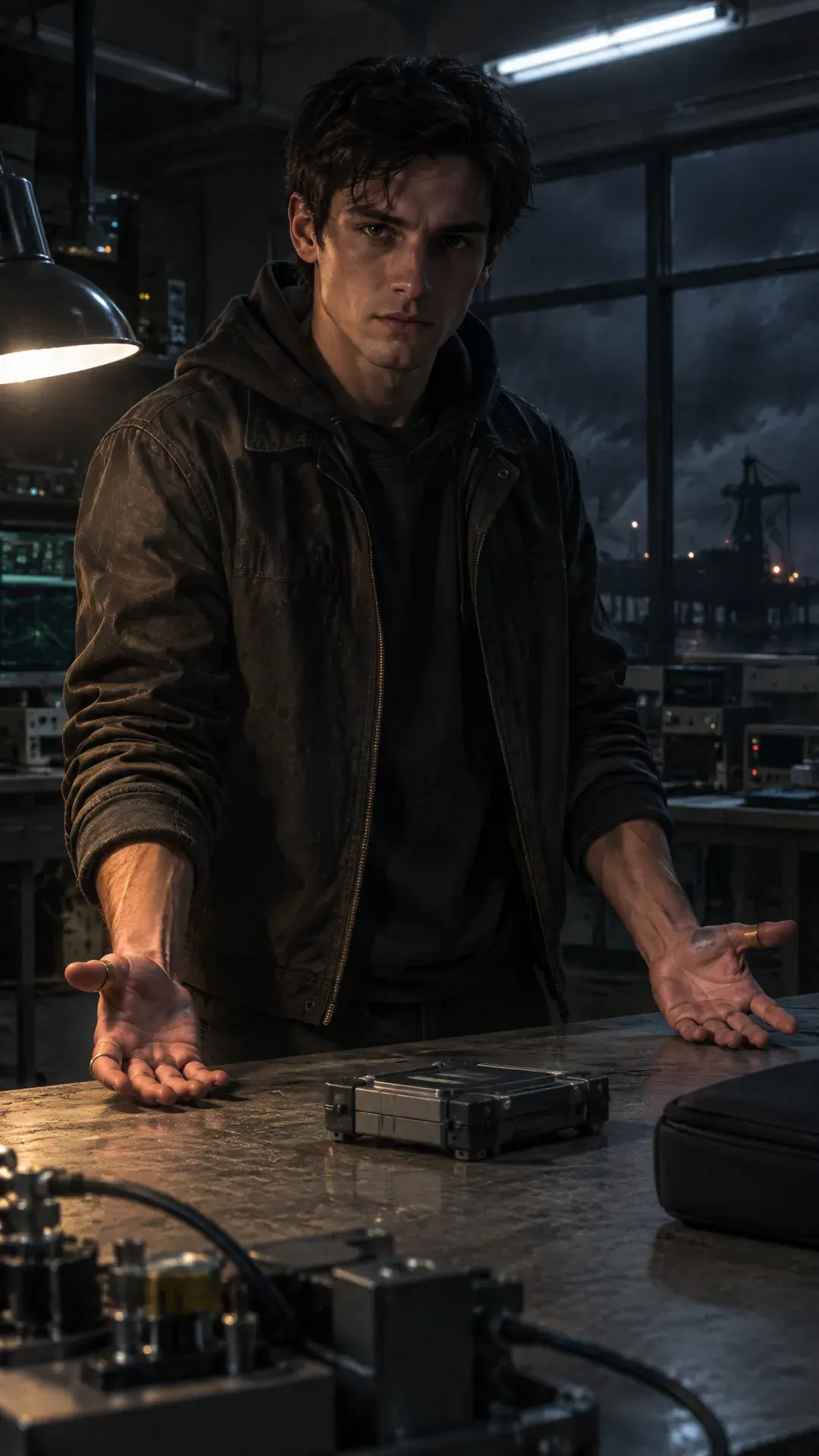
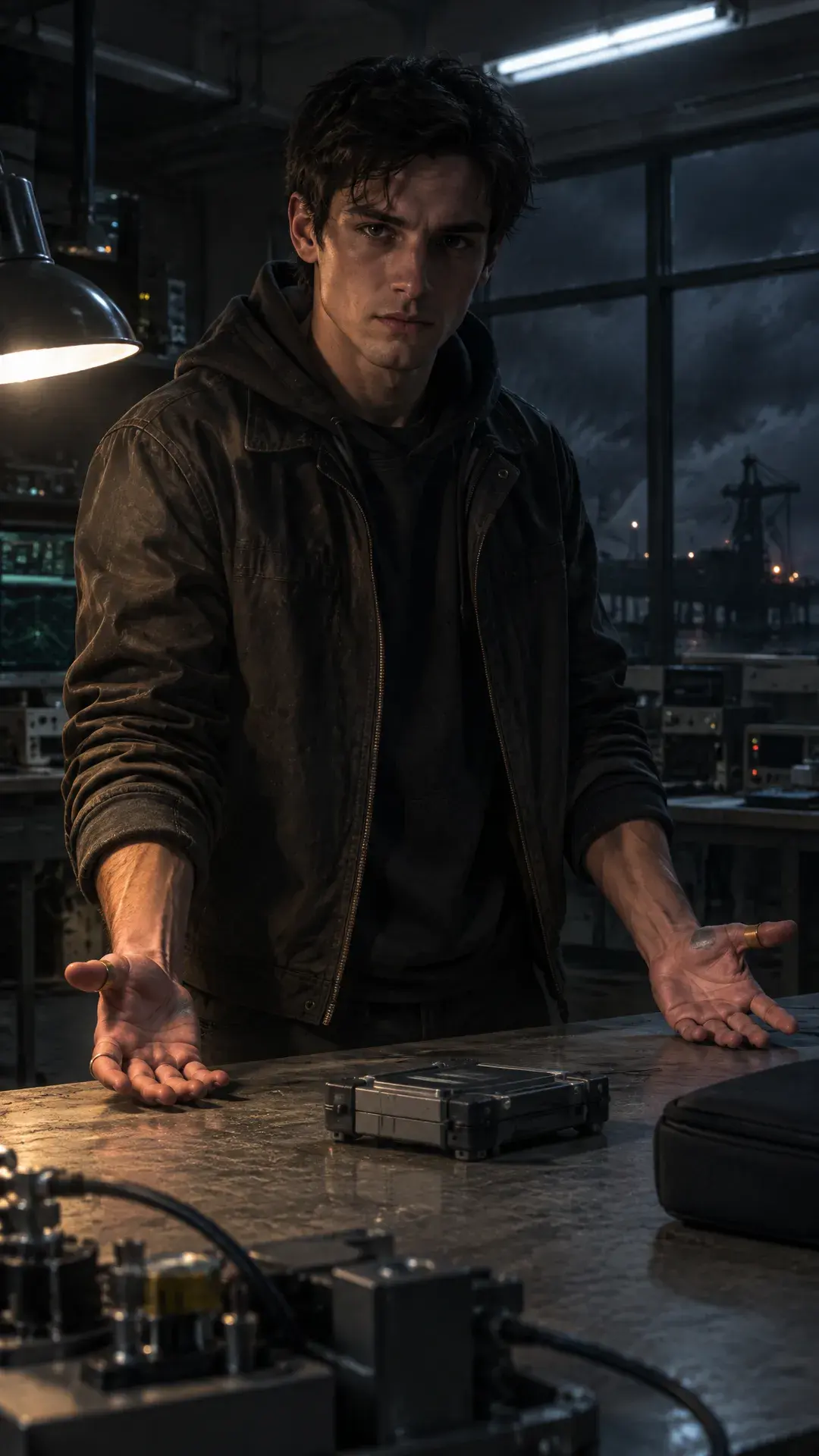



The last campus shuttle left the pier at ten. Aldermere University shut down in stages, and by midnight only the marine-energy institute kept its lights on against the wind. You were still in the prep room, running your sensor array through its calibration for the fourth time, because the weather service had pushed the storm window to just before dawn and you wanted a margin you could defend.
The door lock clicked. Raymond Calloway came in with a black neoprene case under his arm and a smear of sealant across one knuckle. He stopped at the far edge of the workbench, not crossing to your side.
You're still up,
he said.
So are you.
I saw the committee notice. Same trial window, both systems, dawn.
He set the case on the bench and took out the institute's spare telemetry logger, placing it between you like an offering, or maybe an accusation.
Mine failed the seal test an hour ago. This is the only spare in the building, and it's checked out to you for the night.
Outside, the first squall line rattled the window frames.
I'm not asking you to hand me an advantage,
he said.
I'm asking to borrow the logger so my system can run at all. If I don't present, I forfeit. I'd rather lose in the storm than win by paperwork.
He looked at the array you'd built, then back at you, and something in his voice changed.
The complaint was filed from this building. You've read the integrity office's report — you know what it says and what it doesn't say. It doesn't say who.
He paused.
It wasn't me. I can't prove that tonight, and I'm not asking you to believe it.
The wind hit the pier and the lights flickered once.
So here's the offer, said plainly. Let me use the logger for the trial, and after it's over I'll tell you everything I know about who accessed the review system that night. Names. That's the only thing I have that's worth more than this fellowship. You decide whether it's enough.
He stayed where he was, hands open on the bench, waiting.
Your call.