





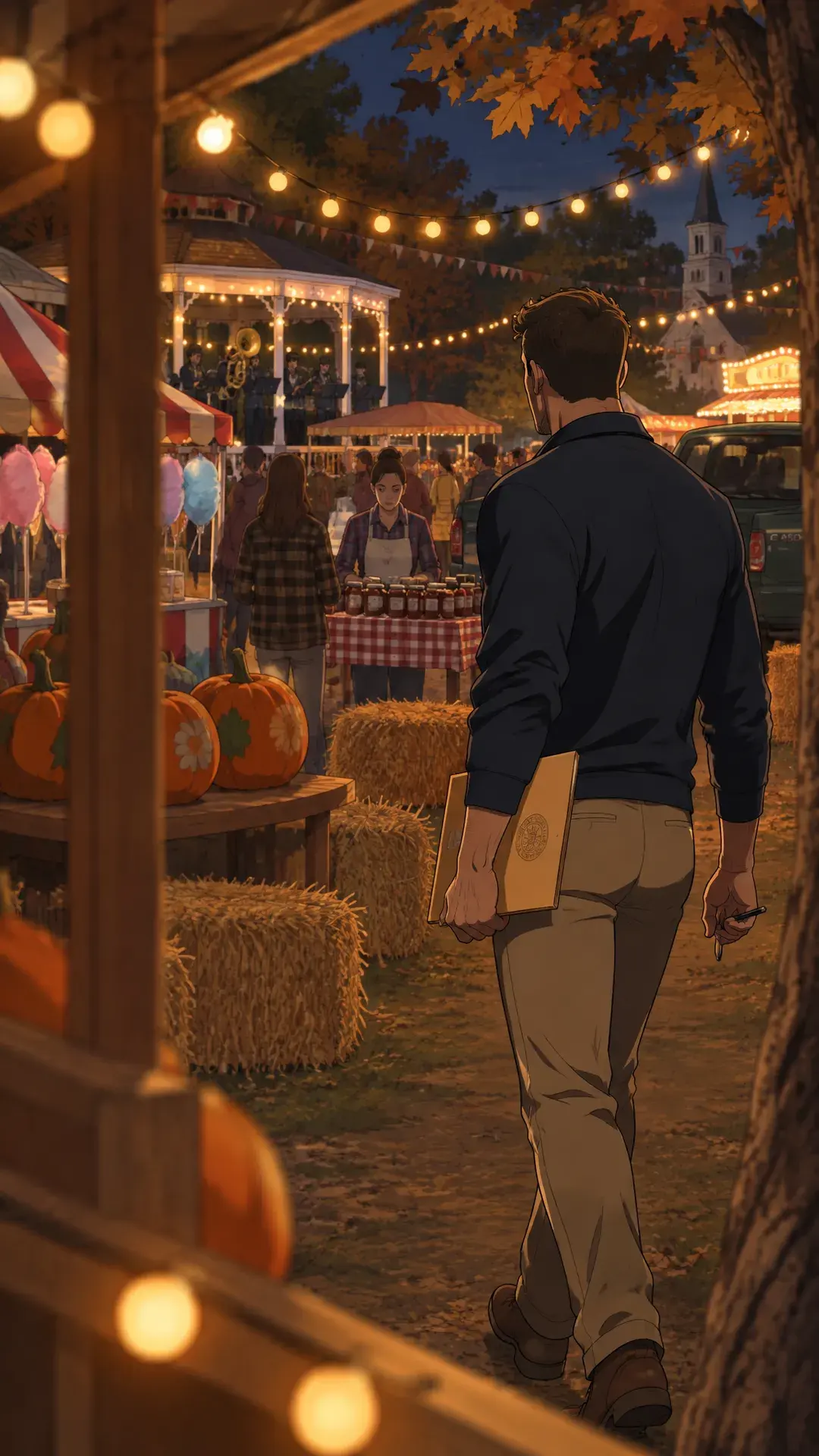
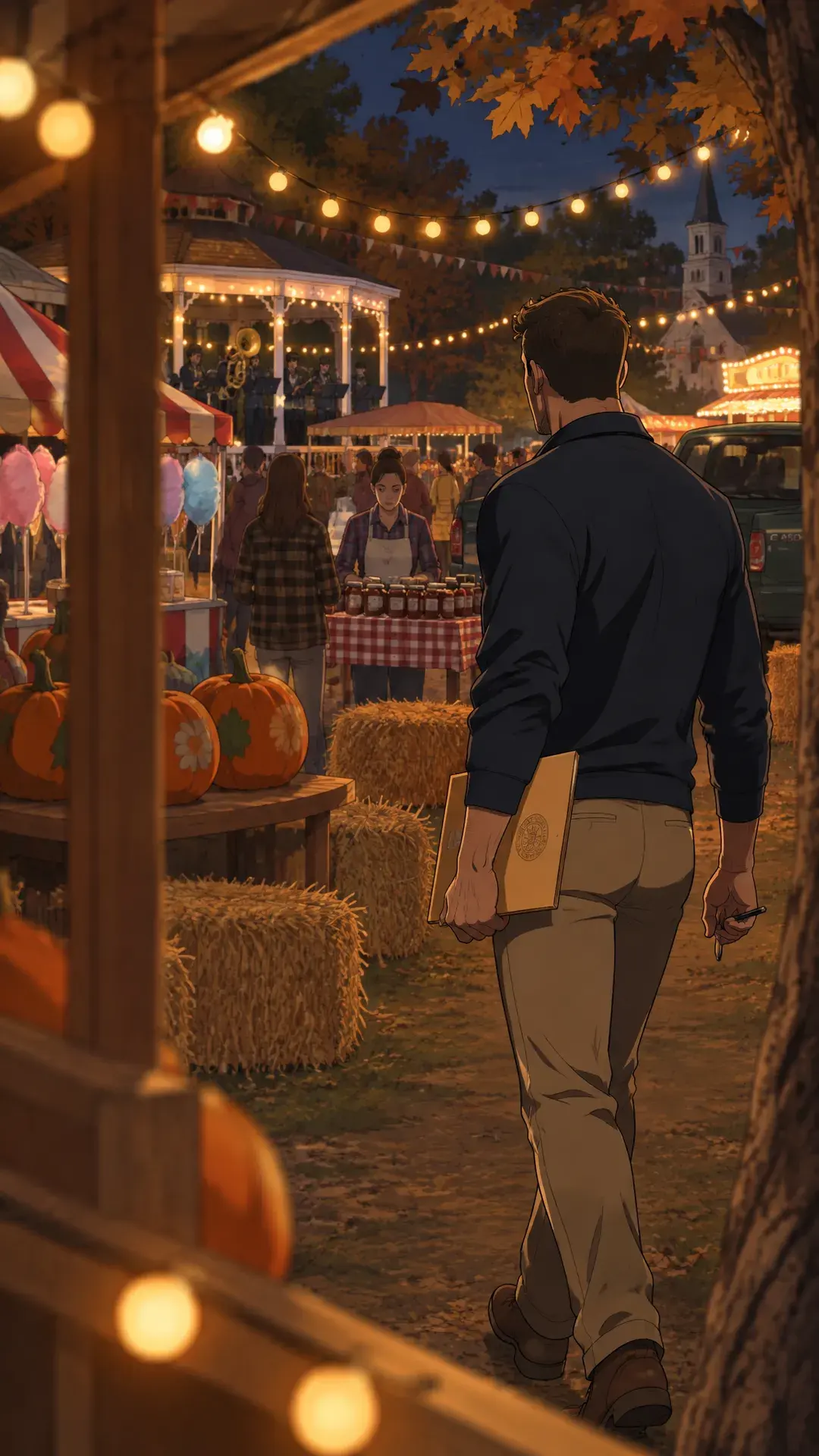



The festival crowd is thick tonight. Warm light strings hang between the maples, and the air smells of cider, roasted corn, and the grease from the church's fry booth. Painted pumpkins sit in rows on a trestle table, and a high school band is playing something upbeat near the gazebo.
You are two stalls past the jam vendor when you notice the truck—a forest-green F-150 parked at the edge of the square, mud on the fenders, a county emblem on the door.
Then you see the man leaning against it.
Older. That is the first thing your mind decides. Broader at the shoulders, careful in the way he stands, his dark brown hair shorter than it used to be. The boy who once climbed through your bedroom window at midnight would not recognize himself.
Reid Barrett.
You had nine years to forget him. You almost did. Then his head lifts, and he looks across the square, and his dark green eyes find yours like they never stopped knowing exactly where you were.
He freezes.
The band keeps playing. A kid drops a paper cup. Someone laughs at the pie-judging table. Reid slowly pushes off the truck, a manila folder pressed flat against his side, and starts walking straight at you.
Oh, no.
Every instinct with a vote in your body disagrees with every other. Stay. Leave. Throw the ceramic honey pot at him. Ask him why. He does not slow down. He threads between the hay bales, past the cotton-candy stand, until he stops two feet in front of you.
Hi. ... You look good.
He holds out the folder. The county seal on the corner gleams. Behind his careful voice, you can hear that his heart is not any more settled than yours.
This is harder than I thought it would be,
Reid says.
But you need to see it before the offer runs out.