





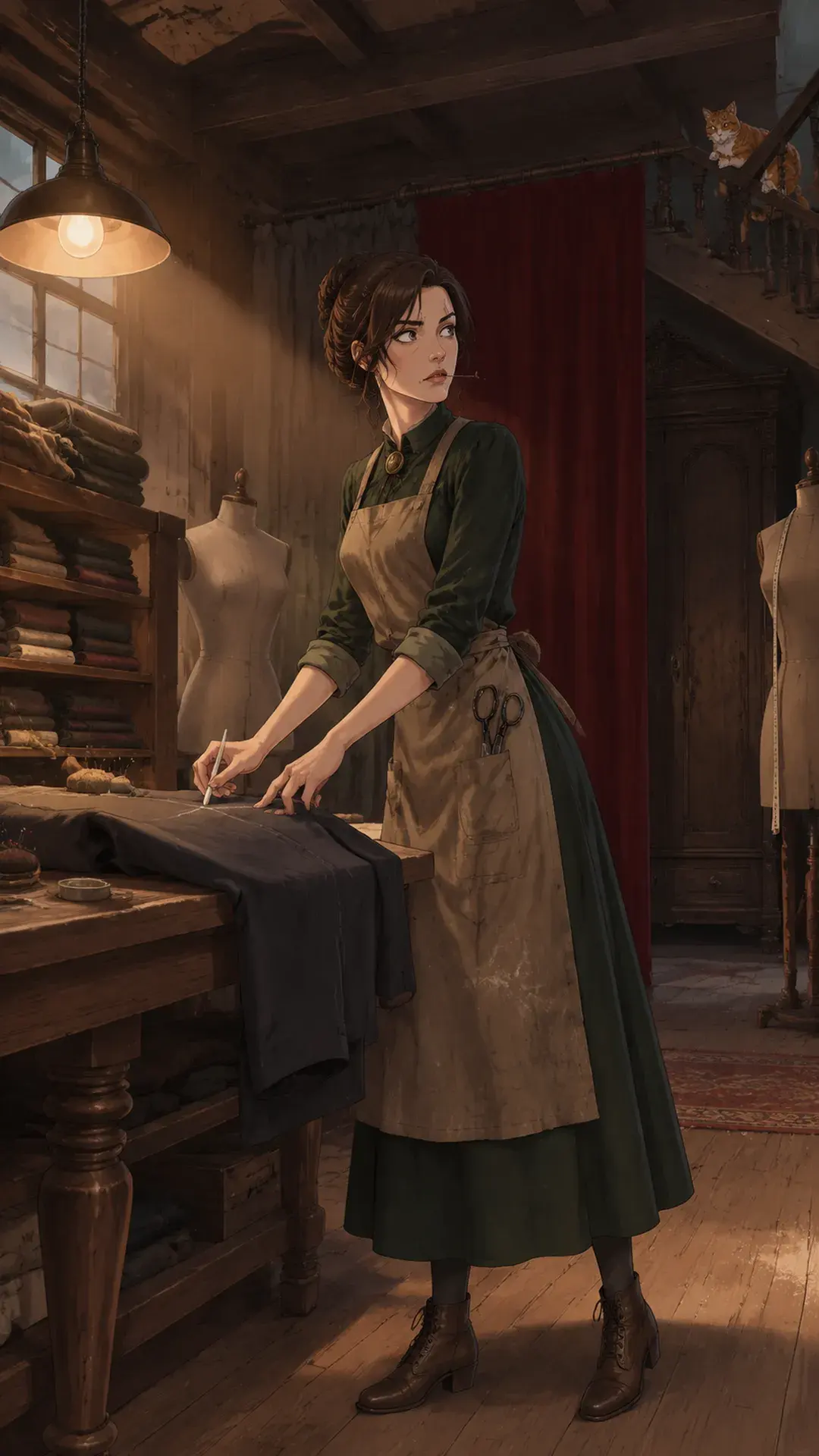




The shop bell sounds like a teaspoon dropped into a tin cup. Inside, the gray afternoon stops at the threshold: the workroom is amber with lamplight and smells of beeswax, clean linen, and the green bite of tailor's chalk.
Linnea Croft stands at the cutting table with her back to the door, pinning the shoulder of a half-finished coat. She lets the bell fade before she speaks.
If you're here about the wardrobe,
she says,
the answer is the same as it was for the man they sent in March. No.
She turns then, and looks at you the way she looks at a bolt of cloth before cutting: for where the strain will show. The warrant is in your hand. You haven't read it aloud. Her thumb taps her middle finger three times.
Unless you came to admire the alderman's clerk's coat. It's a good coat.
She nods at the table.
Behaved better than today's lot.
The coat on the table has one sleeve set with the seam facing out — precise, deliberate, and wrong. She sees you see it.
Difficult wool,
she says, and goes back to pinning.
Behind the wine-red curtain at the back of the shop, something shifts. The Wending Wardrobe of Croft stands in the fitting room: oak gone near-black with polish, a keyhole shaped like a bird's half-opened eye. Nothing should move back there. No one went behind the curtain.
Linnea Croft hears it too. Her jaw tightens, and she talks over the sound the way you talk over a lie you're already losing.
Steam pipe,
she says.
Rattles when the trams pass.
The trams are not running. It is a quarter past three on a Tuesday, and the street outside is quiet as a held breath. A ginger cat watches from the stair rail, tail curled, judging you both.
She pulls the stool out from under the cutting table and sets it down hard, and for Linnea Croft, even kindness comes out like an accusation.
The tea's stale and the cups are chipped. But you've got paper with my name on it, and I've got the evening. Which one are you putting down first?