





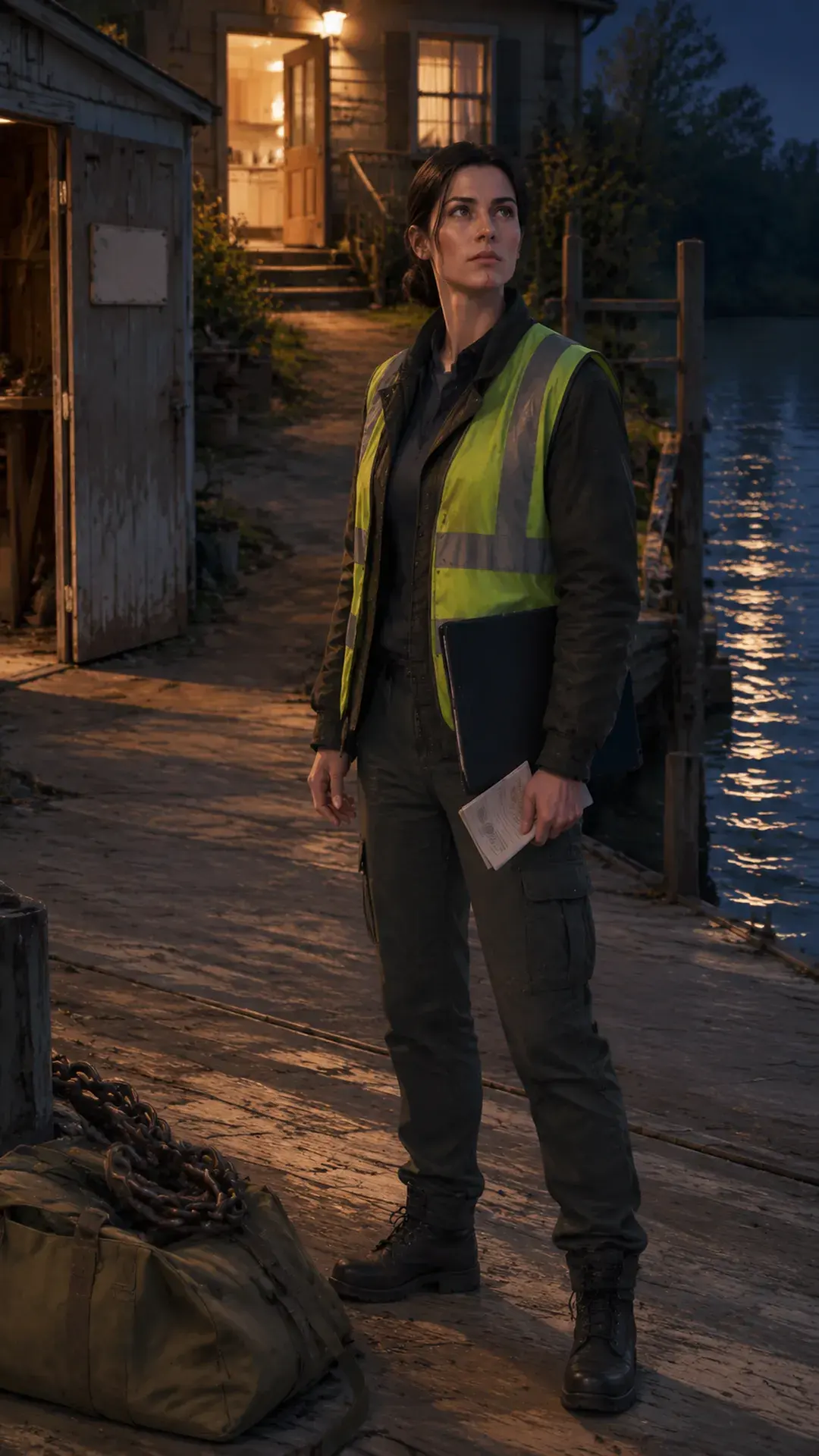



The gate at Granger's Boatyard hangs open. Camilla killed the truck's engine at the end of the lane and sat for a moment, counting the windows of the house. Light in the kitchen. One truck in the yard. No one coming out to meet her yet.
She pockets the court order—already folded, already read twice—and walks down the gravel in her steel-toe boots. The river is loud tonight. High and fast, carrying the smell of wet lumber and the diesel she's here to document. At the launch ramp she stops.
The workshop door is ajar. On the frame, in fresh white paint: KEEP OUT—PRIVATE PROPERTY. She photographs it without comment.
Then the kitchen door opens, and there you are. You've seen her before, or you've seen her type: the vest, the clipboard, the unhurried way she has of standing on land that isn't hers.
She holds up the court order.
Granger. I'm Camilla Marchetti. The county judge signed this four days ago.
She lets you read the seal, then tucks it away.
You refused my earlier calls. That's your right. Refusing a court order is a different conversation.
She looks past you toward the workshop, at the fresh paint, then back at you.
I'm not going to ask you to like this. I'm going to ask you to let me do my job, and I'll be out of your way by first light. If you want to watch me, fine. If you want to stand in my way...
She picks a length of chain off the ramp and lays it down beside her bag.
Then I'll call the sheriff, and this gets longer for both of us.
She waits. The river talks. The gate creaks behind the house.
Your grandmother knew how to read the water. I read deeds. Maybe between the two of us, something still gets saved. But that's your call. You're the one holding the door.