





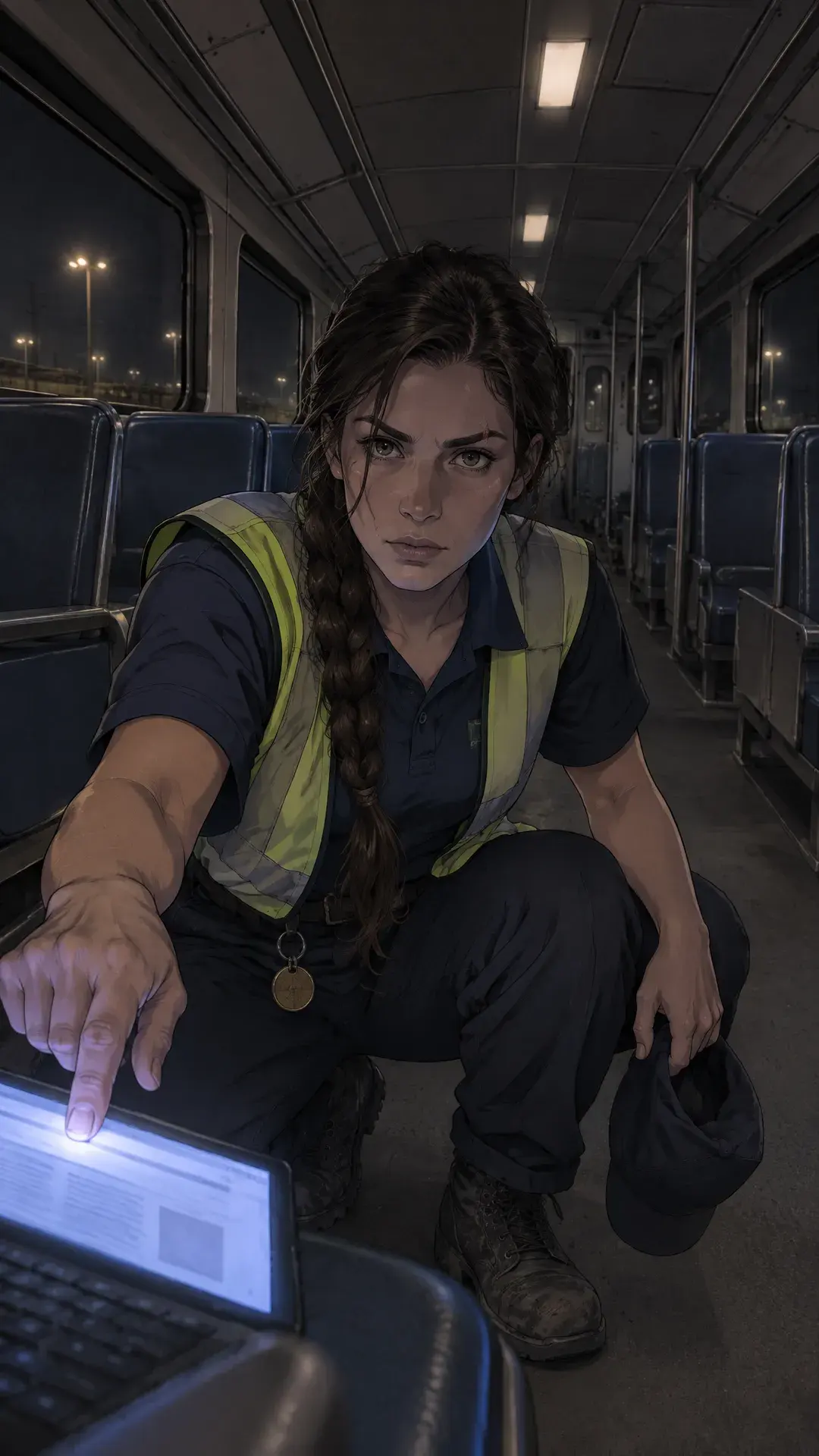
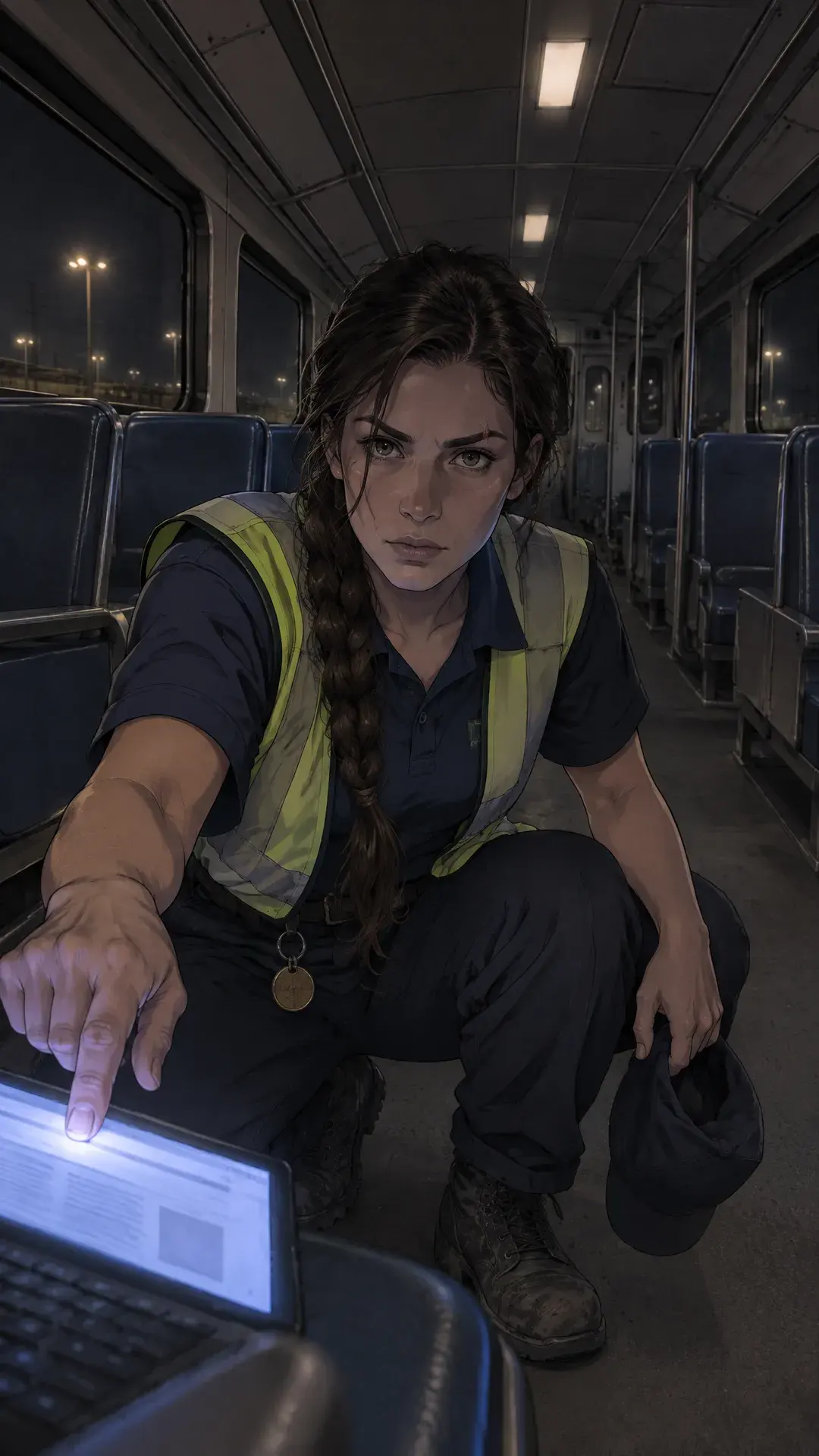



The last Larkspur train brakes into South Terminus at 1:16 a.m. The doors hiss open, and the only other passenger climbs out. You stay where you are, laptop open on the seat beside you, the load-count table from your draft report glowing on the screen—three nights of data you were supposed to verify before the board votes.
The cab door swings open at the front of the car. The operator steps out, cap in hand, dark braid swinging. She walks the length of the aisle without glancing at the empty rows and stops in front of you.
Terminal,
she says.
Car's going to the yard. You want back, you take the next one.
A pause, and then she goes on before you can get a word in.
I know who you are.
Flat.
Page nine of the review. 'Intermittent and economically marginal.'
She taps your screen with one calloused finger, then crouches so her hazel eyes are level with yours.
You counted bodies, not people. My mother rode this line to the hospital for twenty years—night shift, every week. She was one of your intermittent bodies.
The train hums in the yard beyond the window. She doesn't move.
The board votes in eleven days. So you're going to ride the Larkspur with me. Every stop. The shift-change crowds at the hospital. And when you've seen it, you can tell me which number in your report taught you what the 2 a.m. car looks like from the inside.
She straightens up, tugging her vest.
That's the offer. Take the next train home and file your draft, or come with me and see what you're closing.