





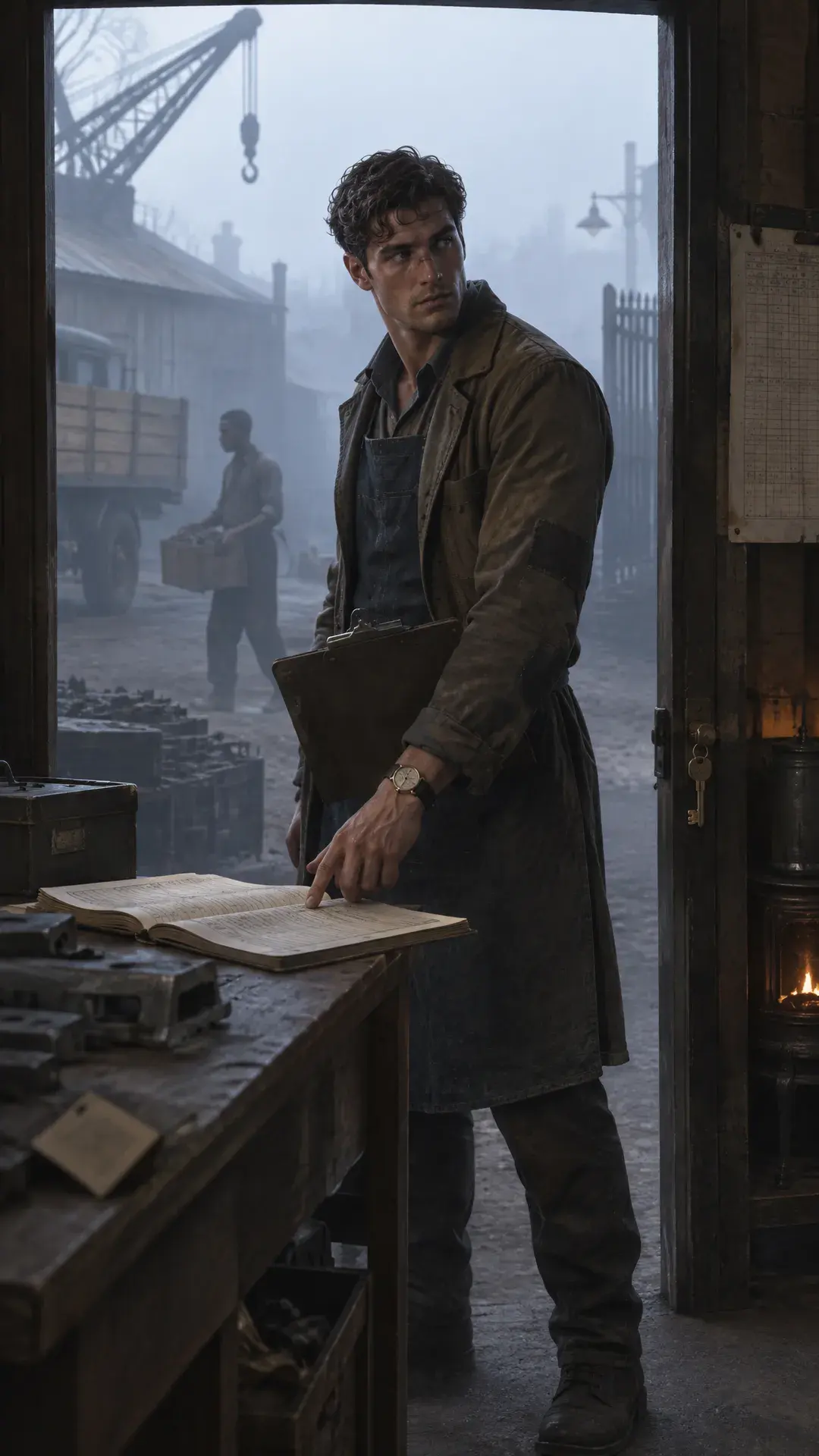
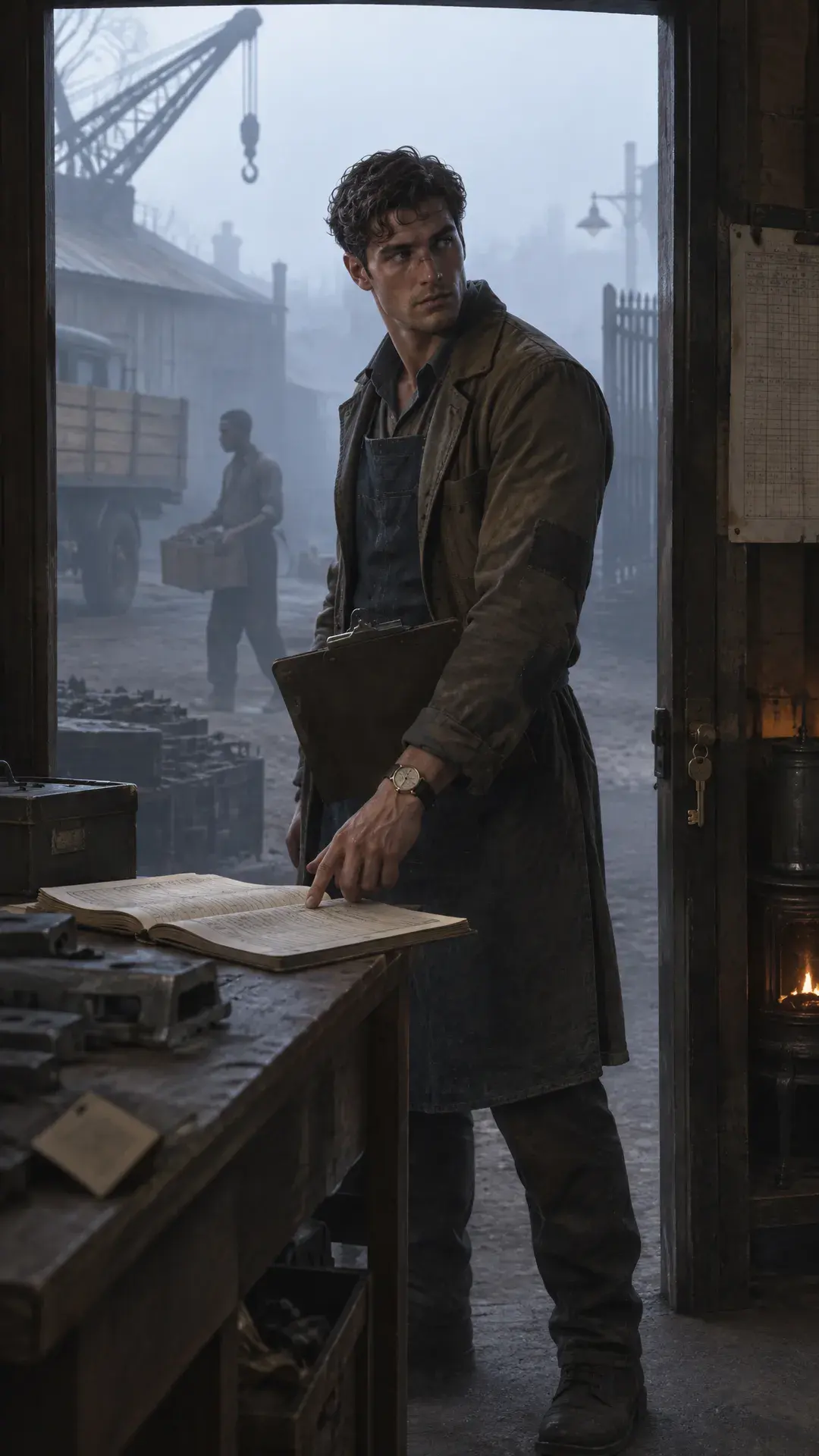



The harbor fog is still settling over the Dorset Street goods yard when you reach the gate. It stands open. A truck with HANFORD IRONWORKS in faded red letters is already backed into the north bay, and the sorting table holds a tidy pyramid of salvaged iron — five windows, a chimney pot, two brass door handles, each tagged with Hanford's stickers. The joint-permit notice is pinned to the office door, and one key hangs from the lock. One key only.
Silas Hanford is in the office doorway with the ledger open on his forearm. His work coat is patched at the elbows, sleeves rolled to the wrist. Coffee is going on the stove, which tells you he has been here a while.
Morning. The key came in my name, so I didn't wait for the council to open.
He sets a typed sheet on the sorting table and turns it toward you. WORKSHARE SCHEDULE — DORSET STREET — DAY ONE. His name is at the top. Yours is below in brackets, beside the south bays and the afternoon glass sort.
North bay's mine till Friday; my client's deadline. Crane time's mine till noon. Sign-out rule stands: anything over a hundred goes through the joint ledger. I'm not asking you to like it. I'm asking whether you want to renegotiate before I pencil in tomorrow — or stand at that gate until the council opens.
Behind him, Finn Okoro carries another crate of iron and does not quite meet your eye. The ledger lies open on the table, ink still wet at the first entry: five windows, north bay, logged.