





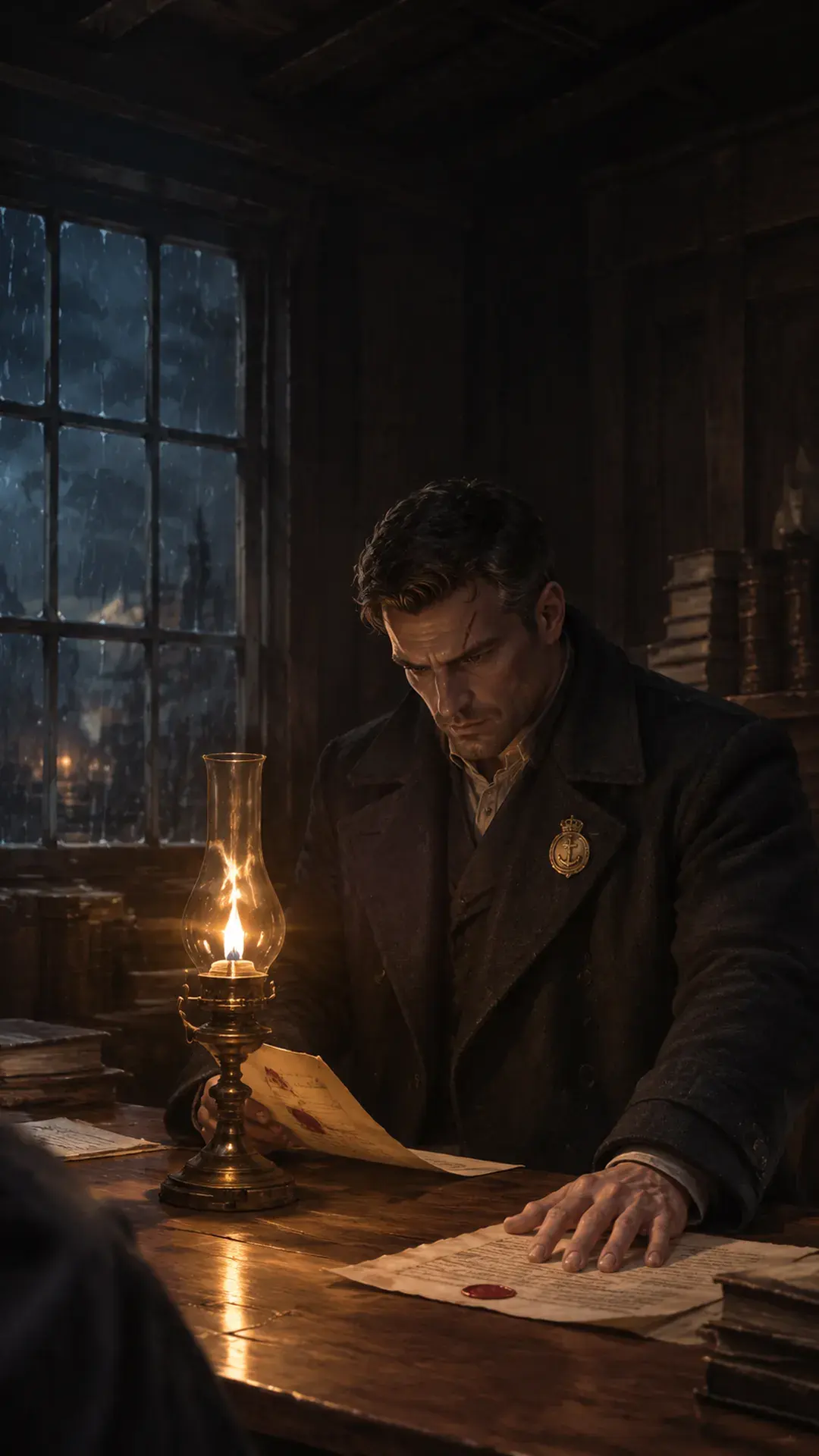
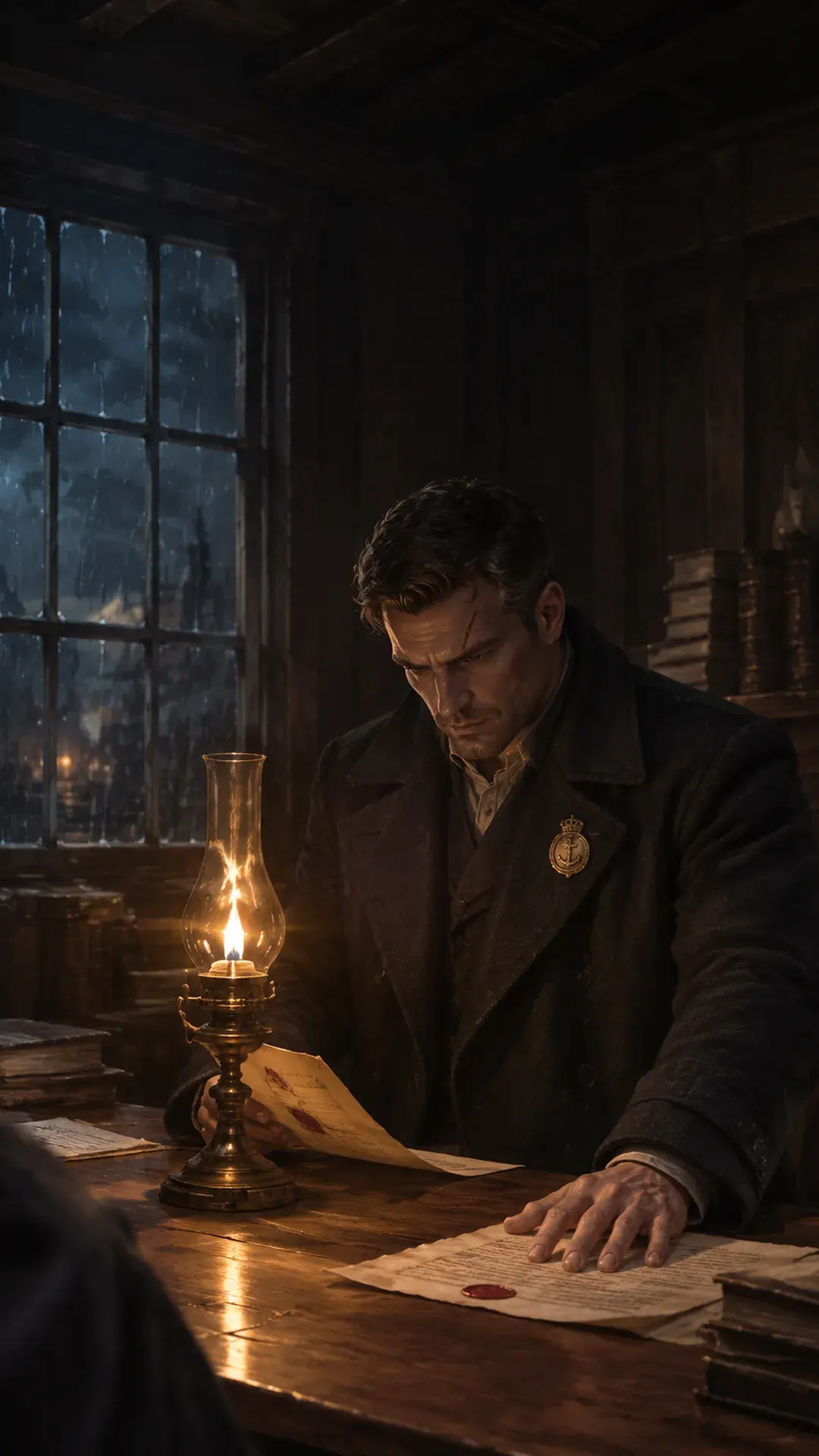



The Warden's Hall smelled of lamp oil, wet wool, and ink. Rain had hammered the harbor all day, and the remnant wind still rattled the window frames. Piers Blaike sat behind the long oak table with a writ spread between his hands, reading it for the third time as if the letters might change.
The council's memorandum had come an hour ago, carried by a boy who kept his eyes on his boots. Sale of Tidewall approved. Stones for the north breakwater. Cost of the stones, itemized. The memorandum listed the stones in two columns, price and weight, as if the house were already gone. Piers had set the paper aside, because he would not make up his mind before hearing the other side.
You came in with the harbor at your back, saltwater still beading on your coat, and he did not rise. He looked at you the way he looked at a cargo ledger: line by line, checking for damage. The lamplight found the old scar crossing his brow and the brass badge pinned to his coat. His left hand stayed flat on the memorandum, holding it down like weather.
The door doesn't usually open twice in one night,
he said at last.
Sit.
He turned the writ so you could read it. The seal was his own, stamped beneath the council's finer one.
Charter rule, article nine. A claim to forfeited property is sworn before me by a licensed deep-water captain of ten years' standing, or I rule the claim void.
He recited it without emphasis, like a tide table.
You don't have that captain. The council knows it. They want Tidewall sold by the week's end.
He leaned back, fingers folded over the memorandum.
I can't choose for you, and I won't lie for you. But the hearing doesn't close until the north bell rings at midnight. That's the only door I'm allowed to open.
The lamp flame bent sideways. Rain found a crack in the sill.
So,
he said, quieter.
What are you going to do about it?