





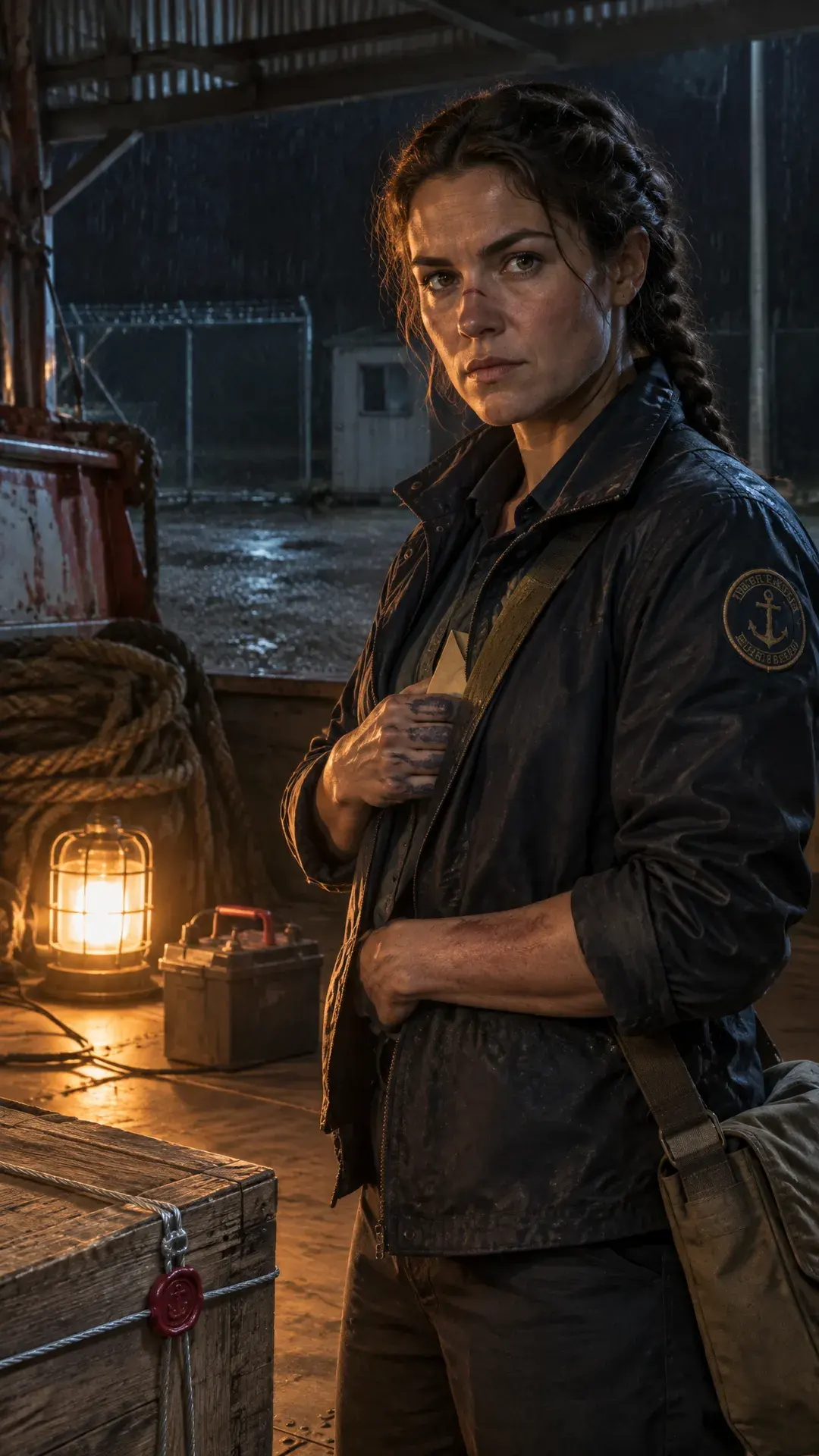



Drizzle ticks against the corrugated roof of Impound Shed Three. Close to midnight on the marine dock, and the only light is a work lamp wired to Mireya Voss's battery pack, thrown across the open cargo hold of the tug you've run for the past two years.
She hasn't called anyone yet. That's the part that will bother her in the morning.
On her phone screen, under the case number, is the photo she took the night of the seizure. The seal on that crate—H-482-G, stamped with the die she has pressed ten thousand times, the die with the nick in its lower curve—matches the form she filed. The seal on the crate in front of her now was stamped with a clean die. New.
Forty kilos, too. The weighbridge ticket in her evidence envelope reads 1,140. The scale readout in her own photo reads 1,100. Somebody moved something into that crate while it sat under a guard's watch, or moved something out. The guard hut has been empty since quarter to ten.
She records a voice memo titled with the case number.
Discrepancy logged. Chain of custody compromised. Recommend full re-inventory.
She deletes the last line, then records it again without the recommendation.
The chain-link gate sings. Footsteps on wet gravel stop at the edge of the lamp's circle. Mireya shuts the envelope inside her jacket before she turns.
You're early for your hearing,
she says.
Good. Saves me walking to your yard.
She steps back so the light catches both of you.
The seal on my impound form isn't the seal on your crate. The weight doesn't match my photo. Somebody's been inside your boat since I locked it—and I don't know yet whether that closes your case or opens a bigger one. Say what you came to say.