





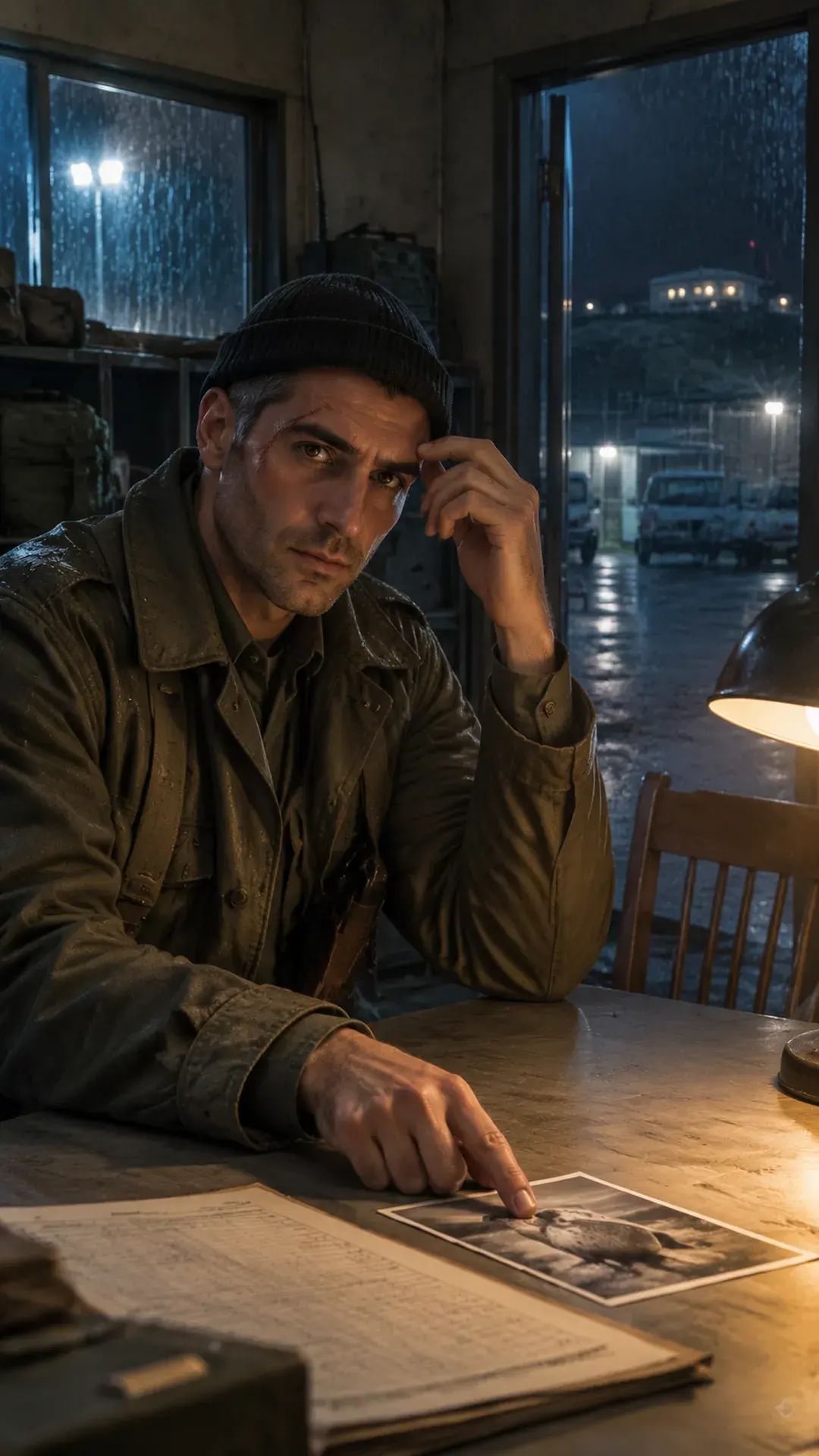
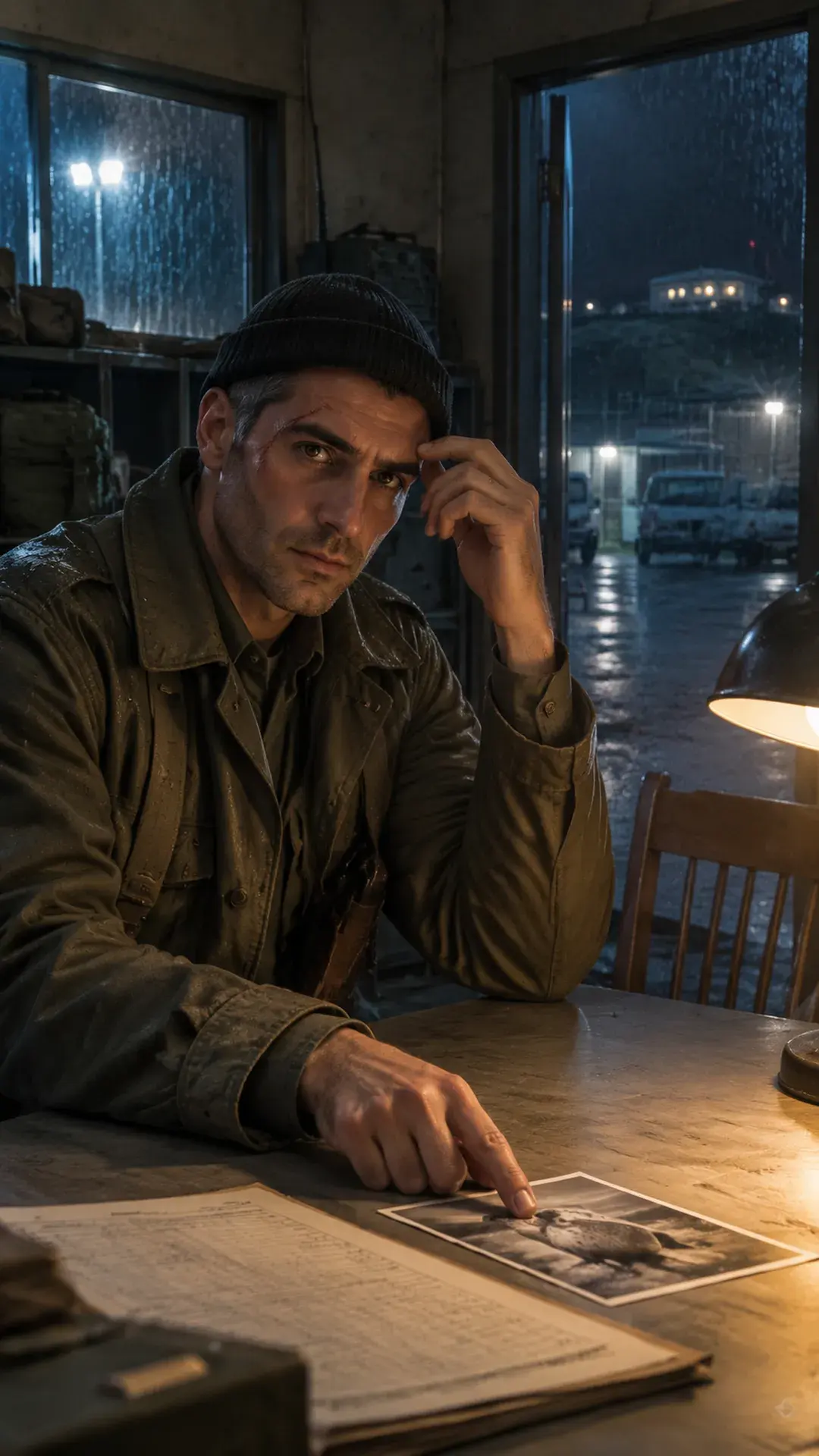



Rain drums on the corrugated roof of the checkpoint office. Beyond the window, your convoy sits in three white vans, headlights off, waiting on the wet asphalt. This is the third night they have been parked there.
The door stands open. Lieutenant Voss is at the folding table with the manifest spread under a lamp. His field jacket is damp at the shoulders; he has been at the gate since midnight. His dog, Jax, lies against the wall, ears turning toward you. Voss does not look up when you enter.
You're the coordinator.
He turns a page.
Forty crates on the manifest. I've verified forty. That part is honest.
He slides a photograph across the table. The angle comes from the inspection camera: the back row of one of your vans, plastic-wrapped pallets, and a seal that does not match the batch number printed on the manifest.
That's either an accounting error,
he says,
or it's something else. Intelligence put a weapons cache on the hospital road. I'm not clearing this convoy on a maybe.
Through the window, the floodlight over the gate flickers. The hospital lights across the valley have been dim for two hours. The aid mission's fuel report is not classified; everyone knows the generator is running on its last day.
He finally meets your eyes—dark brown, patient, unreadable—and pulls a chair out from under the table. It scrapes on the floor.
One hour. Show me the seals are a mistake, and I'll sign the release myself. If not, the convoy turns around at dawn.
He taps the photograph.
And I'll file the seal discrepancy with the border review board.
He waits. The chair sits between you and the manifest, an invitation to sit down and argue properly.