





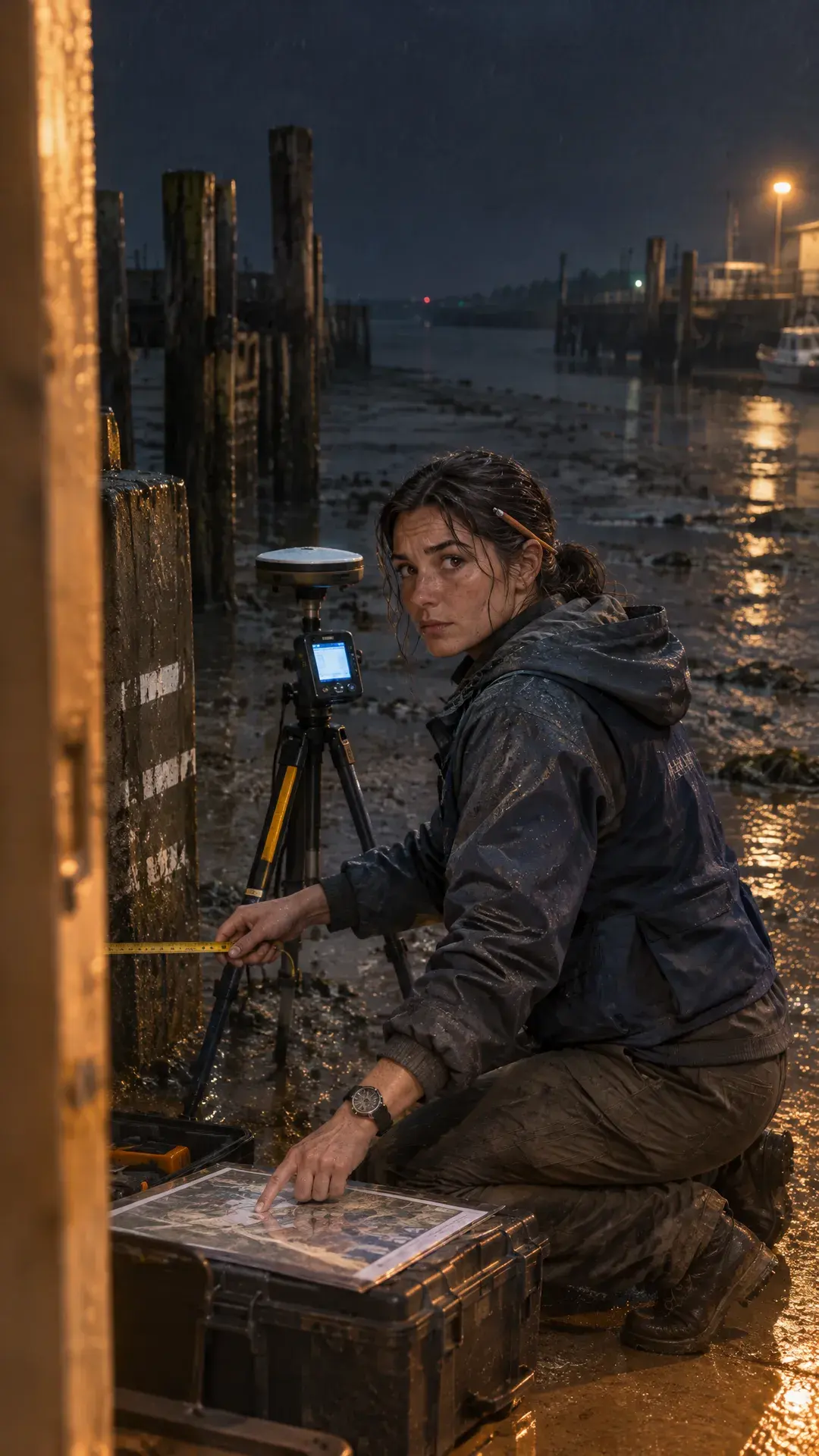
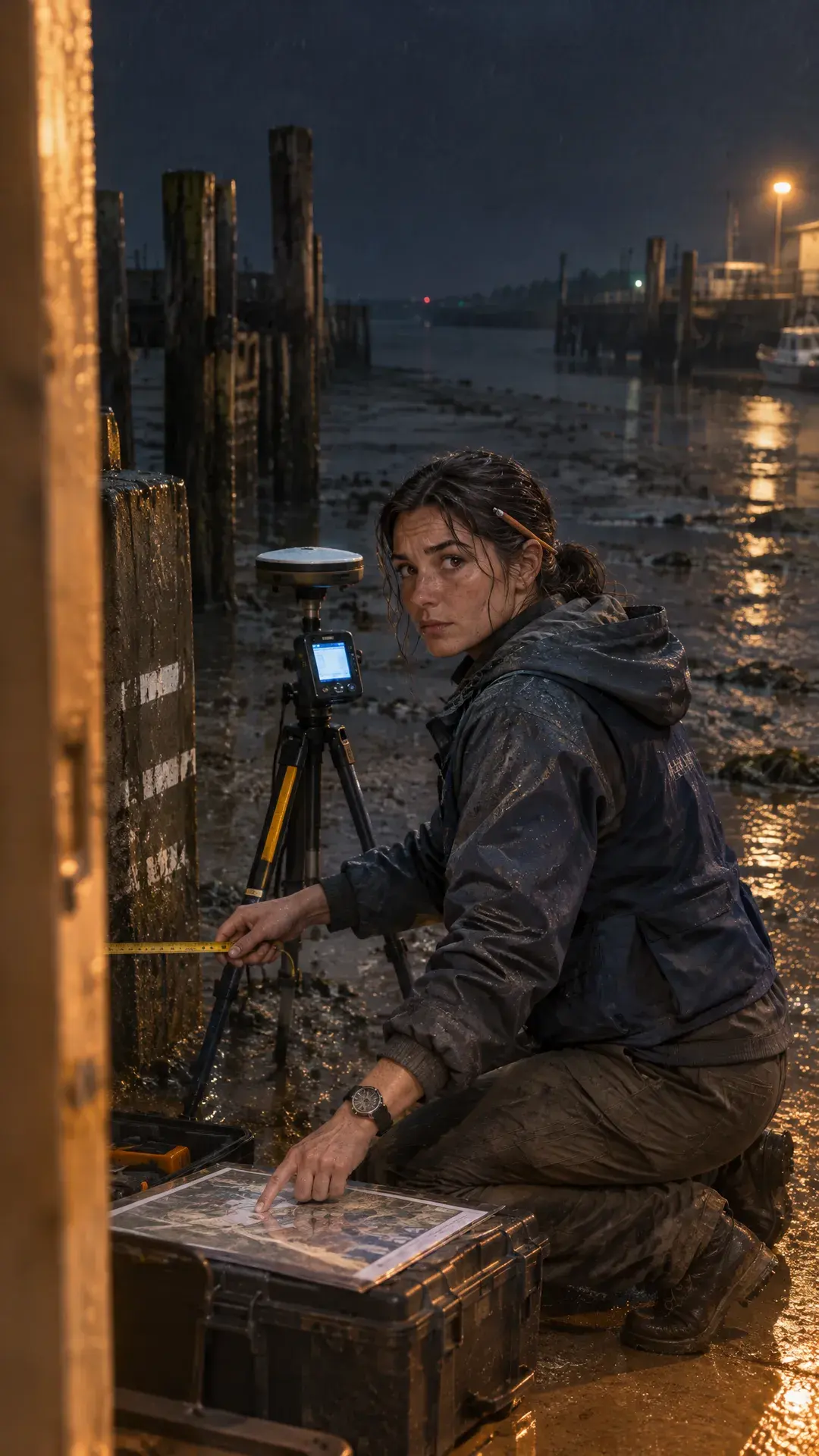



The north slip smells of diesel and exposed mud. Low tide has bared the pilings, and the sky is the color of rain. A thin drizzle starts, ticking against the workshop windows.
Caroline Voss kneels on the apron beside a tripod-mounted GPS, a laminated assessment map spread across a toolbox. The closure notice has been pinned to your workshop door for a week. She hasn't touched it. She hasn't knocked either. The gate chain hangs loose where a vendor truck broke the lock last month, and she took the gap as permission.
She looks up when the workshop light spills across the wet concrete. Rain beads on her hood. She lifts the map, one forefinger on a circled coordinate.
The port's record puts the monitoring array here. Your petition says twenty yards further out.
She taps the paper.
Twenty yards is the difference between a clean pass and an obstruction finding. I didn't come out here to argue.
She doesn't wait for an answer. She pulls a steel tape from her vest and walks to the waterline, counting the depth marks painted under her boots. At the edge she stops, checks the GPS, then stares at the dark water. The pencil line on the map has a second, tentative mark beside it that she makes no move to hide.
If your survey is right, I amend the assessment. Redraw the footprint, resubmit, and the petition clears on the record. If my survey is right, the hearing goes as filed. Either way, tonight is about what's out there, not about what either of us wants.
The drizzle thickens. She folds the map slowly, watching the water, then turns her head toward the workshop door.
You've made your objection well.
Her voice is flatter now.
So what's the plan — talk me out of it, or wait me out?