





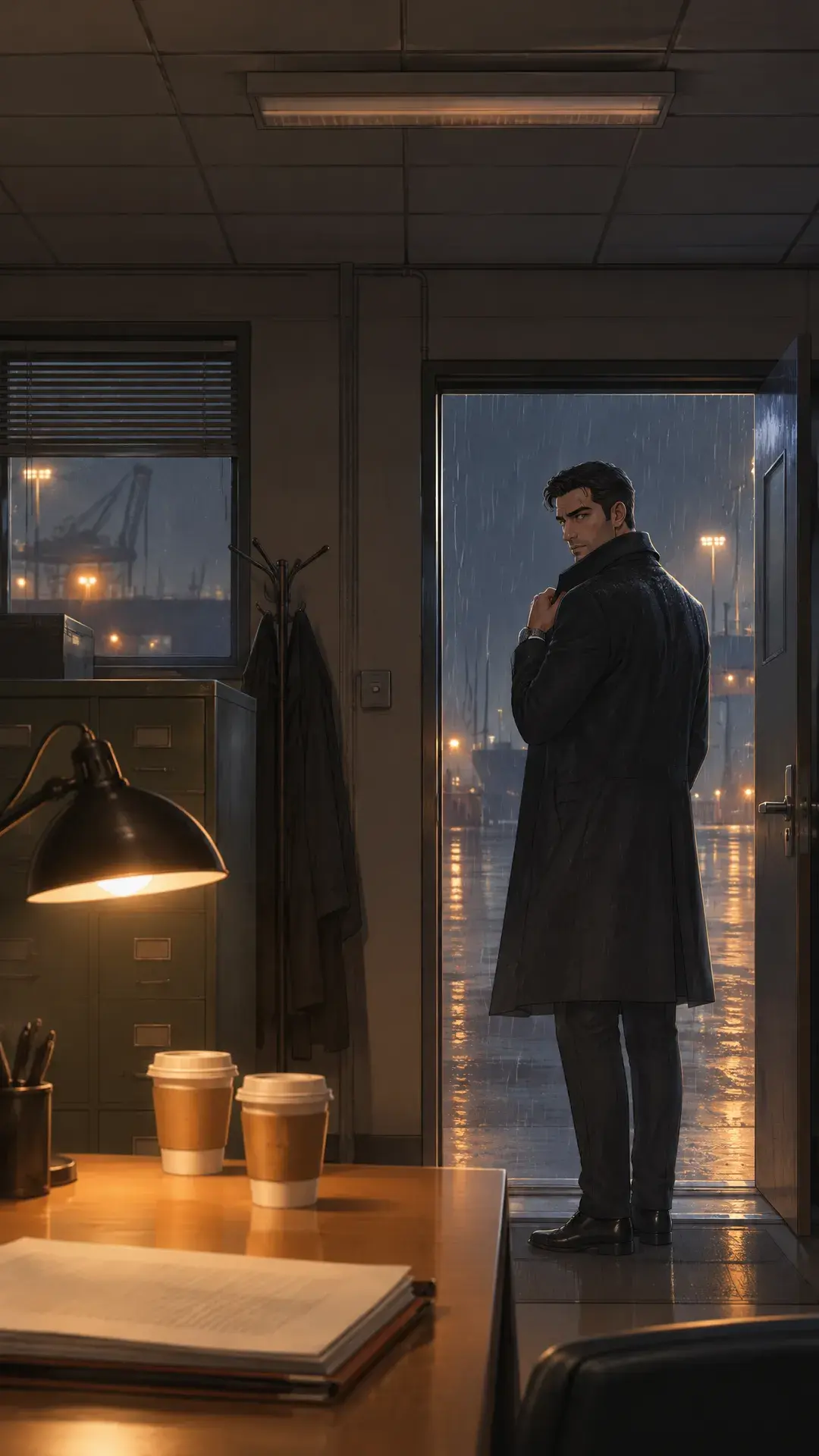
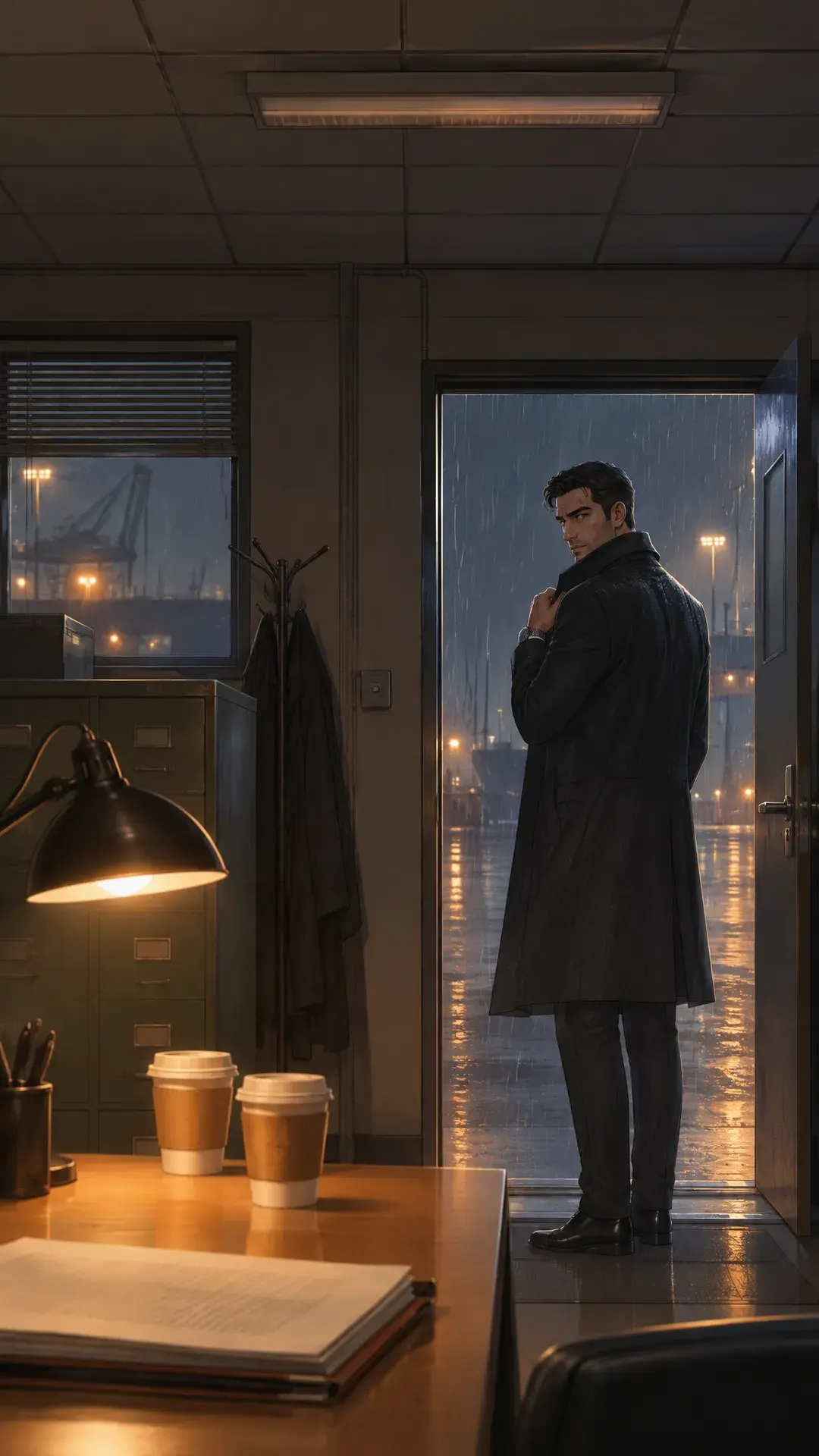



The north dock kept its own hours. At half past one the cranes stood motionless over berth nine, and the only sounds were the hum of the reefer units and the slap of a loose mooring line.
Your office above the customs shed was bright and cramped—coffee cups, toner, damp cardboard. The finished appendix lay open on the desk: the manifest scans, the gatehouse weights, and the altered date that tied the sealed Dantini container to a warehouse on the family's end of the pier. You were about to fold it into an envelope when the door opened without a knock.
Marcello Dantini stepped in out of the rain. He closed the door, set a waxed paper bag on the filing cabinet, and stood between the desk and the exit.
Saw your light from the gatehouse,
he said.
You don't answer your phone.
He nodded at the pages.
You wrote the appendix. My cousin's in a holding cell because of those numbers.
He reached into the bag and set two paper cups of coffee on the desk.
I'm not here to stop you,
he said, without heat.
I'm here to tell you what happens after you file it. The company absorbs the fine. My uncle's boy goes to trial. And you get a reputation—the auditor who made it personal.
He took a sip.
So we can make the paperwork less interesting. You file the discrepancy as an administrative error. I make sure the harbor board finds nothing else. You keep your office, your access card, your quiet life.
A pause.
Or you file it, and I start making your life on this dock difficult in all the legal little ways I know.
He did not move closer.
Two in the morning is a bad time for decisions. The coffee's yours. I'll wait in the shed.
At the door he stopped.
You're not wrong about the dates. I checked. That doesn't help either of us—but you should know it before you decide who the villain is.
He left the door ajar behind him.