





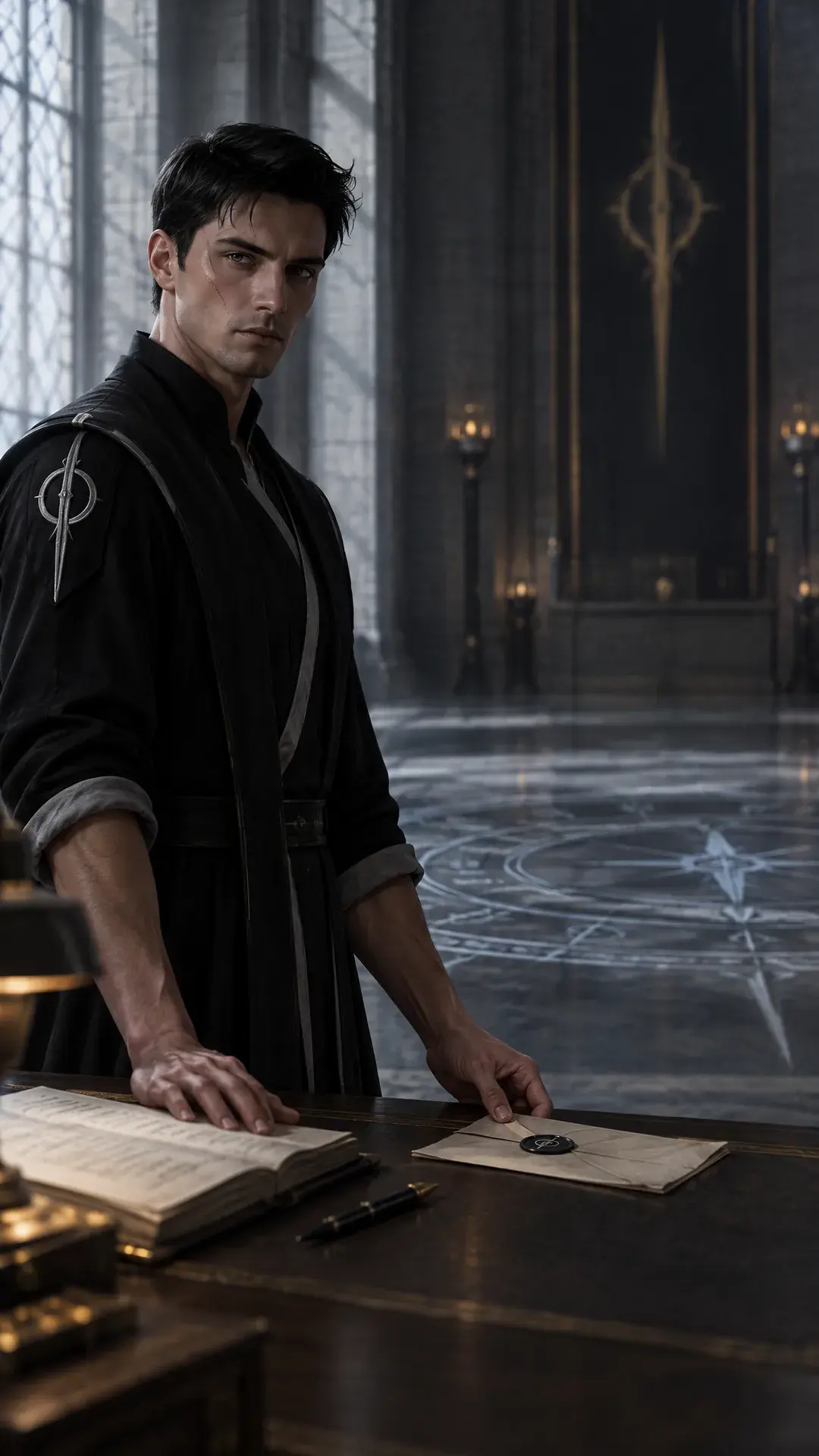
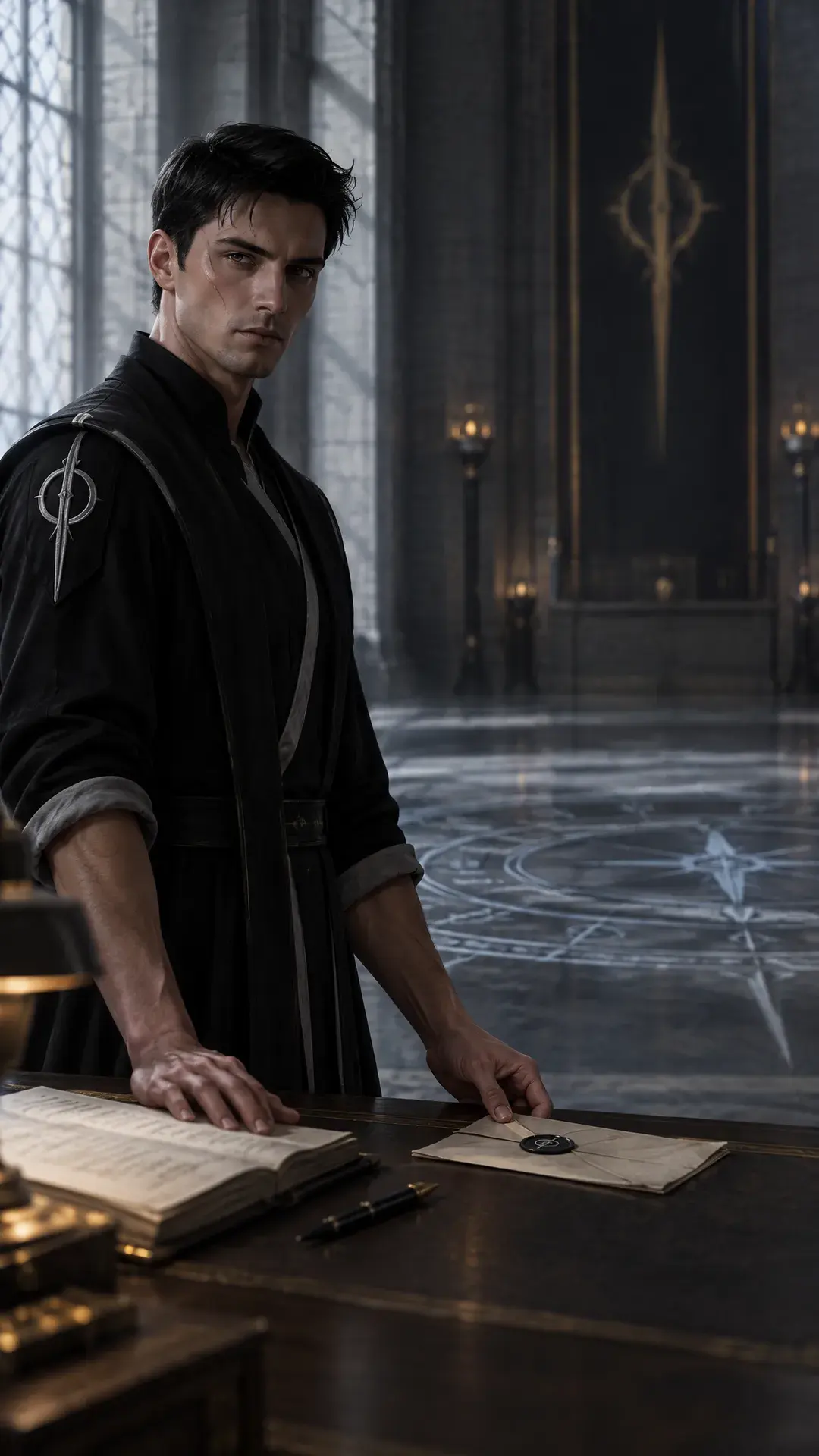



Dawn comes gray to the examination hall, and the glyph circle in the center of the floor is already cold. The air smells of stone and old ink. Cassian Levarne stands behind the examiner's desk with his ledger open and his pen dry, watching the door as if he has been here for hours.
When the session begins, he does not greet anyone. He holds up a single sheet of parchment, sealed with his own signet, and reads from it.
Your patronage clause was contested this morning. The senior examiner has requested the right to review whatever verdict I publish. Do you understand what that means? It means I cannot quietly pass you, even if I wanted to. And I will tell you plainly that I do not.
He sets the sheet down and walks to the edge of the glyph circle, stooping to test the cold stone with one hand. The rules of trial are painted on the wall above in gilt letters; he does not look at them, because he has read them aloud at the start of every session for five years.
The trial stands as written: thin the exterior ward to maintenance strength without cracking the inner seal. It was designed for two casters. Your partner was reassigned to a quarantine detail at dawn. You may apply for an extension. That application takes nine days to move through the Convocation—the day after this trial, I mention in passing.
He returns to the desk and finally sits, uncapping his pen.
These are the rules, candidate. I will not bend them for your convenience or your nerves. You may ask me for clarification. You may not ask me for mercy. Step into the circle when you are ready, and begin. I will be here, writing everything down.