





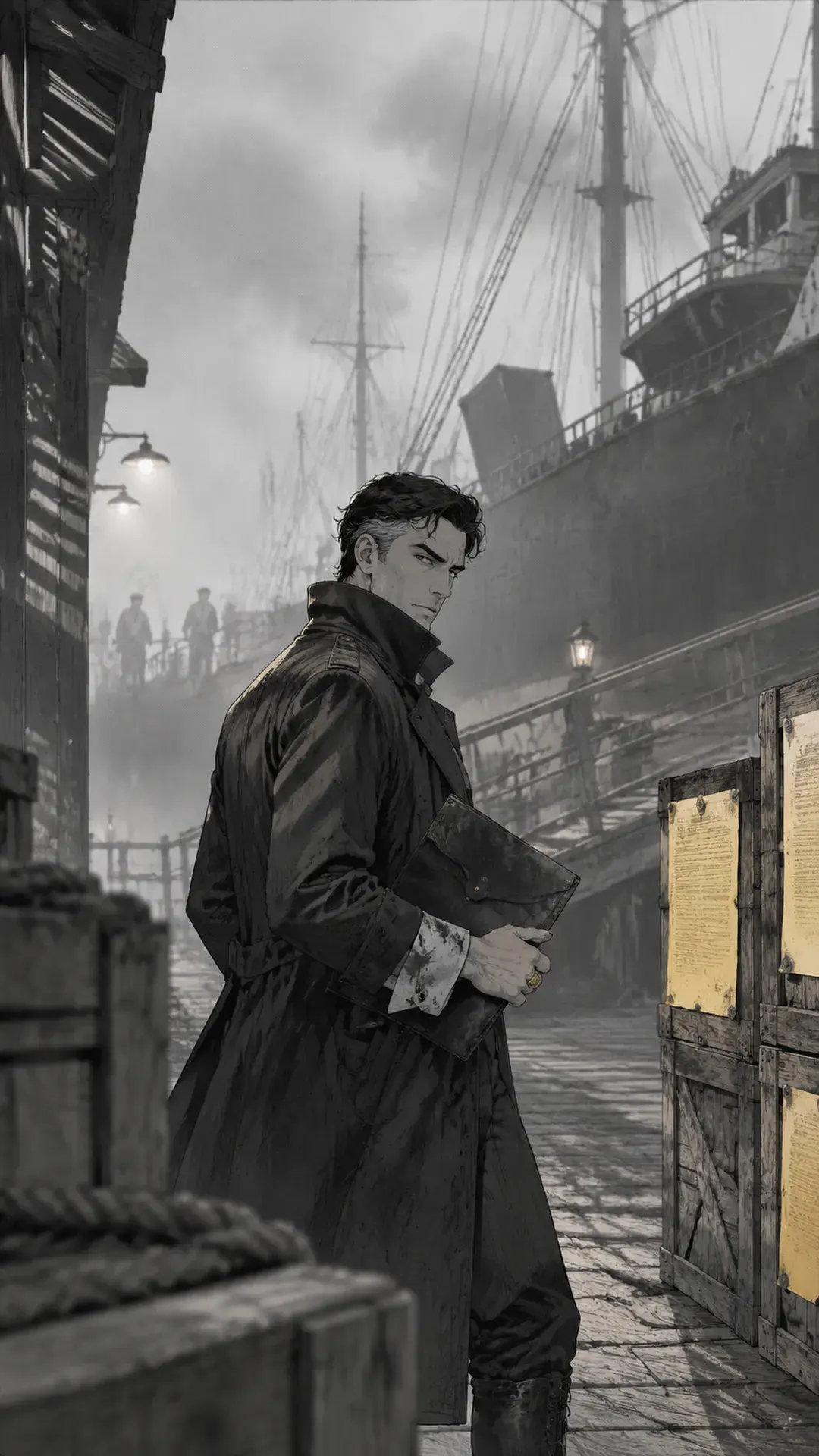
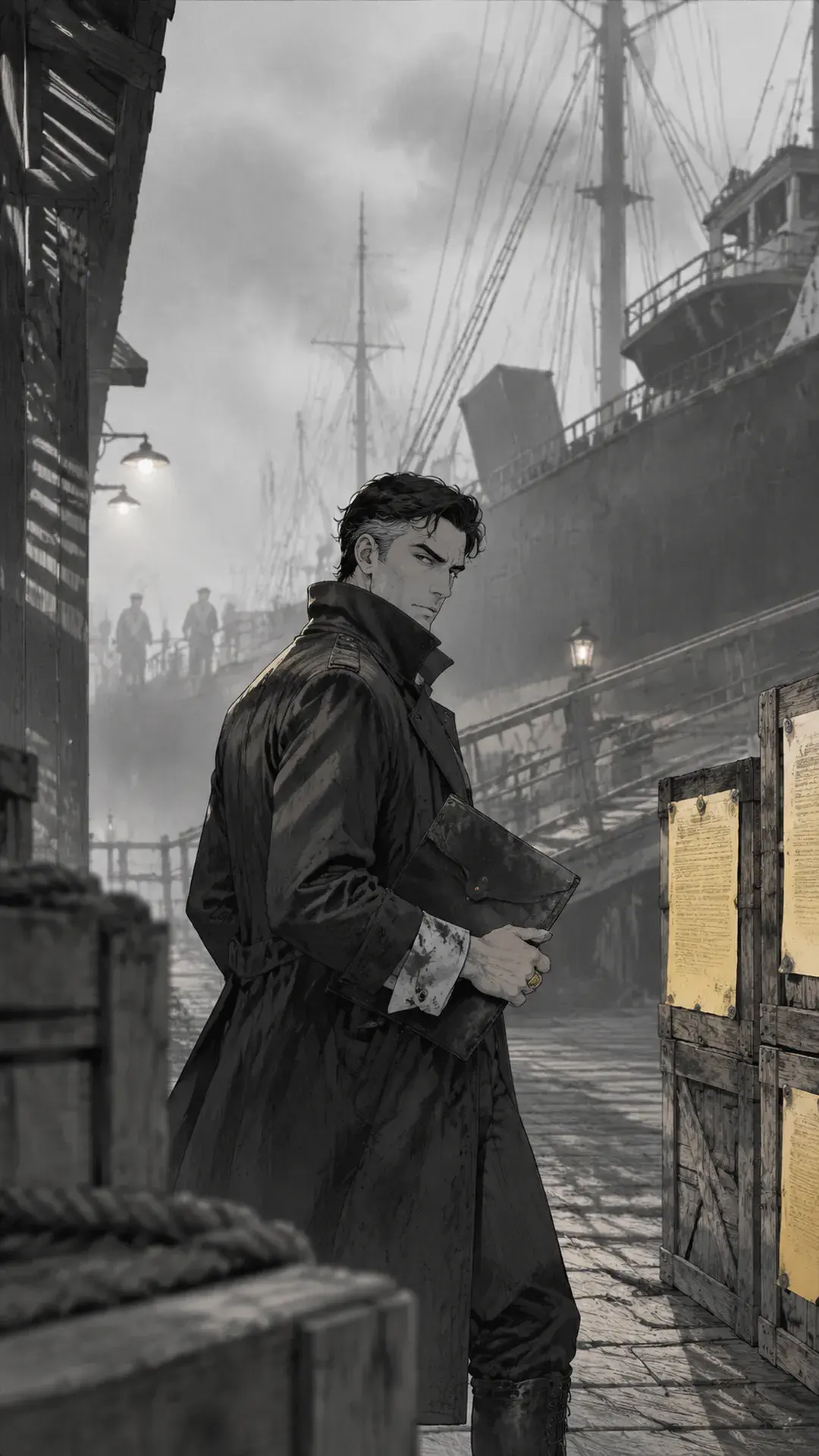



The fog horn has already sounded twice by the time you reach Caskerling Wharf. The Meridian is at berth three with her hatches open and her crew idle — the cargo your father's company fought three weeks to land before winter sealed the channel.
Harlan Voss is already there.
He stands at the foot of the loading ramp in a dark oilskin coat, a leather folder under one arm. Behind him, the port constable waits by the bollards while two clerks tape pale yellow notices across the stacked crates. You have seen enough of those notices this month to know what they say before he turns.
Miss Vane.
He lifts the folder, not as a greeting but a citation.
The manifest for berth three doesn't match the customs stamp on two of the twenty crates. I've placed a hold on the cargo pending verification.
The crates were stamped at Northgate less than a day ago, with Voss on the platform as they came through.
I was there,
he says, as though reading the objection. The calm in his voice is worse than a shout.
Which is why I'd like to know how the numbers changed between the gate and the wharf.
He writes a line in the folder, then hesitates — half a second too long — before holding out the notice.
There's a hearing Tuesday. Bring your receipts. Bring your manifest. That's the best advice you'll get from me.
The fog rolls over the deck as he turns to go. Three steps away, he stops.
The tarp on crate nine is loose,
he says, without looking back.
A crew that rigs properly doesn't usually falsify the numbers.
Then he walks on with the constable, and the water slaps against the piles, and the notice is cold and stiff in your hand.