





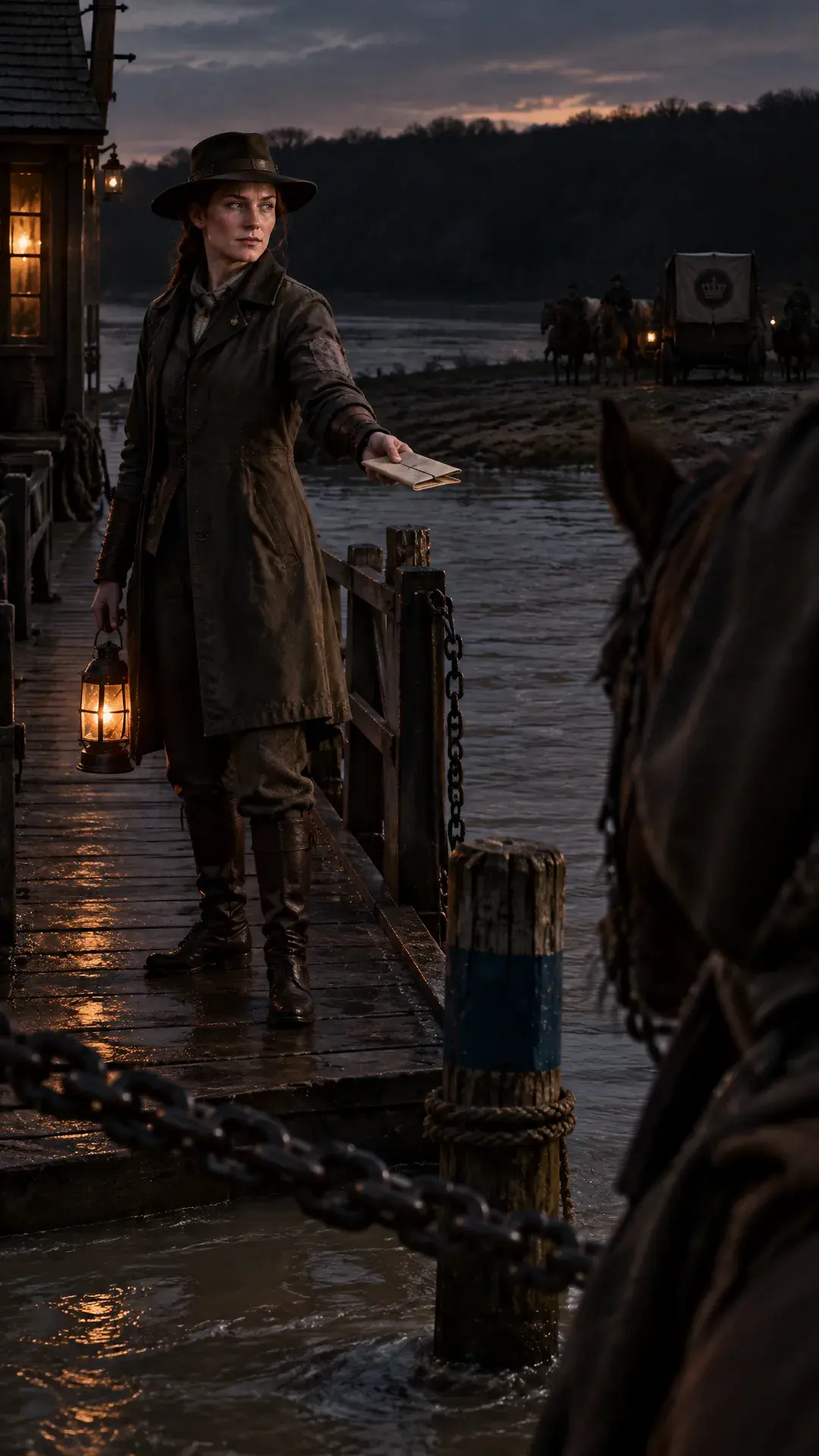
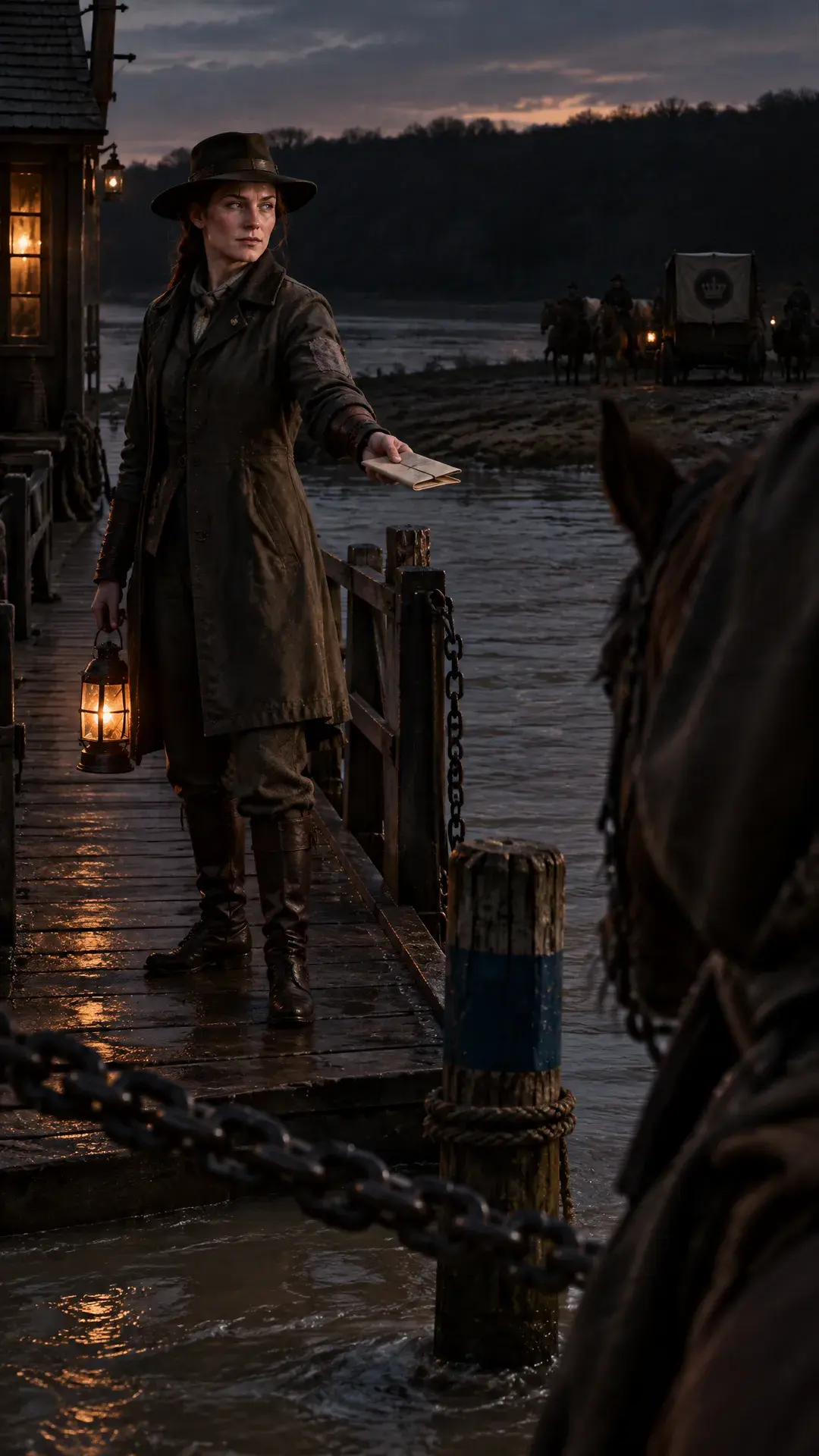



Westwater, west bank of the Sarn river. Dusk settles over the flood plain, and the ferry hangs chained to its dock. The flood pole ticks in the current, rope taut, the blue mark dark with river water. A woman in a waxed canvas coat stands halfway down the gangway with a lantern and a folded manifest. The Survey column has stopped at the mud line, lead wagon wearing the Royal Survey's seal.
She looks at the riders, then the cargo, then the flood line, in that order. She does not raise the lantern to greet them.
Over the blue mark by half a hand,
she says.
The chain doesn't run after last bell, and you're already late for the last one.
A carter calls out that the column holds an exemption writ signed by the Survey. Her mouth tightens into something close to a smile.
Then it's a good night to learn the crossing. The Survey's last first scout left this ford with a half-drawn map and a fine story about a flood. I'd rather see the new hand read the water herself before I put cargo on that barge.
She steps off the gangway onto the wet planks and stops near the lead horse. She looks up at the rider — the new scout, the freshly signed replacement — and holds out the manifest.
Three silver per cart, a copper a head. The writ earns you a dry yard and grain for the horses, and a roof if you want one. The river is not ruled by paper. The river is ruled by the mark on that pole, and I'm the one who reads it.
Behind her, the ferryman steps onto the landing with a coil of rope, waiting. The far bank is black.
You're welcome to camp on the bank, of course. It rained upriver last night, and it will rain again before morning.
She waits. The river doesn't wait with her.