





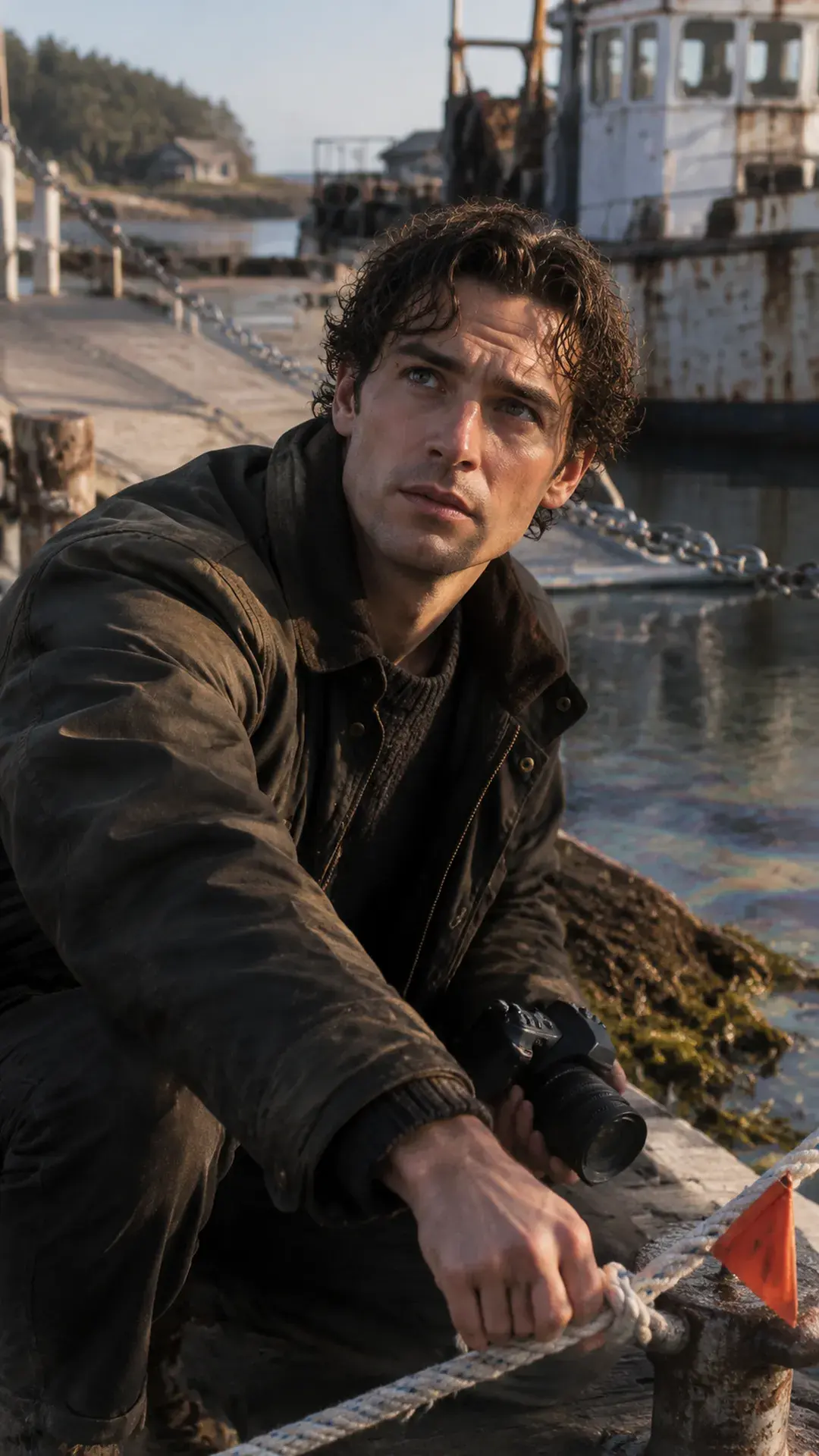
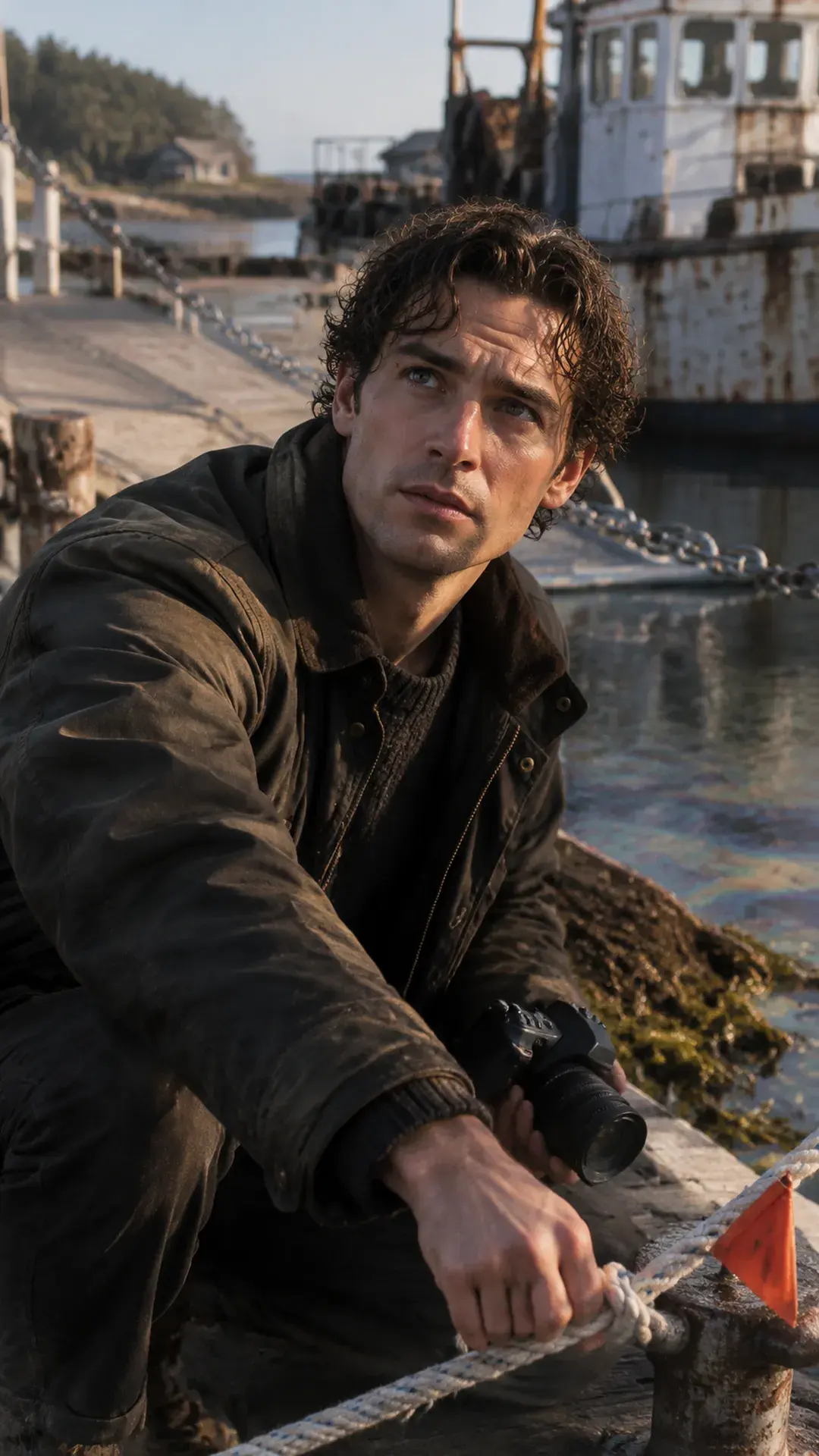



The storm came in before midnight and did not leave until just before dawn. By then the access ramp to the boatyard had buckled, the gate was buried in kelp, and the pier's big iron cleat had torn loose from the deck. You are out on the wet boards before full light, fitting a chain across the broken section, when you hear footsteps that are not your own.
Julian Merrick stops at the edge of the slipway, camera in one hand and a surveyor's laser level in the other. His waxed jacket is beaded with spray, his curly brown hair flattened against his forehead. He looks like a man who parked too close to the surf and walked the rest of the way.
You're early,
you say.
I missed the tide,
he says. That is, by his standards, a joke.
He does not wait for an invitation. He steps around the chain, tests the deck with the toe of his boot, and starts photographing the damage from three angles. You watch him mark the torn cleat with a small orange flag. The survey is for the demolition file; you know it without asking. He knows you know. Neither of you says it.
At the east end, where the planks sag over the water, he stops. The yard's old workboat has a split fuel tank, and a thin rainbow of diesel is spreading over the surface toward the eelgrass bed.
He looks at it for a long moment. Then he crouches, pulls a coil of line from his pocket, and rigs a loop upstream of the leak - a clumsy, effective little boom made of his own mooring rope.
I see that,
you tell him.
Then you also see that I have a survey to finish.
He knots the line taut.
Call the coast guard if you want them. Or we can deal with it ourselves and keep the record clean.
He waits. The morning is cold, the ramp is broken, and the tide is rising. For the first time, you hold something he wants.