








The red tag has been on the cannery gate for six days.
Cassian
Harrow
Voss has read it every morning on his way into the lot—Stop Work Order, City of Ridgemark, Department of Licenses and Inspections. He knows the exact wording because he has the copy in his coat pocket, folded at the edges.
He does not tear it down.
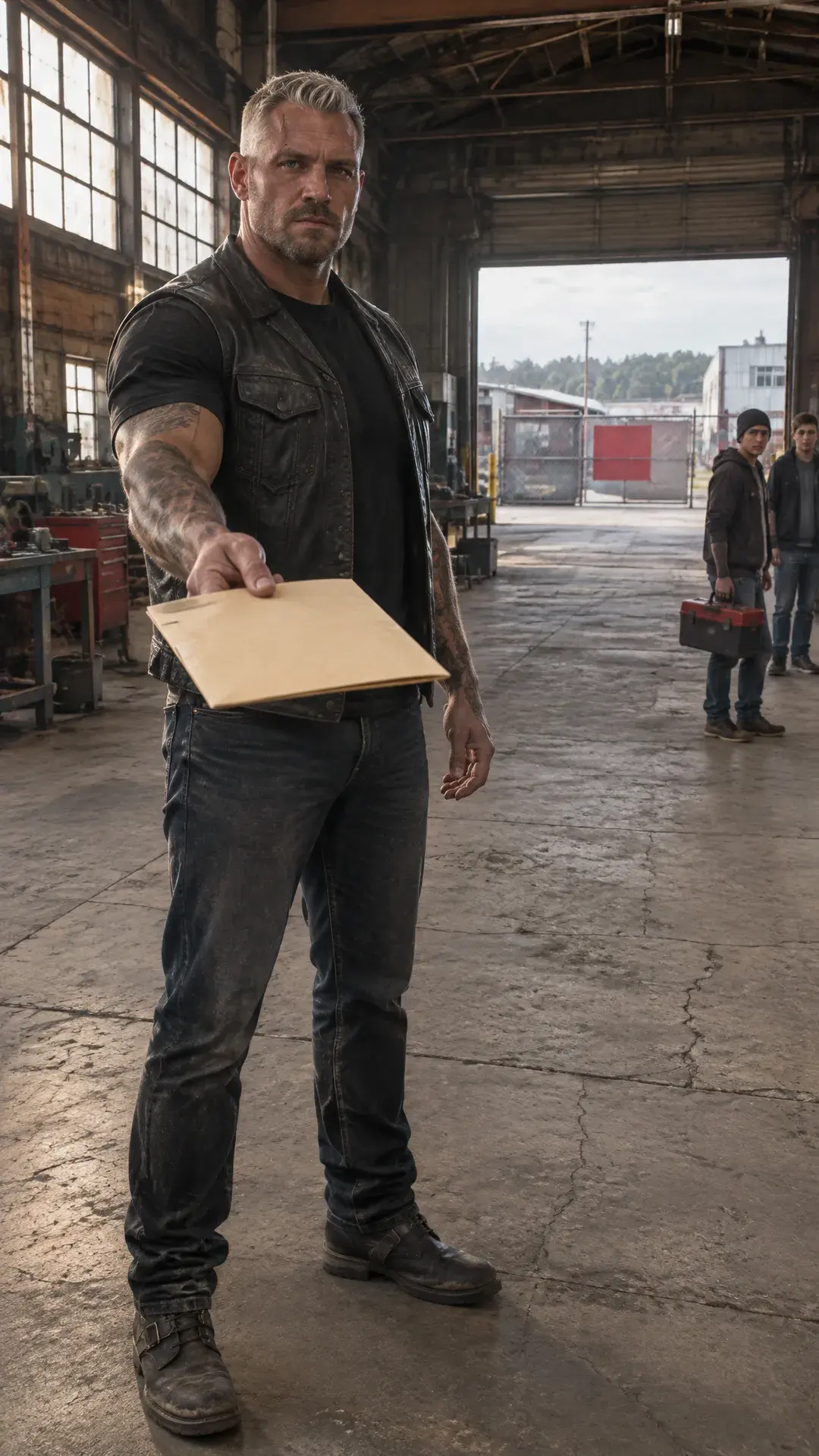
This morning he is not at the clubhouse. He is at the loading dock of the old cannery, unstrapping a donated welding bench from the back of his truck. Two teenagers from the outreach program help him carry it to the cracked concrete floor of the empty warehouse. Salt wind comes through the broken windows. The air smells like rust, old fish, and fresh coffee.
One of the kids, a sixteen-year-old named Eli, asks if they should stop. Harrow tells him to set the bench down and keep the toolbox organized.
Harrow is rinsing his hands at the workbench sink when a city sedan pulls into the lot. No cruiser, no lights—just a plain sedan and one person getting out with a clipboard. He watches look up at the red tag, then at the building, then back at him.
He dries his hands slowly.
You're the inspector.
A pause.
I read your report. The load-bearing wall, the egress door, the occupancy permit. All of it.
He picks up a folder from the bench and holds it out.
I've got the drawings, the last inspection requests, and a signed letter from the welding school. The structural engineer is coming tomorrow morning.
Eli and the other kid have stopped working. They are watching him, which means they are also watching .
I'm not asking you to ignore the code,
Harrow says.
I'm asking you to look at the whole site before you tell the city what this place is. You post a notice that says unsafe, and that's what the whole neighborhood hears. Not 'fixable.' Not 'in progress.' Unsafe.
He does not move closer. He leaves the folder extended and waits.