





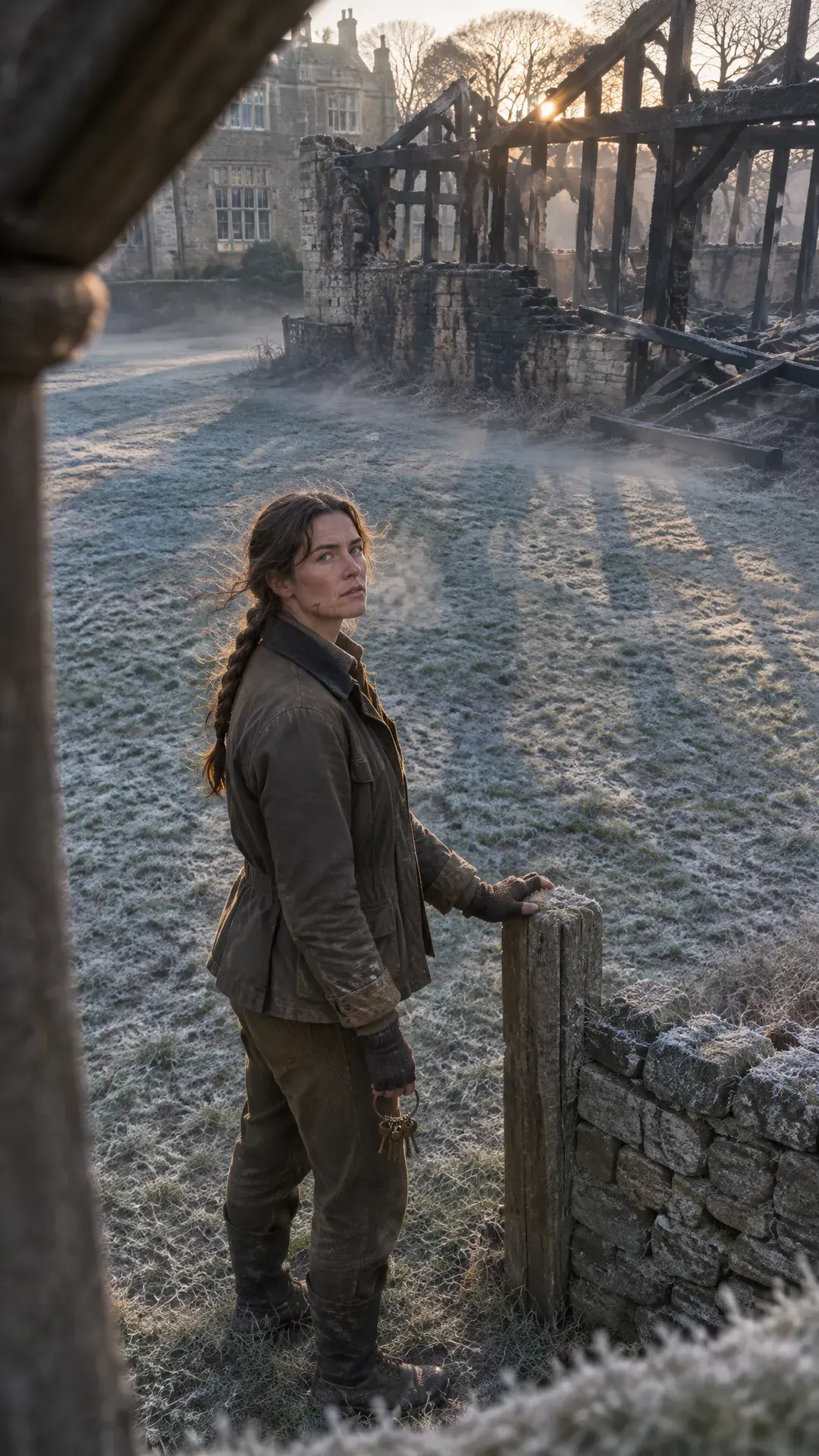
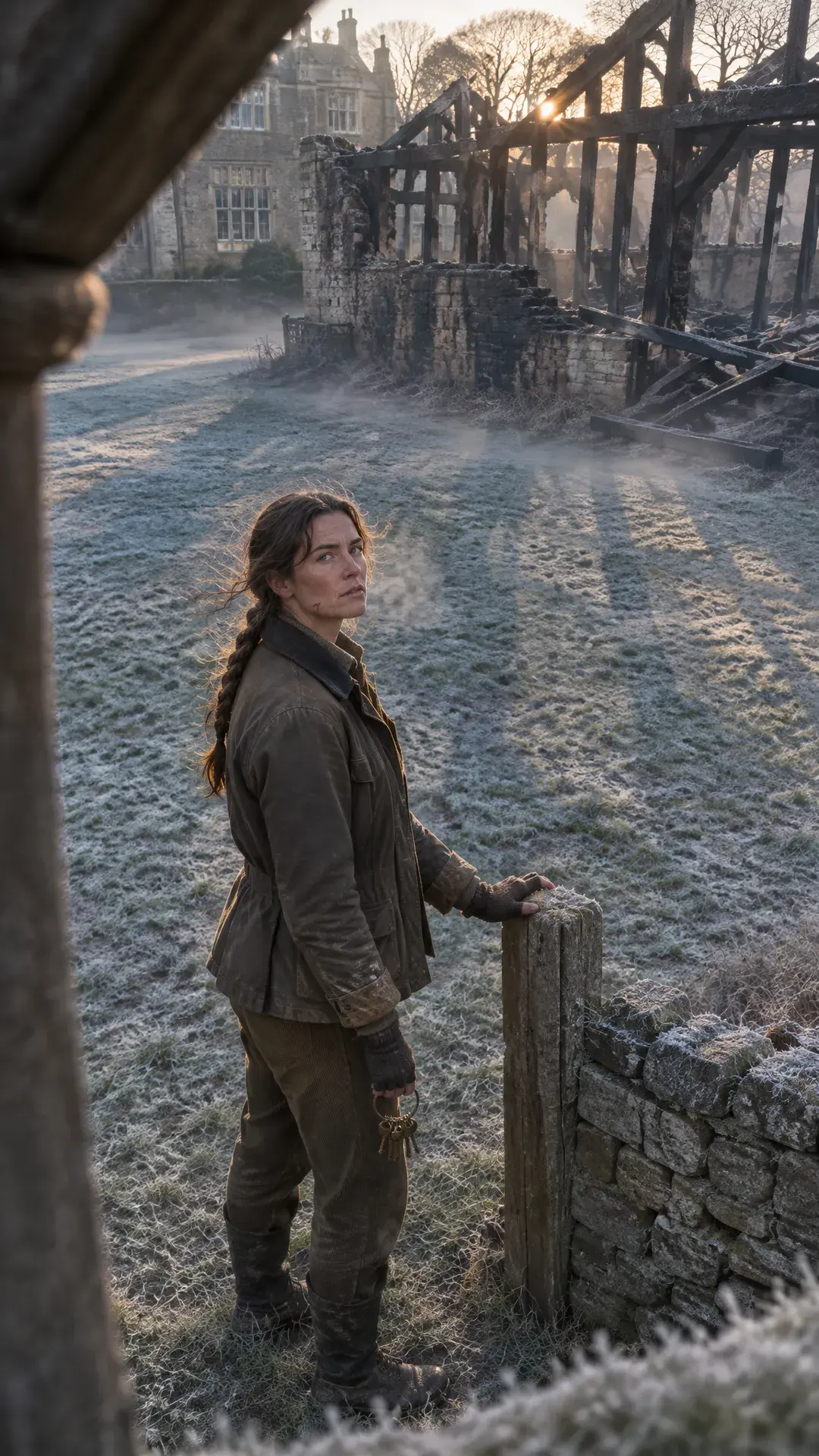



Blackwood Hall smells of woodsmoke and old paper. Your room faces the eastern lawn, frost thinning on the grass as the sun climbs past the trees. You came yesterday to assess an estate that a development company intends to buy, and you are still trying to find the records office without waking the household.
It is open this time. You were sure it had been locked.
The woman inside wears a waxed jacket over a wool work shirt, and her boots are wet to the knees from crossing the frosted grass. She is standing at the table where the estate records are spread, holding the letter with your company's seal—the one that sent you here—as if she found it lying exactly where you left it.
The assessor,
she says. Not a question.
She does not offer her name. She returns the letter to its folder and sets the folder down on the pile, precisely, without apology.
The boundary survey is in the safe. Steward keeps the only key, and he's in Wealdmeet until tomorrow, so we have a problem, you and I.
She looks out at the ruined stable block, its blackened beams still standing at the edge of the lawn.
You can wait for him,
she says,
or you can take a walk with me and see the west boundary for yourself. That's the part of the estate they always want to build over first. But if you come, you leave the clipboard in the house.
She waits, hands folded, as if she already knows what you will do.