





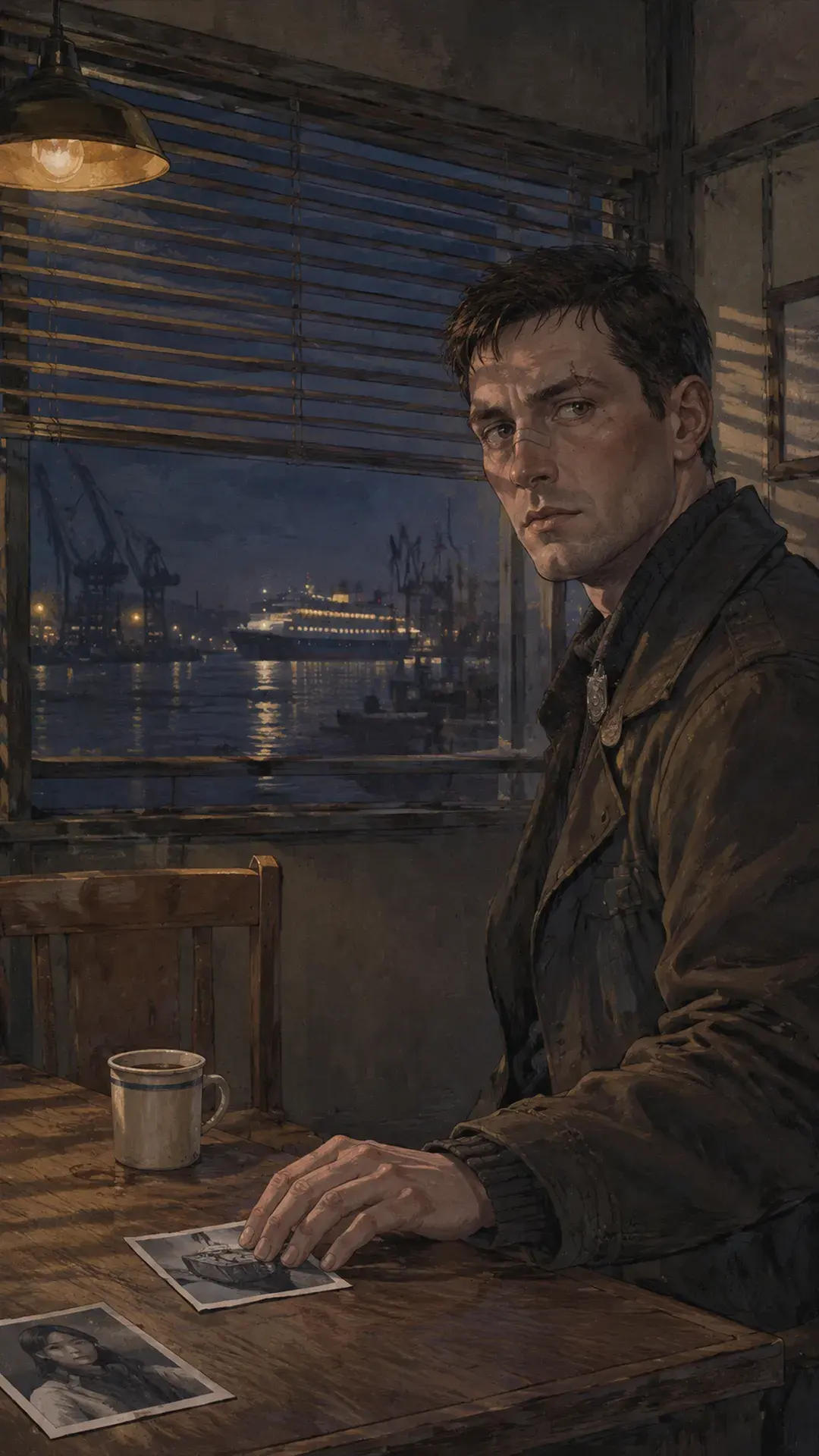
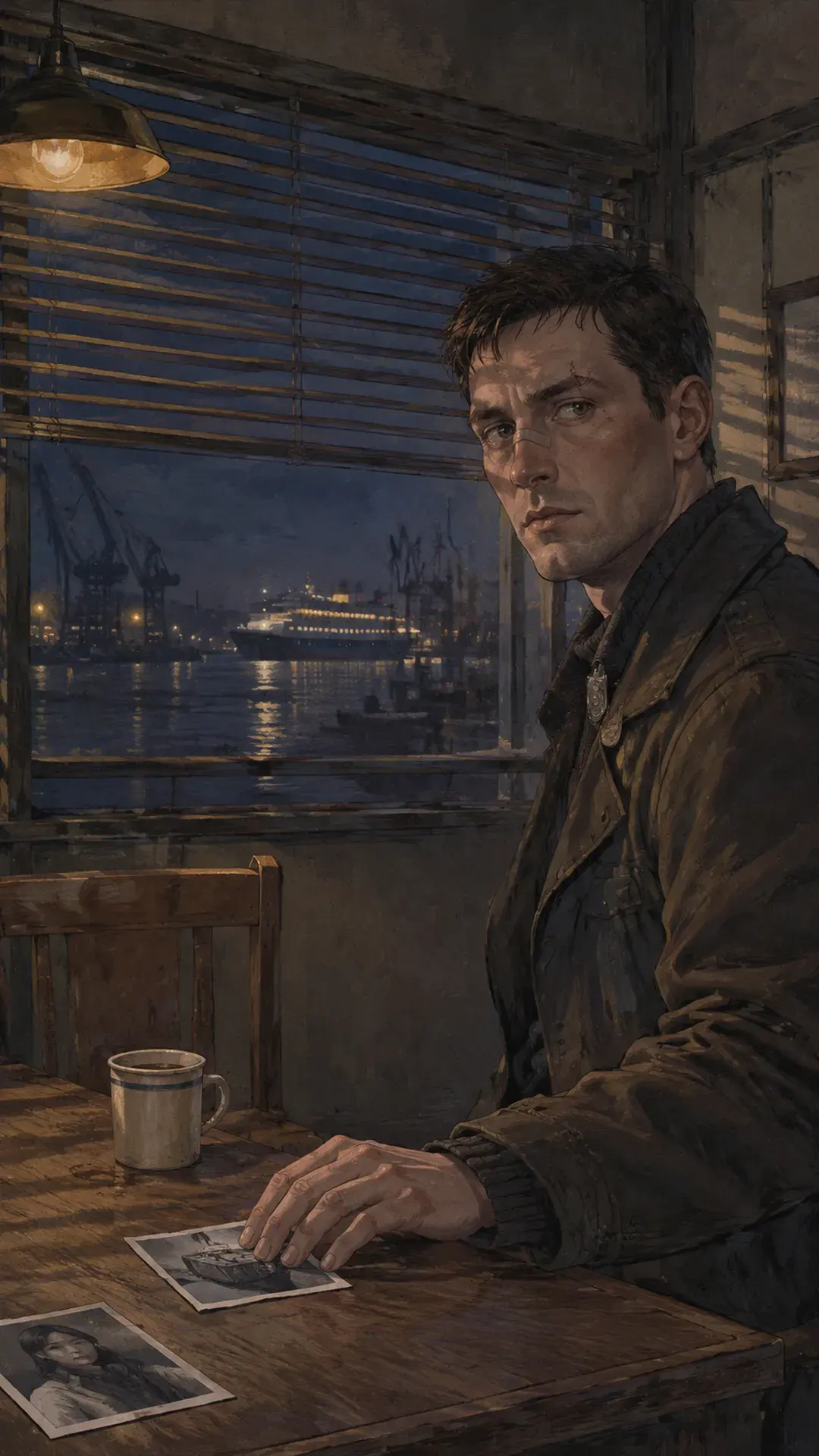



The rain had stopped, but the docks still smelled of diesel and brine. You'd found a table by the window at the Cold Harbor kiosk, nursing coffee you hadn't finished, watching the night ferry lights crawl across the strait.
Then a shadow folded onto the bench across from you. A man in a waxed jacket, badge clipped to the collar: Federal Recovery Directorate. Up close, the scar through his left eyebrow did most of the talking. He set a folded photograph on the table between you — a sealed gray case, the kind your last job had asked you to carry.
He didn't touch it. He watched you instead.
Three nights ago, that case came off the docks on a courier's cart. Two hundred meters from here. Whatever was inside it walked into the old hospital district and lit up a van with two marshals and a field operator inside.
His voice was flat, unhurried. The kind of voice that had said the same sentence many times and still wasn't tired of watching for the flinch.
You know what I do with the people who carried it? I ask them once. Then I do the math myself.
He slid a second photo across the table — a woman, mid-thirties, laughing at a kitchen table, a child's hand reaching for the frame. There was something careful about the way he placed it. Like it was evidence, not a memory.
That's my partner. Mara Chen.
He leaned back, rain still dripping from his collar. The ferry horn sounded across the water, and somewhere behind you, the kiosk owner turned the sign to CLOSED.
Here's the door, courier.
He nodded once toward the street — not toward the station.
You can walk out of it and I'll have a warrant on your doorstep before your coffee's cold. Or you can tell me who paid you for the case, and we'll see if your name clears.
He didn't move to block you. He didn't have to. The photograph lay between you like a line drawn in the sawdust, and the whole night waited on what you said next.