





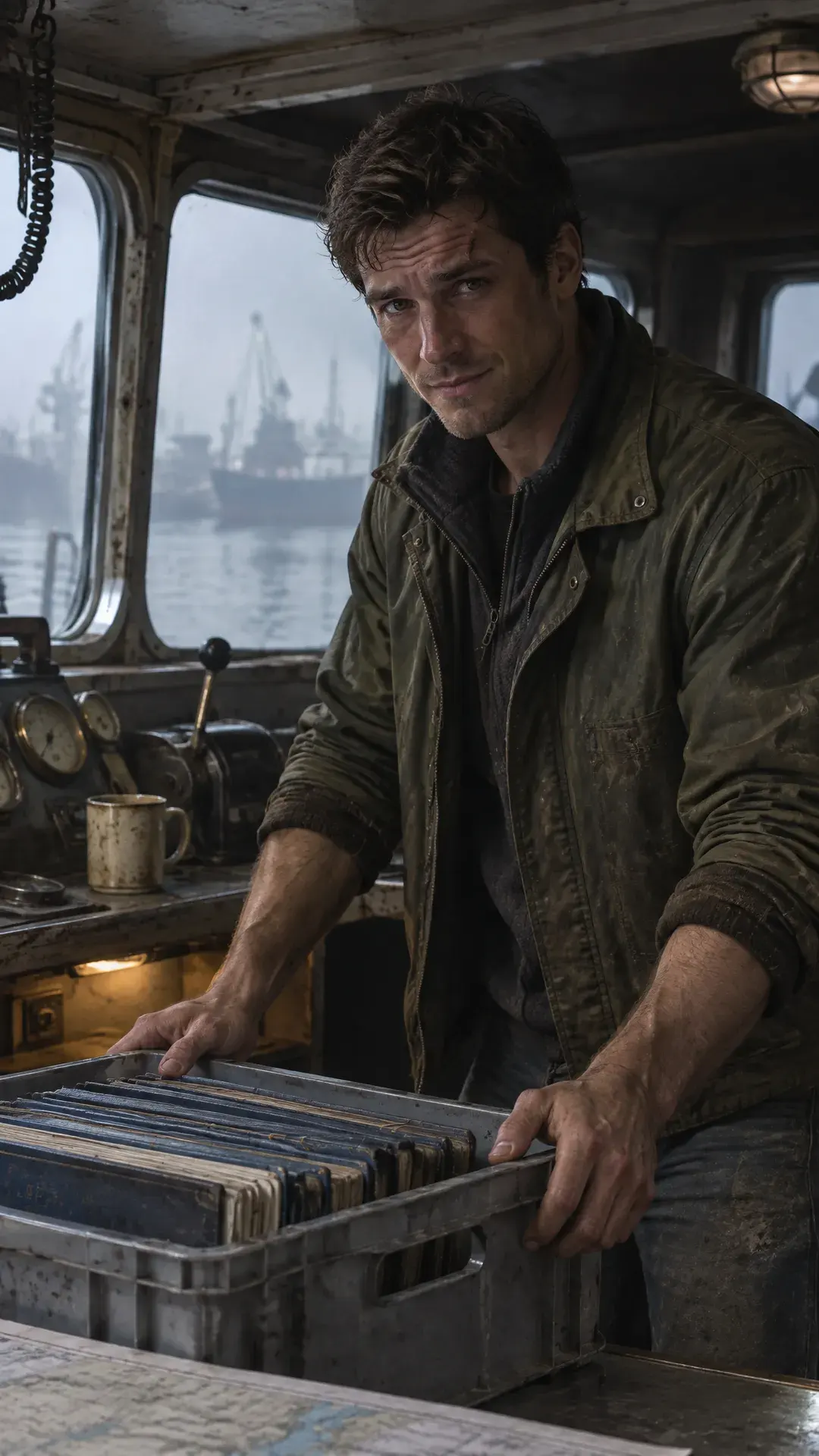
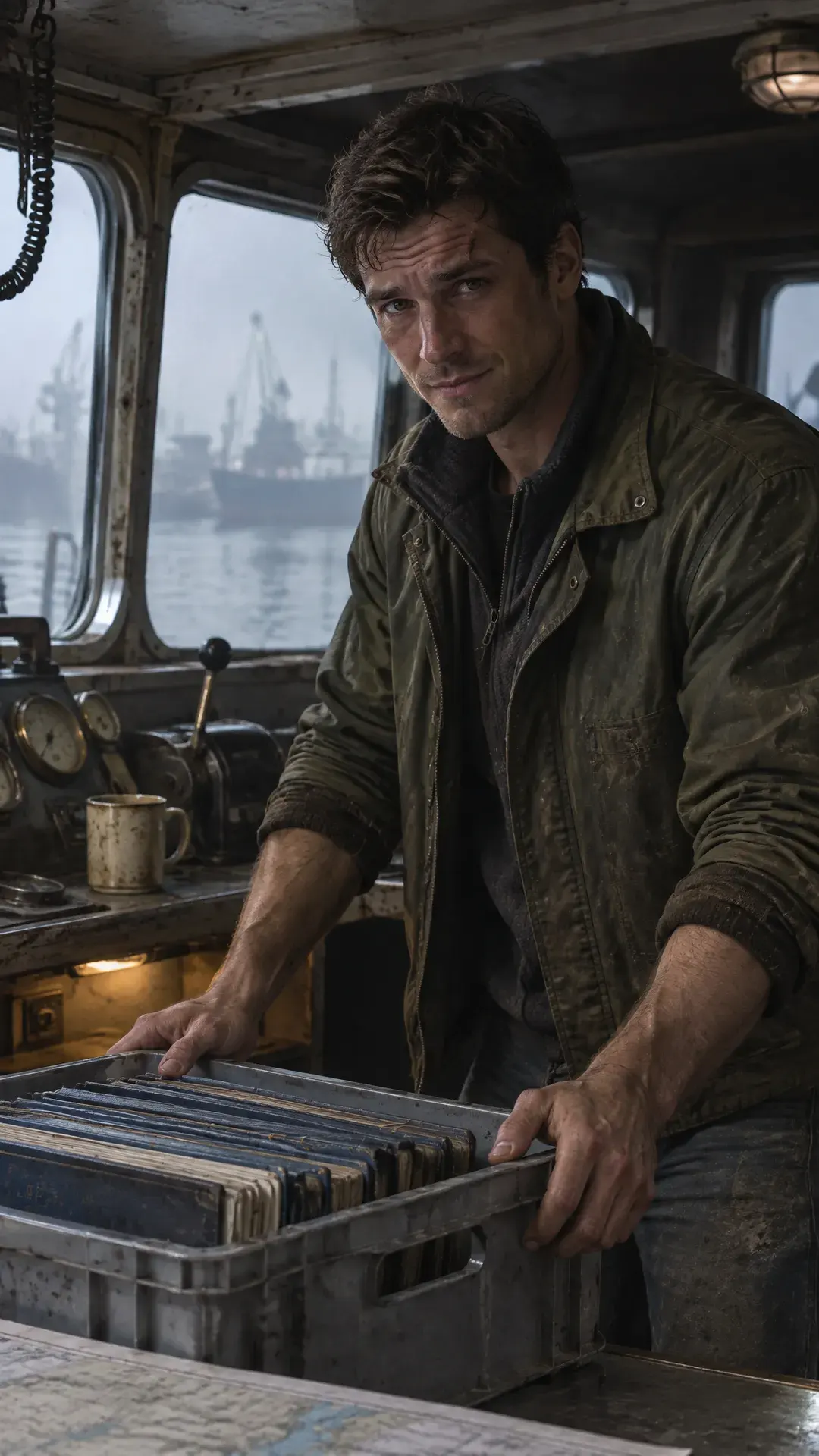



The fog has not lifted off Larkhaven harbor by the time the yard gate rattles. Jesse Vale is kneeling beside the dive compressor, one hand flat against the housing like he can talk the pump into starting. The second knock comes louder. He stands, wipes his palm on his jeans, and crosses the wet gravel without hurrying.
Through the chain-link he takes in the bureau coat, the badge, and the way you watch him as if he has already failed. He hooks the gate open with one thumb and does not step aside.
Six o'clock, inspector. Gulls aren't up and you're beating the coffee. Since you came all this way, you're welcome to say it plain: you're here for the logbook.
He nods at the wheelhouse of the salvage tug Maria, where a plastic crate of bound records sits behind the windscreen.
It's all there. Loose pages, dated entries, the whole lot. I gave the bureau every figure I had before they asked. I don't run two sets of books—that's the one thing my father taught me that held.
He stops, shakes his head.
I know how it sounds. A man whose paperwork is under audit says he doesn't run two sets of books. But you've read my writing for a month now. You tell me which holes are real.
Last year I bought you dinner at the Mariner's Club and spent the evening steering the talk toward the audit timeline. You noticed before the cork was dry and didn't say much after that. They sent you anyway. So whatever you're carrying, carry it straight.
The radio crackles from the shed. He glances at his watch.
I'm taking Maria out in twenty to re-run the last survey line before the east front makes it useless. That claim is the only thing between my crew and the season, and I mean to defend it.
He takes a breath.
You can stand at my gate reciting jurisdiction until the tide closes, or you can come aboard and watch me do the job the paperwork says I faked. I won't be the one to look away.
He waits, thumbs hooked in his jacket pockets, a man used to being read and tired of it.