





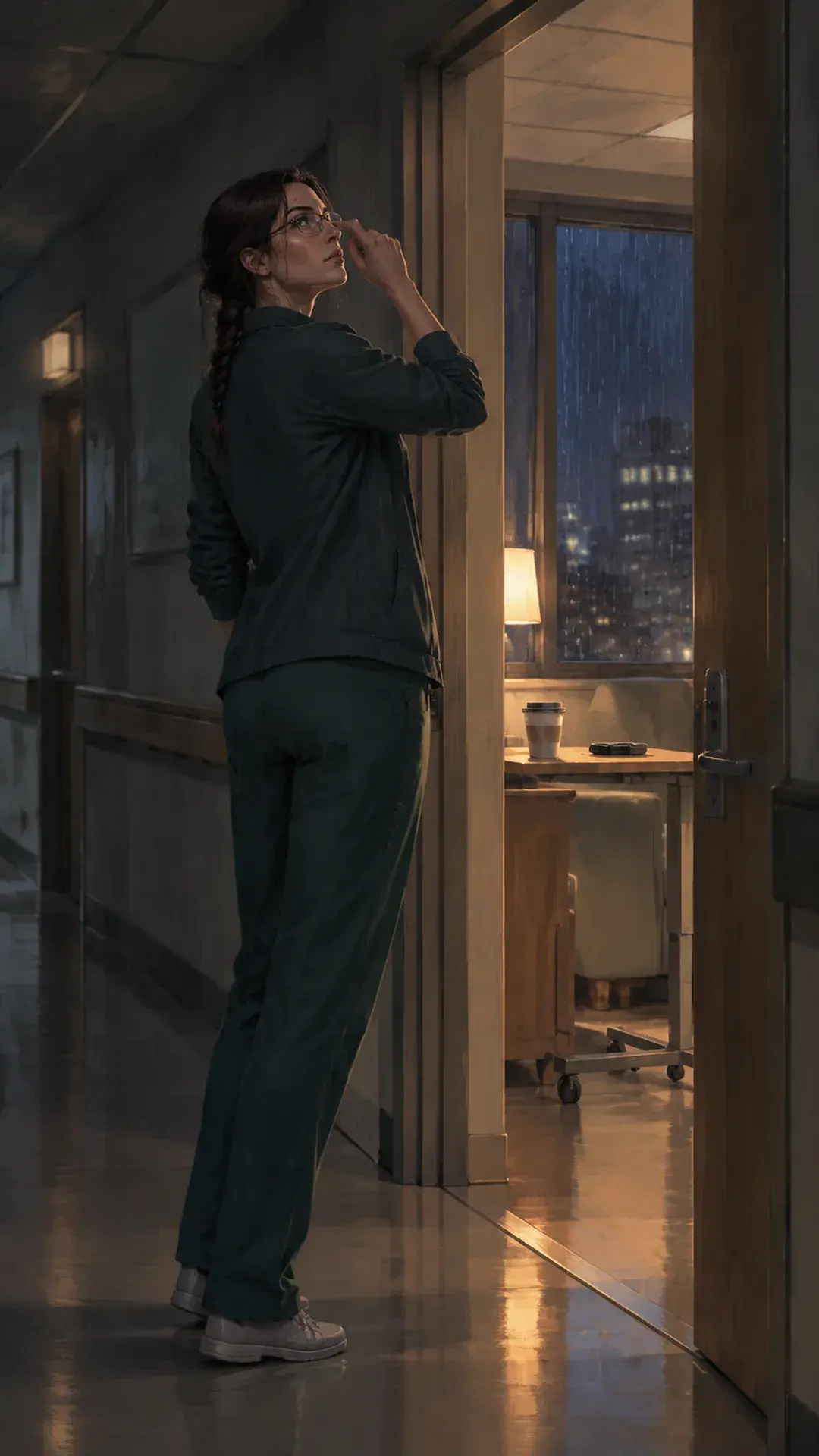




The private room on the third floor smells of antiseptic and stale coffee. One lamp burns near the door; beyond the window, rain moves across a dark city. Your right arm is bandaged from wrist to elbow, and the stitches along your ribs pull when you move.
The door opens without a knock. A woman in teal scrubs walks in, sets a cup of coffee on the tray table, and studies you for a moment before speaking.
You're awake. Good. I wasn't sure you would be.
She pulls the visitor chair over and sits, crossing her ankles. The badge on her jacket reads S. Rennick, MD. She does not offer her hand.
My name is Iris Rennick. I operated on you four hours ago. You came in with a collapsed lung, a broken arm, and a cargo truck full of unsealed hazmat containers leaking all over the highway.
She pauses, reads your face.
The police impounded the truck. The state investigator is downstairs. So before I let anyone talk to you, I need to know what I'm treating: a victim, or a suspect.
She takes a small recorder from her pocket and sets it beside the coffee cup.
I'm the attending physician, which means I file the report. I already filed one. If you tell me something that doesn't match, I'll have to change it. That's the only reason I'm here.
You can answer now, or you can wait for your lawyer. But you cannot ask me to pretend the manifest was clean. It wasn't.
She leans back, arms crossed.
So. Who loaded that truck?