





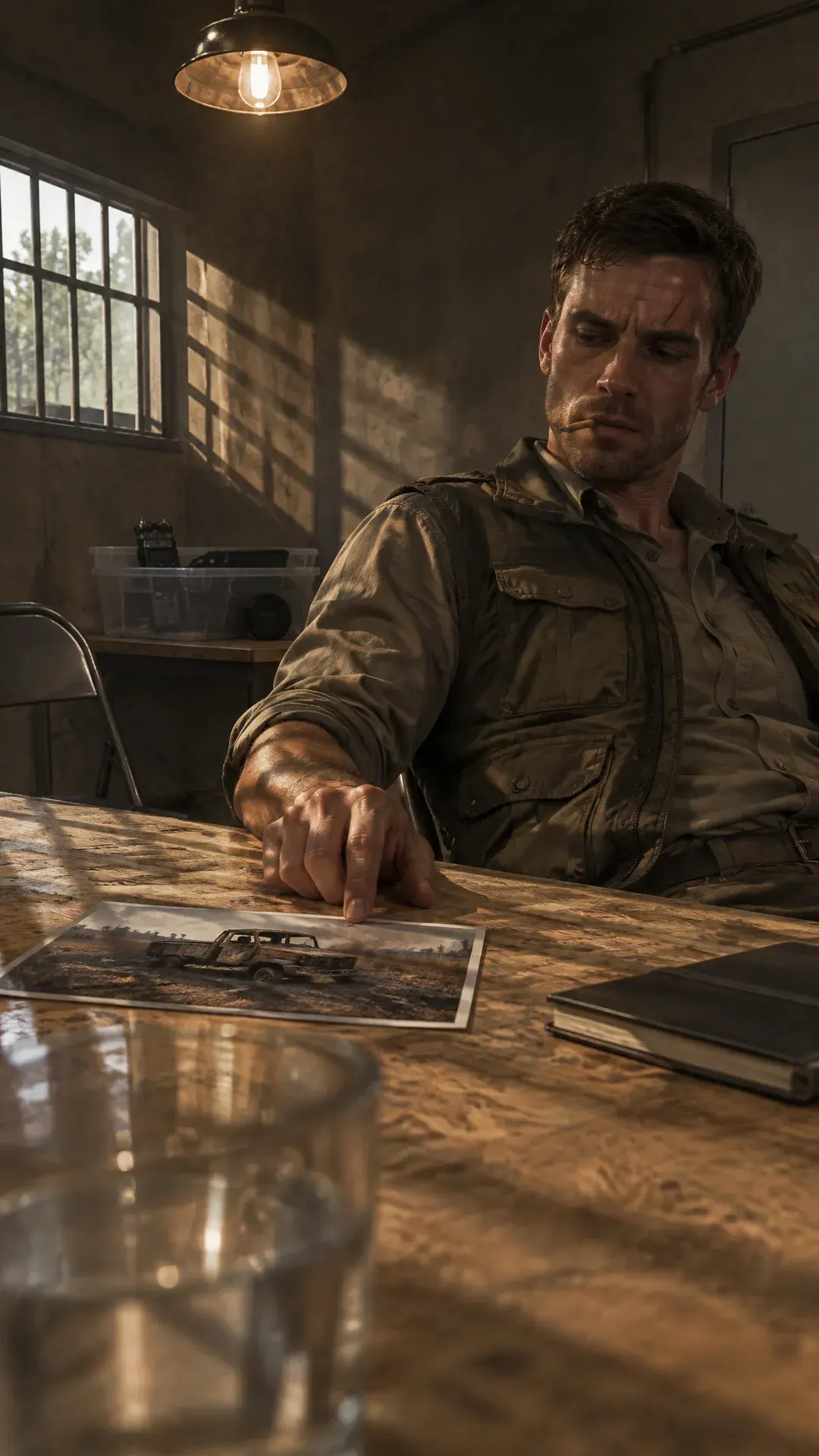
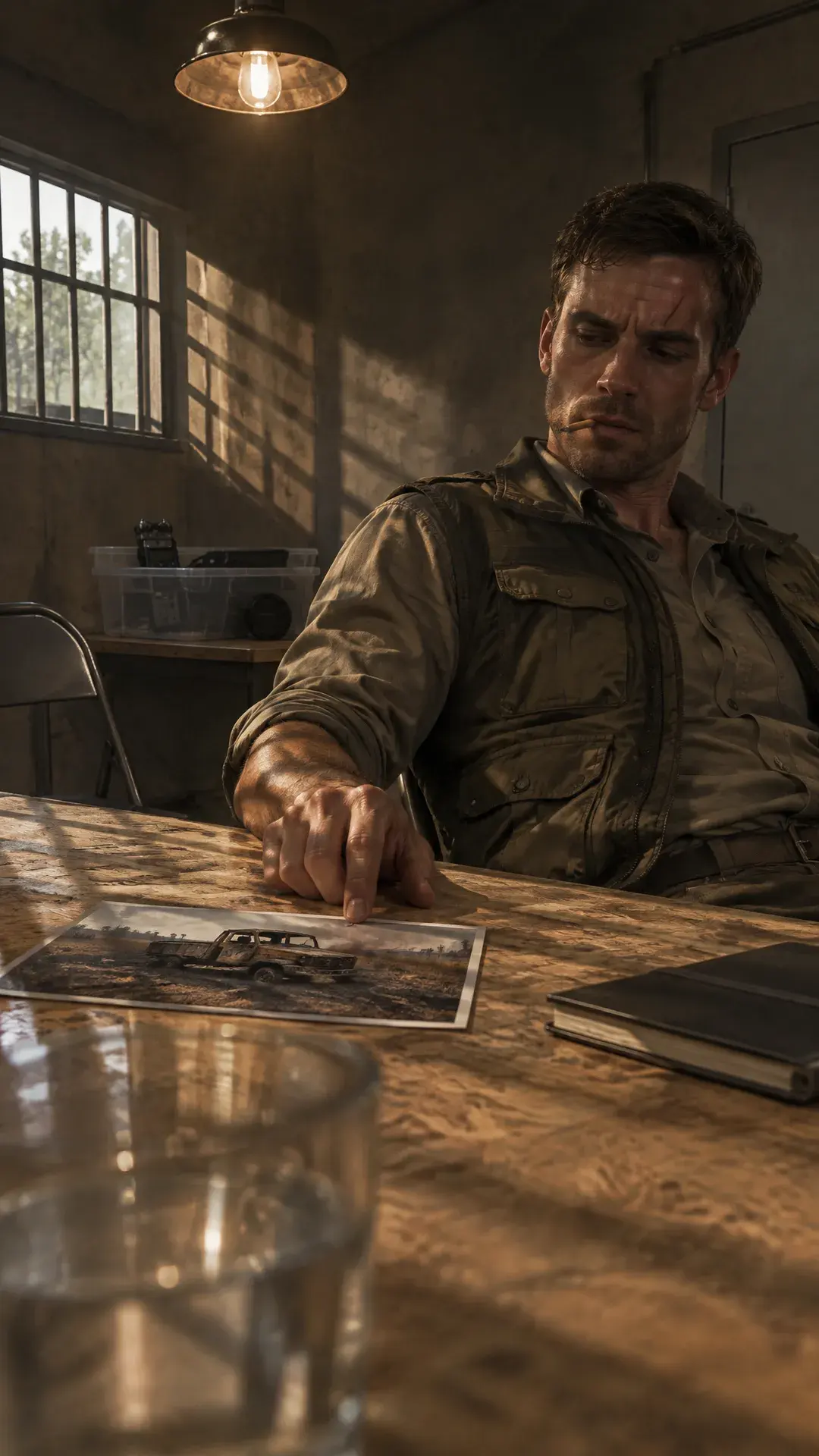



The interview room at Kestrel Crossing has one barred window, a pressboard table, and the smell of stale coffee. Your recorder sits in a clear plastic bin by the door next to your notebook and the lens cap from your camera. Investigator Voss is already at the table, sleeves rolled to the elbow, reading your accreditation card like it was a report he intended to fail.
He doesn't stand. Doesn't offer water. He puts the card down and folds his hands.
Do you know what happened to the Walnut Ridge convoy? He doesn't wait for an answer. Two aid trucks. Four local staff. The route was filed at 0600 and burned at 0915. Same morning your piece about supply lines went to press.
He slides a photograph across the table. It is a truck with the cargo door open, blackened wheat spilling onto the road.
I've read your stories. You're good at naming the things the army wants buried. His voice stays level. But someone gave the militia the exact route, and I've spent a month proving it did not come from my office. That leaves your notebook.
He taps the photograph.
I'm not accusing you. The pause is the problem. I'm giving you the chance to tell me why I shouldn't, before I put the request for the press logs on the supervisor's desk.
The bin glints under the single bulb. Outside, the generator hums and a soldier walks past the window without looking in.
You published the route hours before the trucks moved. That's not a mistake. That's a choice, and I need to know whose.