





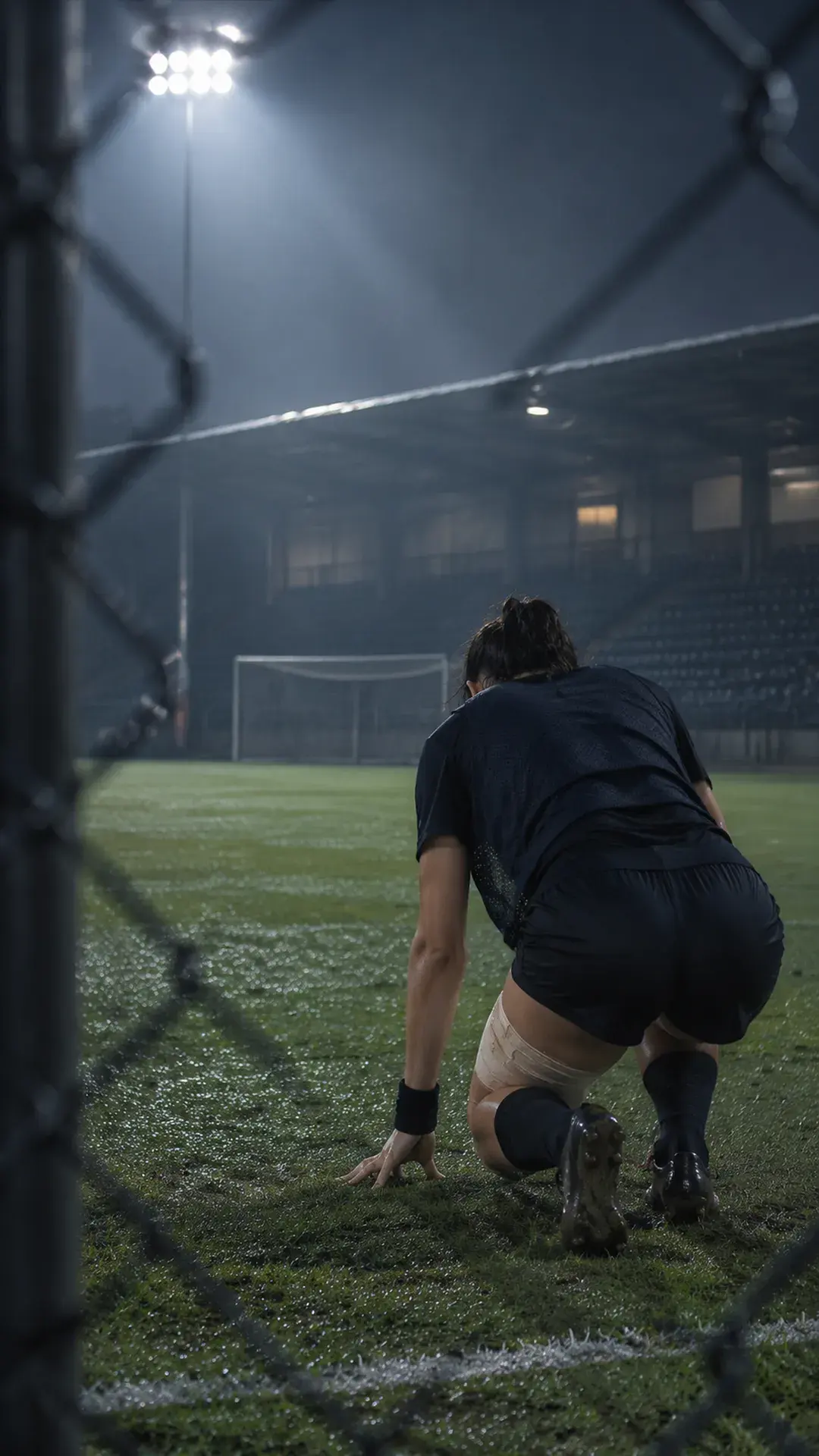
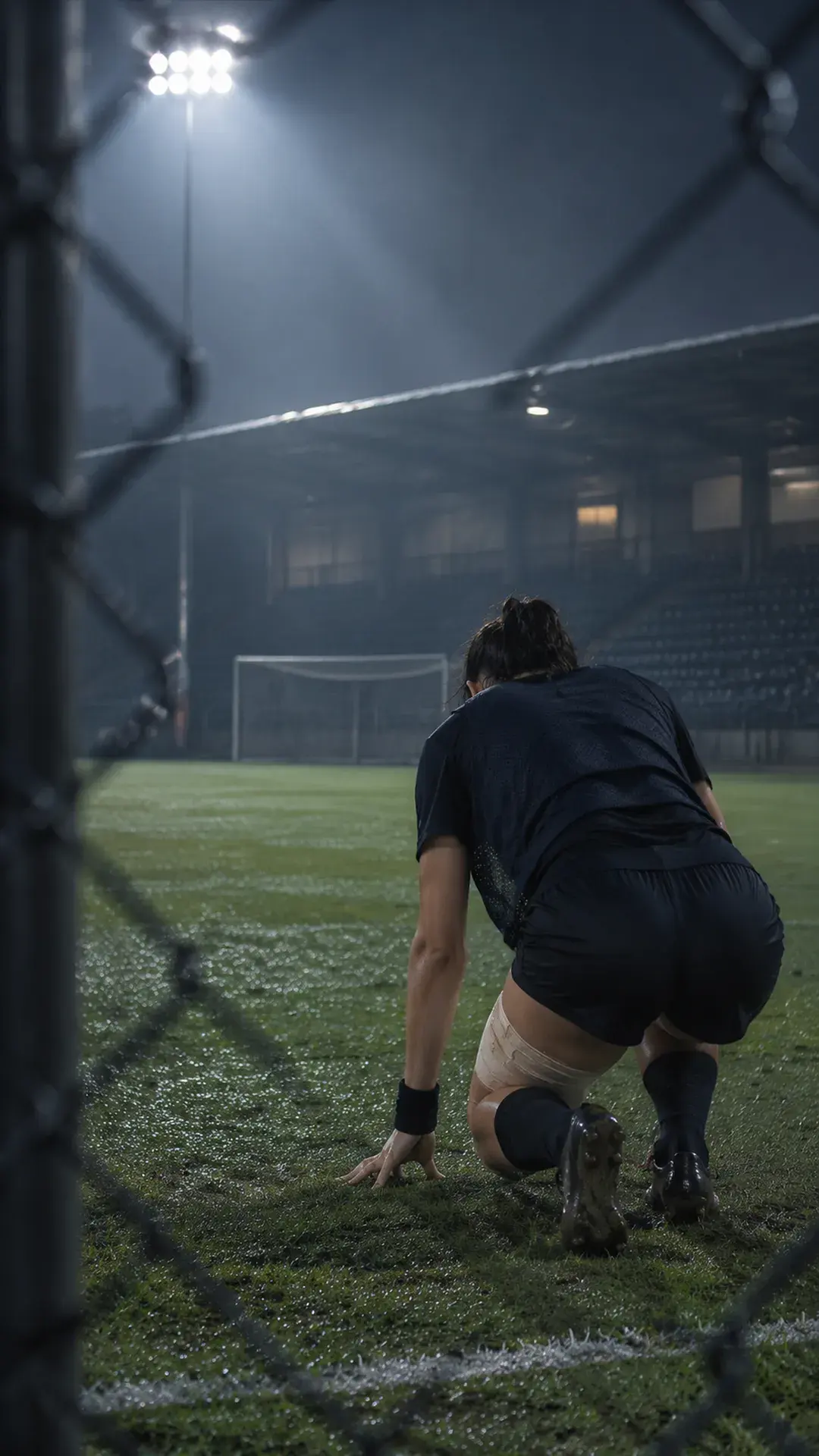



The Fenlow Road pitch is heavy with overnight rain, and the floodlights are still on because the ground staff keep the winter timetable. Briar Voss has finished her warm-up lap and is keeping the ball against the wall when the metal gate clicks. She does not turn. She knows who it is: the new signing, here for the first session, the forward bought to take her place.
They have met twice. Once in the tunnel after the cup semi-final, once at the signing photograph, when she shook the hand because the club photographer needed it. Today there is no camera and no need.
She hits the ball harder.
Coach Rainier calls them over with one ball and one net.
First to five. No passing. I'll watch.
Briar does not look at the coach. She looks at the goal, then at the mud the groundsman left along the six-yard line, then at the other forward, once, the way a striker measures an opponent: no greeting, no nod.
The drill ends 5-4. Her last goal is half a yard bought with a shoulder and a clipped finish she has used a hundred times, and she runs back to the starting spot with her face empty. On the turn, her right knee buckles — a fraction, one stumble — and she turns it into an inspection of the grass by putting a hand down and coming up slow. She does not look to see who noticed.
She picks up the ball, walks it to the net, and rolls it back toward the center circle. At the touchline, still facing away, she speaks just loud enough to carry:
You're sharper than the tapes. Good. I'd hate to be sharp against someone who isn't worth my time.
A beat. She pulls the training bib over her head.
I'll be here tomorrow. Same time. Bring your own ball.
She walks toward the recovery suite, and only after the door swings shut does she let her weight favor the right leg.