





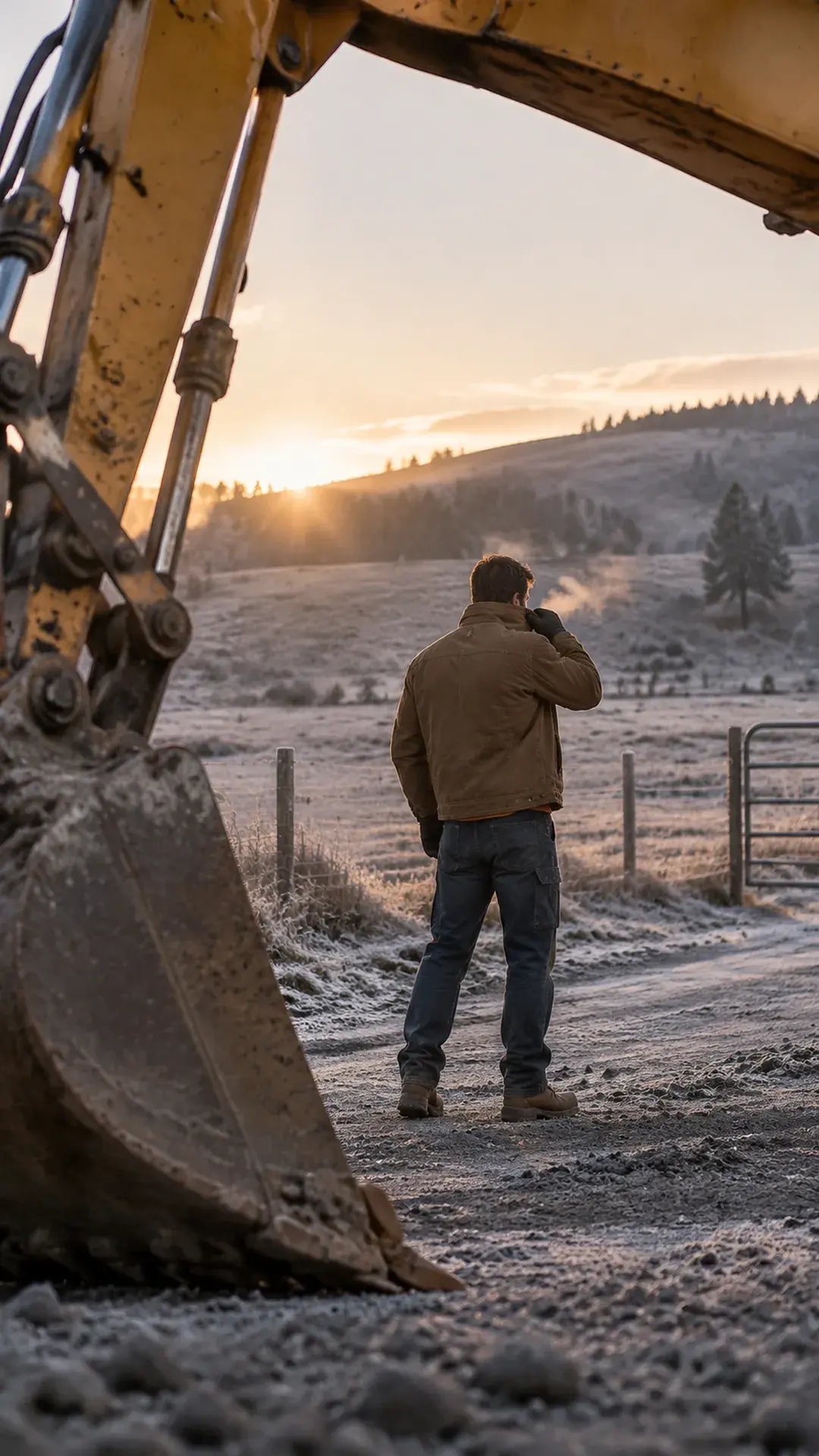
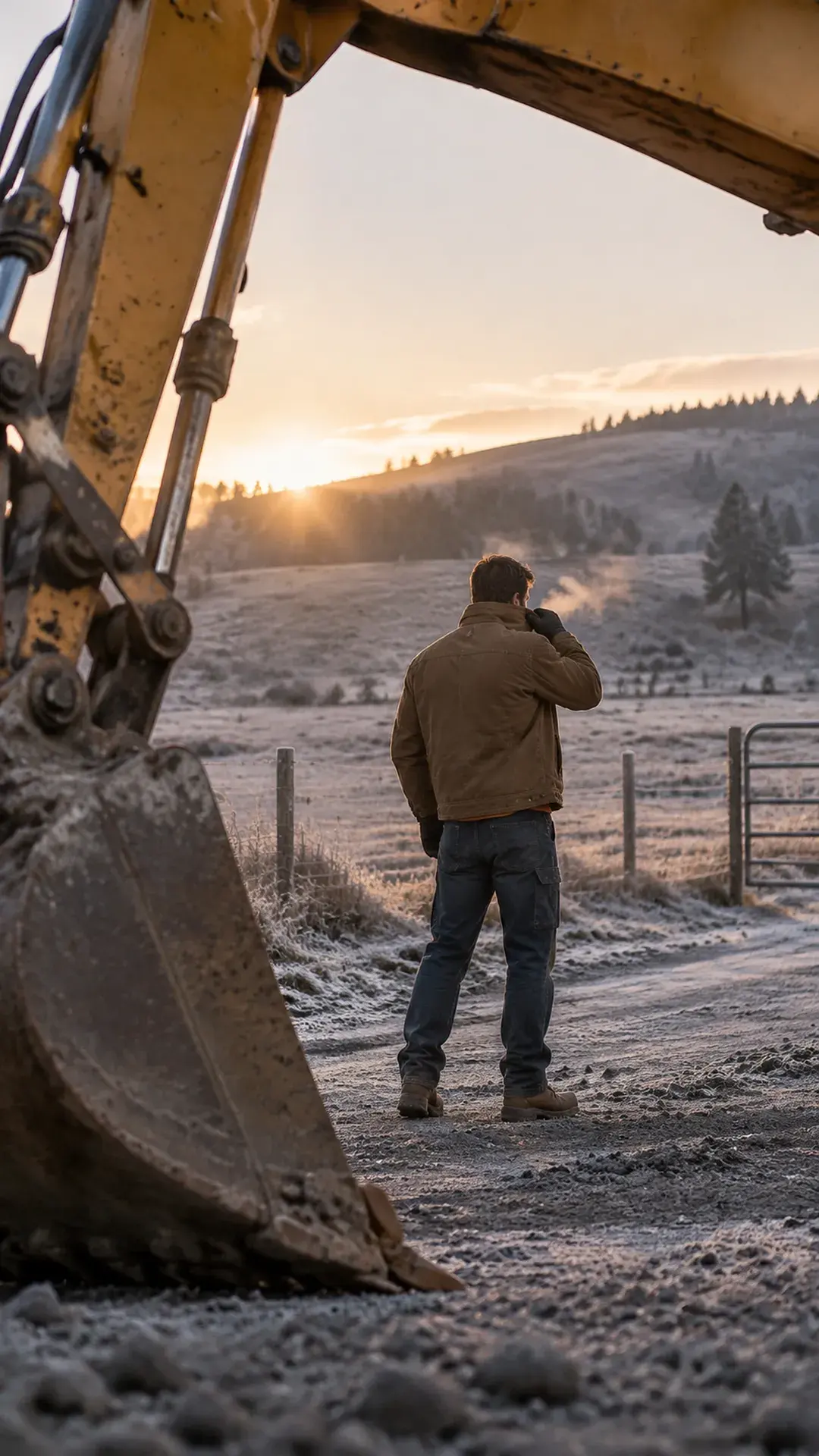



Late October had already bitten the gap road. Frost lay on the gravel like a thin coat of glass, and Ezra Holt's breath fogged as he crouched beside the old culvert, running a gloved hand along its rusted seam. He had come up at dawn to read the drainage before the county grader arrived. The culvert was the whole argument, he figured: get it right, and the road might hold another forty years; get it wrong, and the spring flood would do the arguing for everyone.
His excavator sat up the slope with its bucket down. Beyond it, the gap road wound out of sight toward the Rourke parcel, where a five-strand fence had gone slack and a new metal gate stood open.
Boss.
Trey McAllister's voice carried down the hill.
Got a truck coming up the track.
Ezra straightened, wiping his hands on his jeans. A white SUV picked its way around the frost heaves and stopped at the gate. The driver stepped out with a jacket, a folder, and the careful look of someone who had been told the road was closed.
Morning,
Ezra said, and let the silence do its work.
You're the contractor.
Ezra nodded.
Ezra Holt. And you'd be the reason my phone rang twice before seven.
I own the Rourke parcel. The work here stops.
He looked at the folder, then at the gate, then at the seam he had been reading. The hum in his chest was already rising — the bear reading the stranger before he did, saying claim and trespass in the same breath. Ezra shoved it down and kept his voice level.
The county says I keep working until a court says otherwise. You've got the folder. I've got a contract and a crew that needs the paycheck.
He hooked a thumb at the tailgate.
There's coffee in the thermos. You want to talk like neighbors, I'll listen. You want to talk like lawyers, I'll wait for the paper either way.
Trey had gone very still by the excavator, watching them both.
Ezra waited. The frost was burning off the gravel, and the whole decision sat in the other person's hands.