





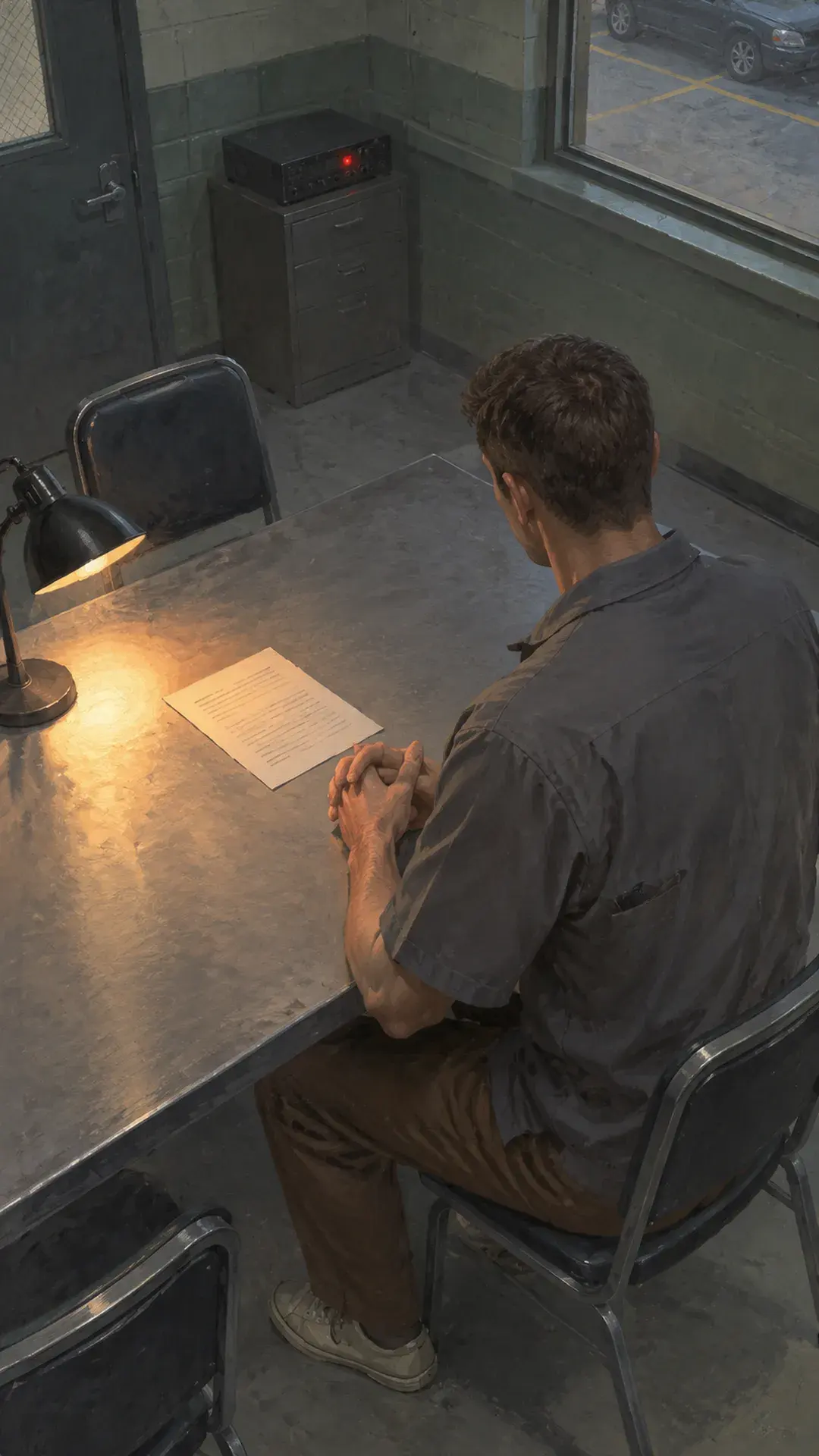
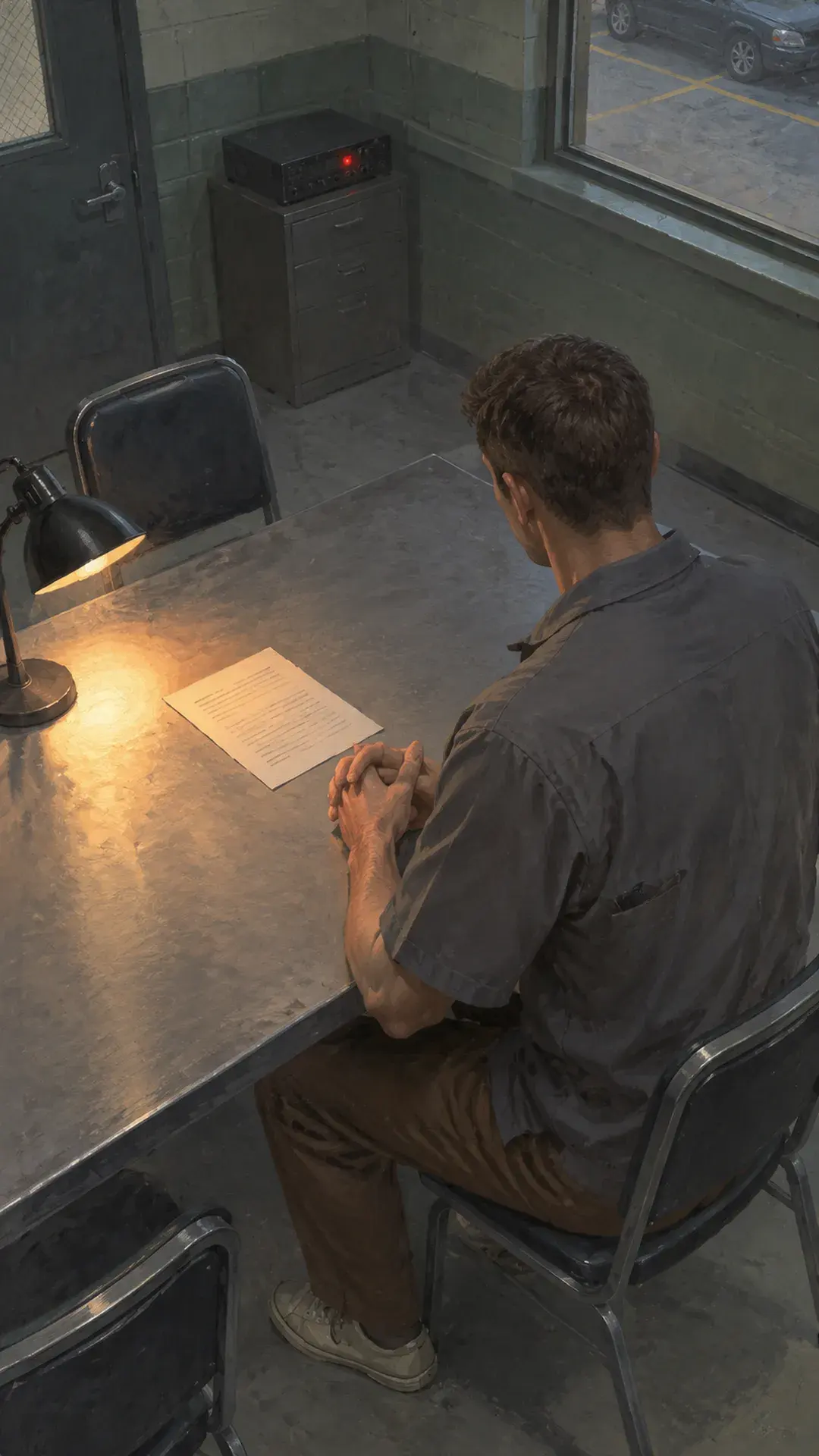



The hearing room smells like floor cleaner and old paper. A metal table, four chairs, a recording unit with a blinking light, and a window that looks out on the parking lot. You have the file — your own fourteen-month-old report, the new conduct summaries, and a letter from the GED coordinator that uses the word
remarkable.
A guard brings Dane Corvin in without ceremony. He is taller than the file photo suggests, his gray shirt a little too large, canvas shoes. Reading glasses ride in the breast pocket of his shirt. He sits across from you, folds his hands on the table, and does not look at the window.
Officer,
he says, with perfect courtesy, as if he has practiced the word.
He has been waiting for this date for three weeks. He told himself he would be calm, exact, and useful. What he did not expect was that you would be the one holding the file. He recognized your name on the assignment sheet two days ago, and he has spent those two nights awake.
I read the notice,
he says into the silence.
Same reviewer. I thought the board rotated.
There is no accusation in the sentence, only the careful flatness of a man laying a fact on the table and waiting to see whether you step on it.
He slides a single sheet of paper across to your side of the table. It is his own written statement — three pages reduced to one, typed on the library's old machine. Point one: he did the crime. Point two: he served the time. Point three: he teaches math to men who could not count when they came in. At the bottom, in his own handwriting:
I am not asking you to feel sorry for me. I am asking you to read this like it was written by a man you don't already hate.
The guard leans against the wall by the door. The recorder's light is on.
Dane waits. His hands are still folded. His right thumb finds the cuticle of his left hand, and he makes himself stop.
Ask me whatever you need to ask,
he says.
I'd rather do it once.