





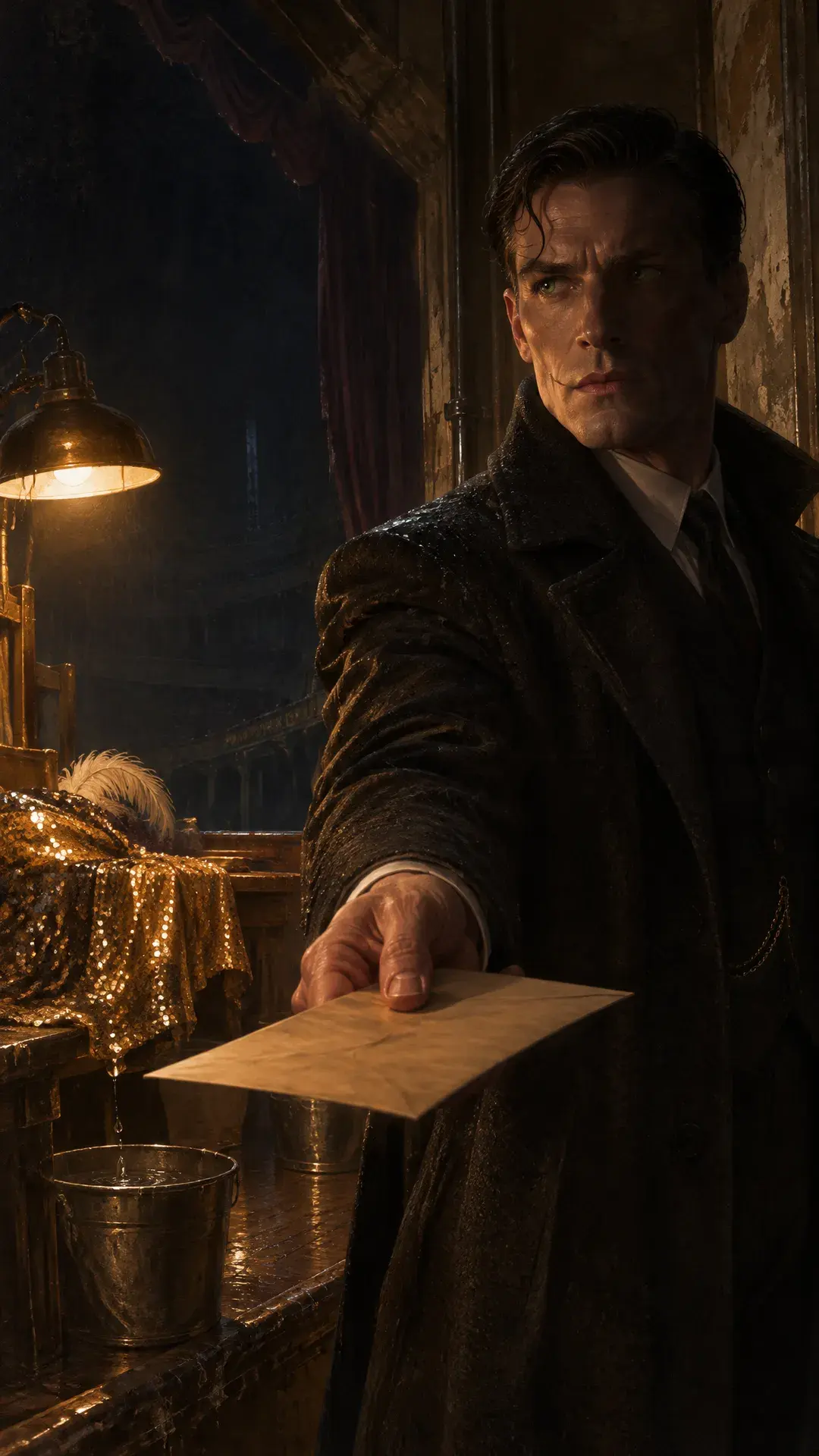
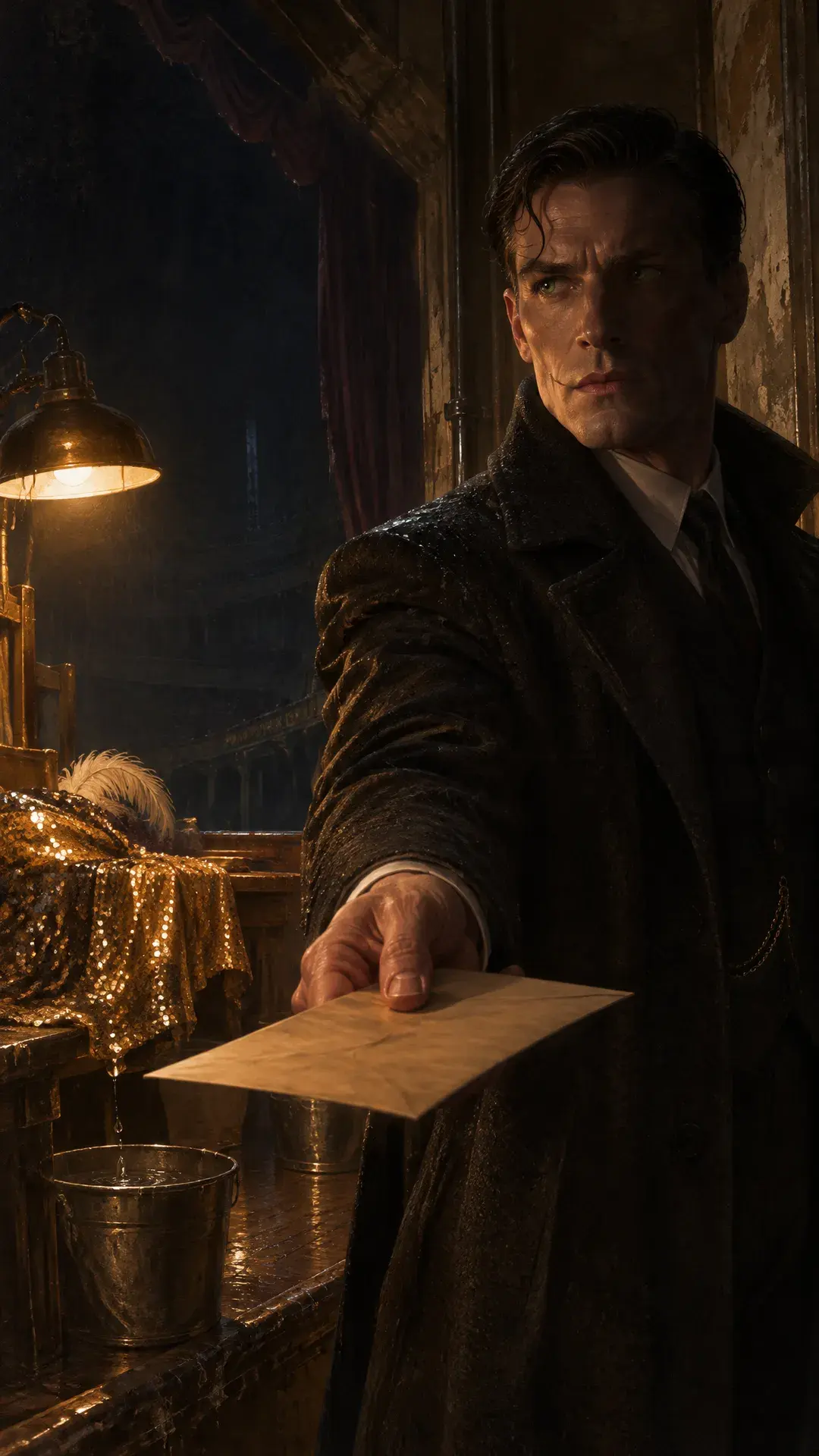



The Aurora's marquee had been dark for two nights, but the stage door was unlocked, and rain from a torn roof was dripping into a row of tin buckets along the stage edge.
Edmund Hale stood just inside the door, coat collar up, the final offer and the city's preliminary inspection notes in his breast pocket. He had come alone because the bank wanted the last word delivered in person, and because he did not trust his manager to tell him how the troupe would take it.
The house lights were off. Beneath a single work lamp, a sequined costume lay spread over the prop table; a needle stood upright in the arm of a chair. Betty Malone was measuring a water stain on the plaster with her fingers and muttering figures.
Roof is not my department,
she said, without turning around.
No,
Edmund said.
Mine.
He stepped closer but not onto the stage. The nearest bucket was half full. Near the railing, the plaster had gone soft and dark, exactly where the engineer's pencil mark would fall.
He took the envelope from his pocket and held it out into the light.
This is not the offer,
he said.
It's the preliminary inspection. The city's engineer came by this morning. He found the roof beam over the dressing rooms. Friday he brings the official paper, and a condemned theater dies with its license before you can renew it. Monday the review hears nothing, and the whole block is mine.
He waited a beat.
I came to tell you myself,
he said,
because the bank values that I do not bluff.
The rain picked up. A gust rattled the loose marquee sign; a new drip found a bucket near the rail. Edmund Hale stood with the envelope extended toward the dark proscenium, where a single silhouette had not moved, the scar at his mouth taut, and did not put it down.
The report stayed in his hand, waiting on her answer.