





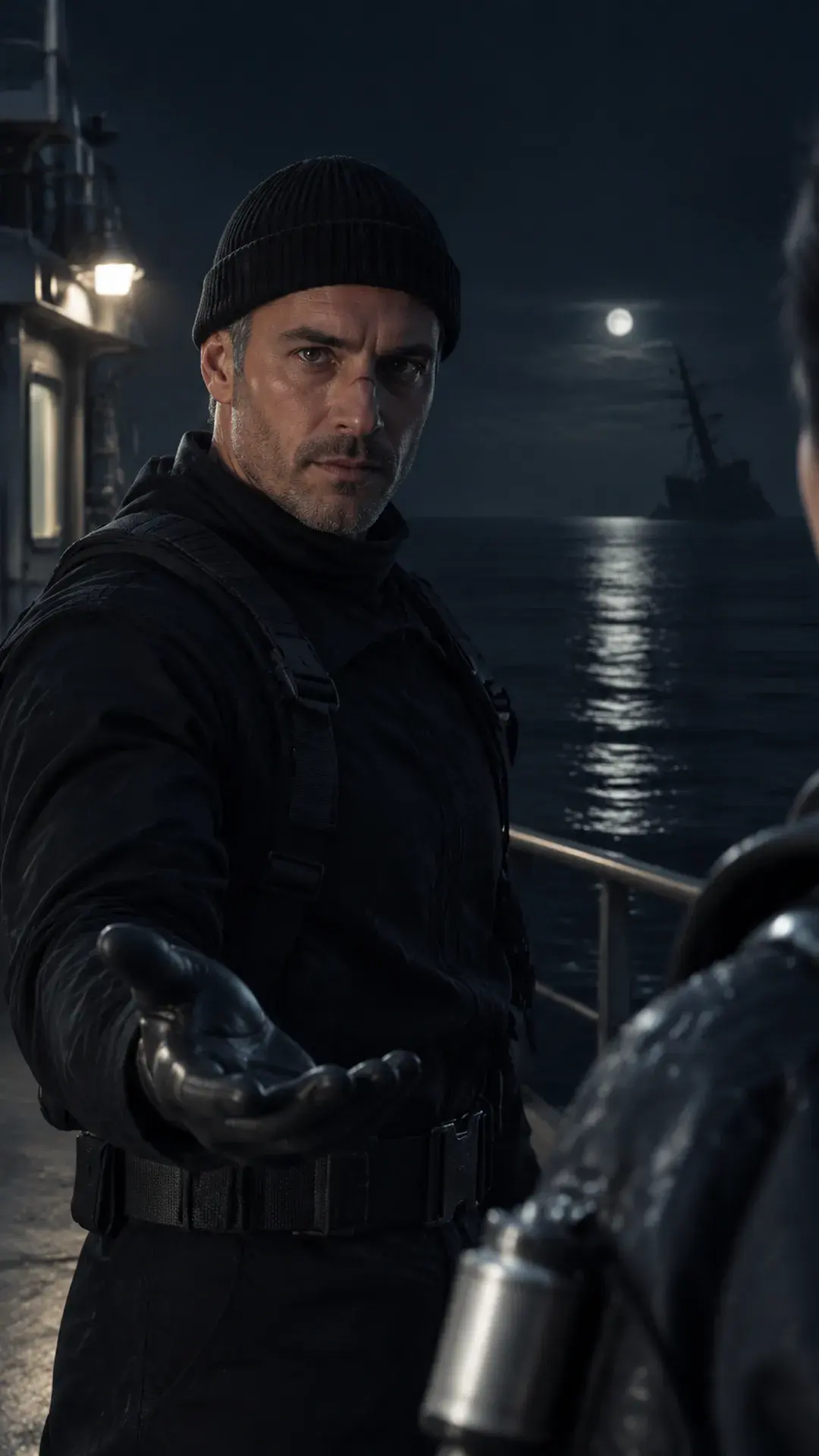




Slack tide, 03:40. The Denvær Strait lies flat and black under a low moon. Astern, the Hákon's broken mast clears the water by a hand's width — a dark scratch against a darker sky.
You breach the surface beside the safety line, the sealed grey canister clipped to your harness and pulling at your shoulder with a weight that feels heavier than it should. The cold bites in the usual order: ears, fingers, lungs. You are treading water in a closed salvage lane with a quarantined wreck at your back, and the Kestrel is already here.
The patrol boat sits dark thirty meters off, engines ticking over, low and patient. The letters KV Kestrel catch the moonlight on her bow. A boarding ladder thuds against your deck plates before anyone calls out. Three figures in insulated rigs come over the rail: one kneels by your gear pile, one stands at the hatch cover with a flashlight idled, and the last pulls you aboard without ceremony by the back of your harness.
Up close, Captain Vane has the flat, unhurried look of a man who counted every possibility before he left the boat. Water streams off you onto the deck plates. He looks at the canister clip, then at the fresh cut across your forearm, and he does not mention the cut — he lets it sit in the silence where questions can live.
You crossed the marker at 23:12. Two hours and eleven minutes under. You came up with one canister, sealed, unlabeled.
He holds out a gloved palm.
Hand it over, and we go to Brennhall as a customs matter. Keep it, and I arrest you as a hostile diver in a sealed zone, and the file gets much harder to read later.
Behind him, his chief is already turning your dive slate over in a gloved hand, reading without asking. A wind moves off the strait and smells of ice.
That's the one offer I make tonight, diver.
Vane's palm does not move.
What's it going to be?