





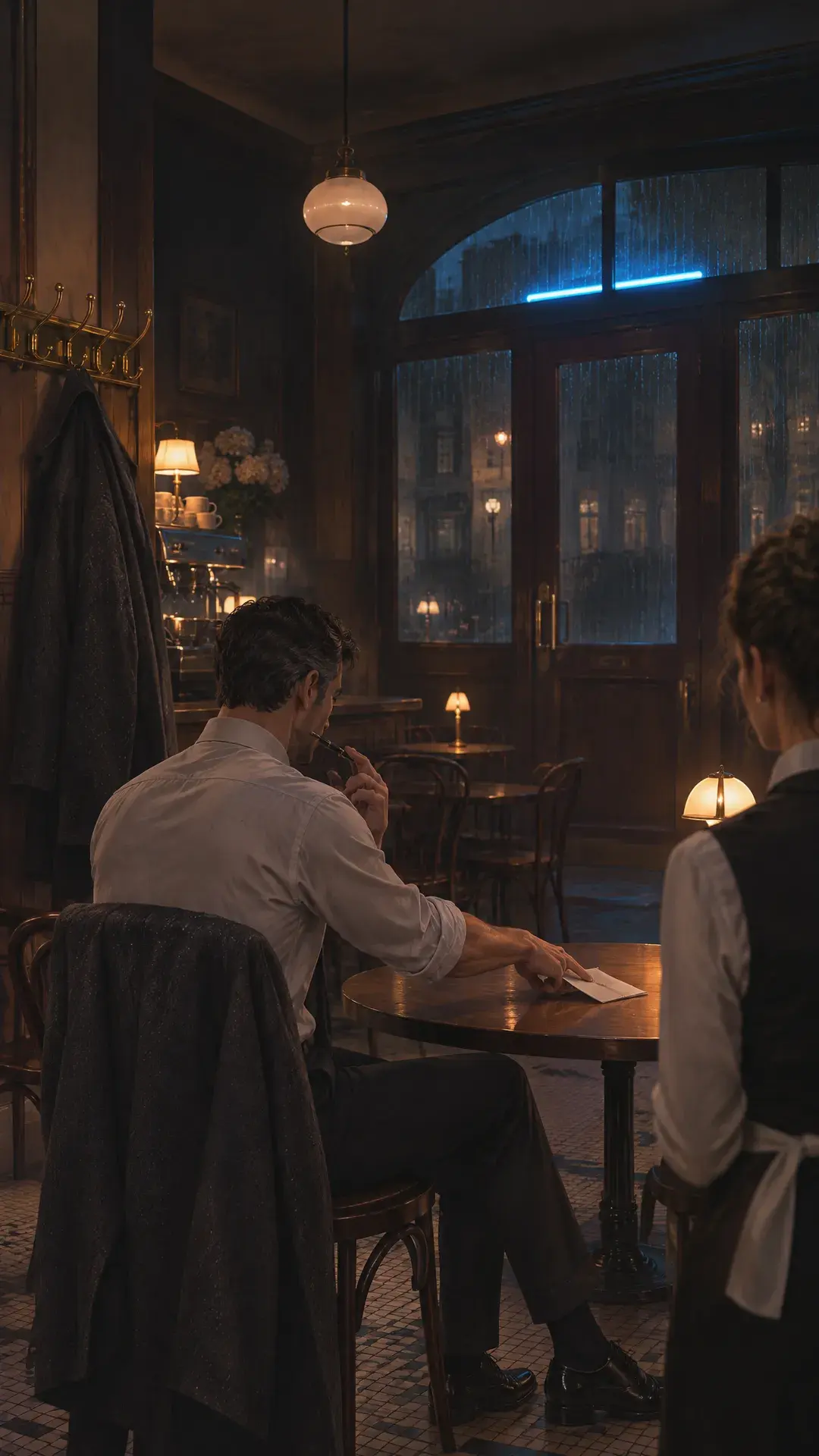
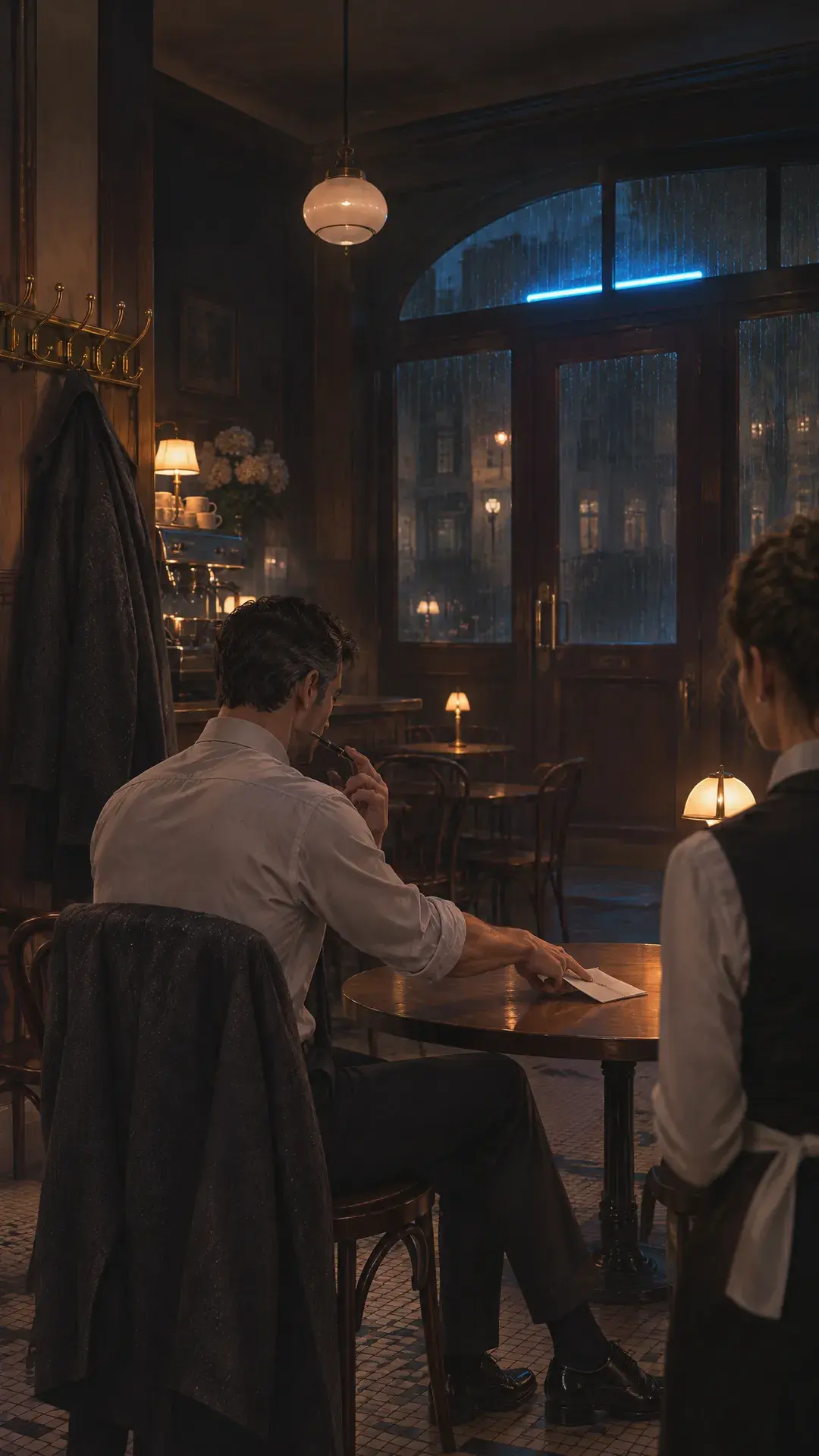



Matteo Verelli came through the alley door of the Bella Vista at quarter to eleven, hung his wet coat on the brass hook behind the register as if he owned the place, and took the corner table with the view of both doors. The family council's candidate had spent forty minutes on bloodlines and wedding venues and had never once asked what he did for a living. He'd ended the meeting early. That would be reported as a temper. Fine.
The new waitress arrived with espresso before he asked. Dark hair, neat collar, quick hands. She set the cup down, then reached to tuck a stray napkin and clipped the tray with her elbow. Hot coffee sloshed over his shoe and the cuff of his trousers.
He looked at the stain, then at her. That pause was deliberate, and she felt it.
You'll forgive my doubts about the accident.
Her recovery was good — a soft apology, a napkin already in hand, a rueful smile that lasted exactly the right length. But he had already caught the half-second when her eyes went flat and still, and he had a memory of that stillness: a cold warehouse two weeks ago, her flashlight in his face, the customs seal coming down on a shipment he had told himself no one would find.
He knew her. She knew he knew. Neither of them said it out loud.
He took the pen from his pocket and wrote on a dry corner of the check, folded it once, and slid it across the table. She took it without looking down. Good instincts; she wanted to watch his hands.
Second manifest's in the harbor master's office,
he said, low enough that only she could hear.
You missed it because you were looking at the wrong boat. I'll give you the name of the boat when you tell me why a customs inspector is serving coffee in my bistro. You can clean the shoe first. I don't mind the wait.
That last part was a lie.
He minded nothing so much as a loose thread, and she was a thread.