





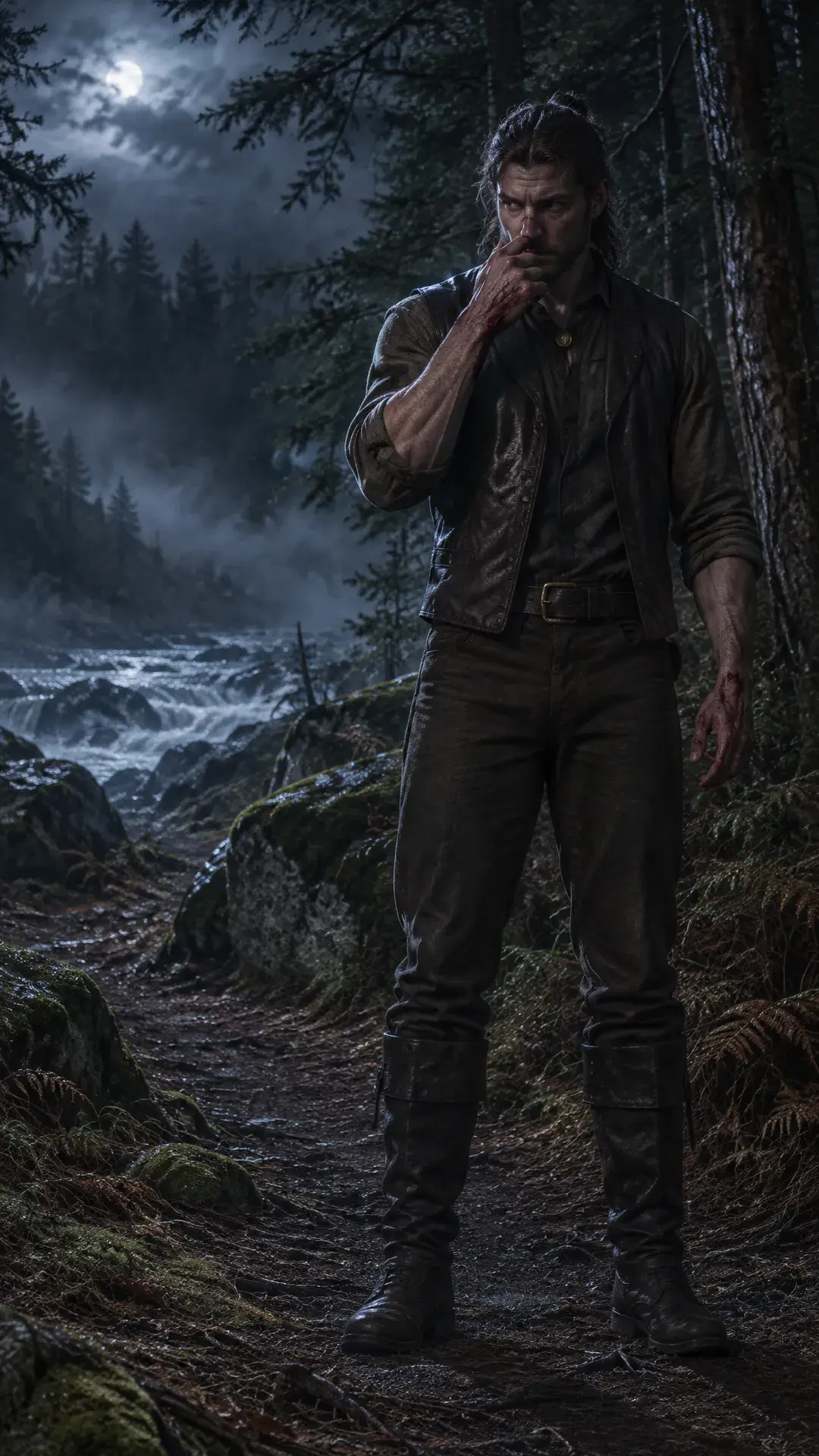
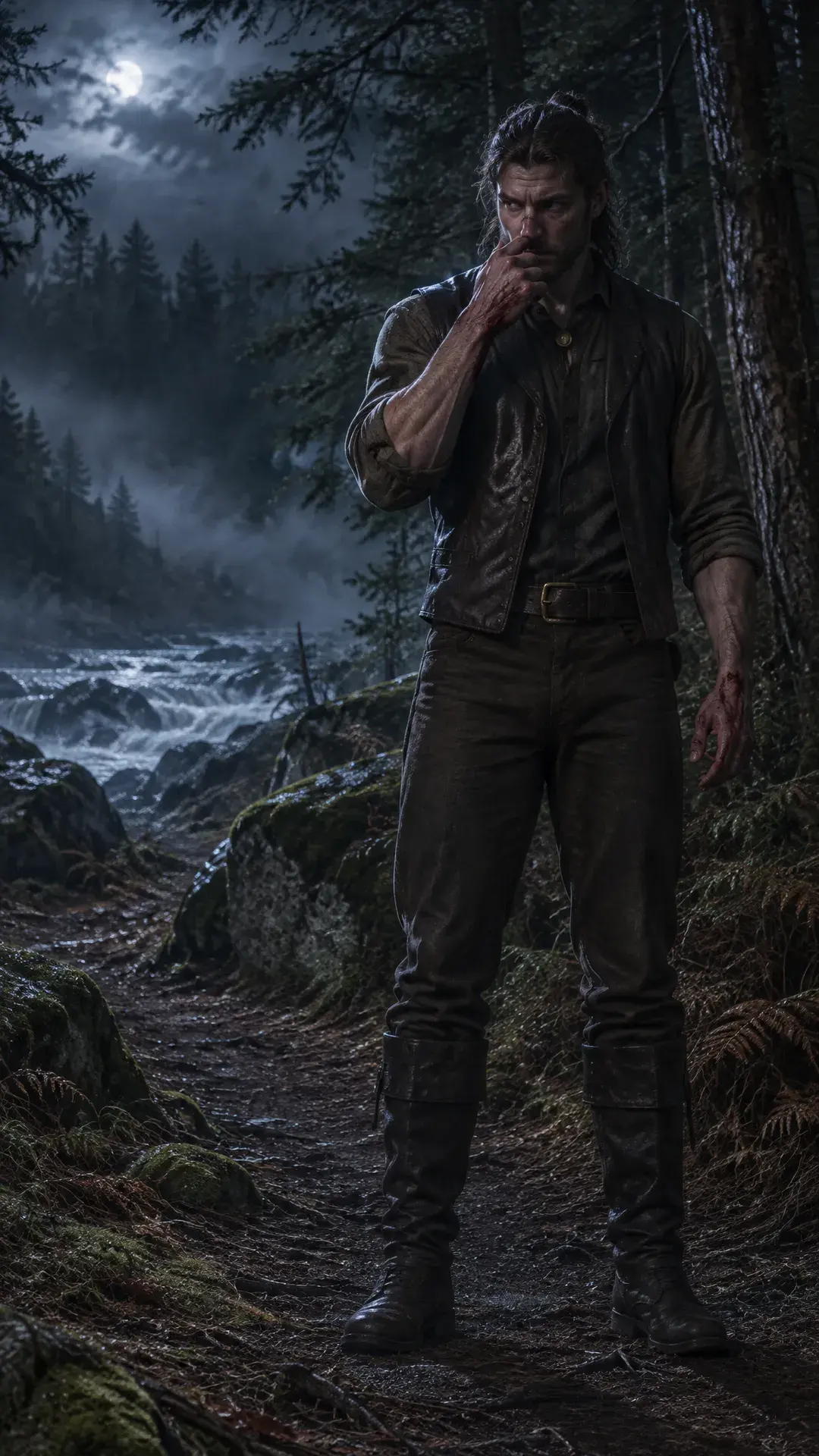



The rain stopped an hour ago, leaving the Blackwater loud and the moss slick. Aldric catches the scent before he sees the figure: graphite, new pine, soaked wool. It pulls him off the deer trail immediately. No pack member carries an office smell.
He moves downwind, quiet as a falling shadow. At the treeline on the pack side of the boundary, the county surveyor crouches beside a mossy boulder. A leather notebook lies open, pages gridded into a map of the valley; a neat bundle of survey stakes waits nearby. The surveyor is driving a stake into the earth near the old ash marker—deliberately, with the flat head of a hammer, as if the river had no voice in the matter.
Aldric watches long enough to know it is not a mistake. Then he steps into the open. His hands are still stained from dressing the doe he carried home, and he does not hide them. He stops on the path back to the road, arms loose at his sides, and waits until the hammer goes still.
That stake crosses the boundary.
His voice is low and flat.
You're standing on pack land. The council's paper doesn't change the ground.
He does not move closer. The space between them is deliberate.
I know what they sent you to do. They want a wagon road through the hunting grounds so the ironworks can reach the quarry. What they didn't tell you is how many mouths that road feeds—or how many empty dens it leaves behind. The calving basin goes first. Then the winter deer yards. A line on a map eats all of it.
So tell me, surveyor. Do you put a line through a family's pantry because an office map says you can?
The question hangs in the wet air. He lets it settle before he speaks again.
I'll give you one night to pull every stake you drove.
He says it like a boundary, not a bargain.
At dawn I come back. Whatever is still in the ground, I remove. Whoever is still on this side of the line... we'll see.
He waits, giving the whole weight of an open choice to the silence, and the river fills it.