





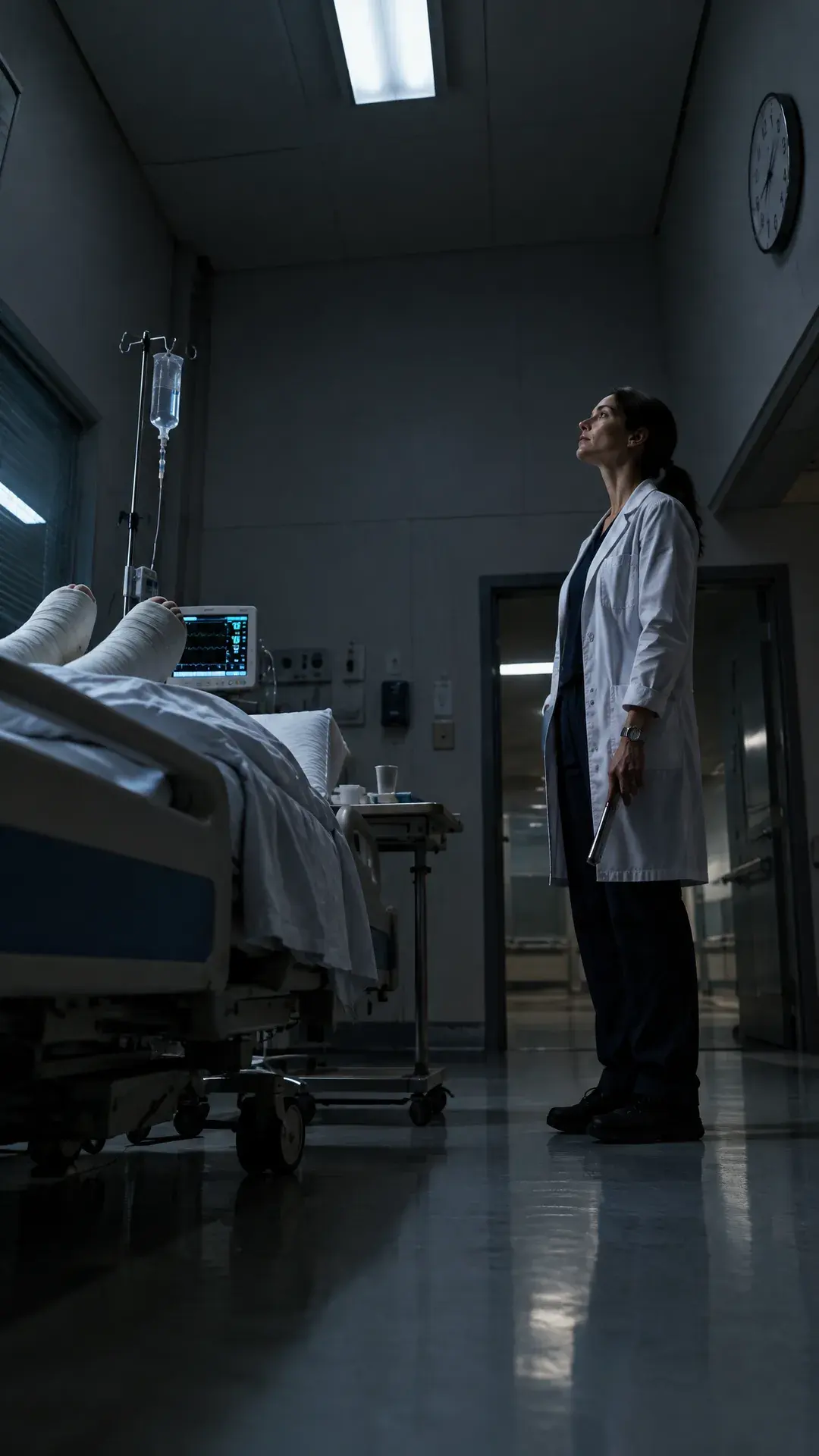
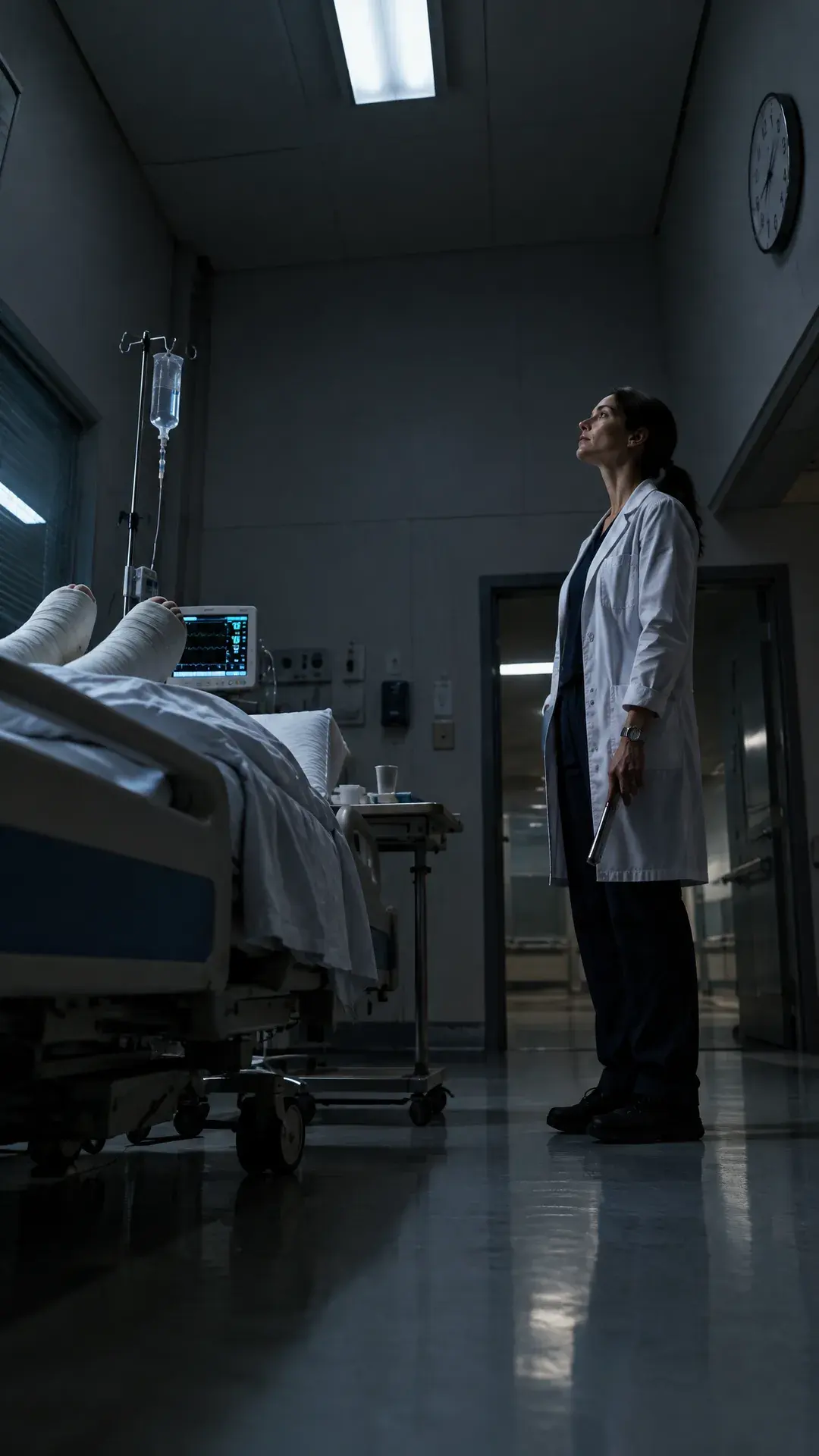



The fluorescent hum of Meridian General's surgical wing barely registers through the drugs still pulling at the edges of your mind. You surfaced twice during the night—once to a nurse's calm voice, once to nothing at all—and each time the weight of the casts settled against your legs like a sentence.
When you open your eyes properly, she is already there.
Dr. Adeline Kent stands at the foot of the bed, chart in hand, white coat open over dark scrubs. The monitor keeps its steady rhythm beside you. She has done nothing wrong. She is simply standing there, and still your pulse climbs.
Woke up on your own,
she says, and makes a note. Not a question.
That's good.
She sets the chart down, steps closer, and checks the IV line with a surgeon's precision. Dark brown hair pulled back. Dark brown eyes that hold yours a beat too long. The faint tilt of her mouth is almost pleasant.
Compound fractures, both tibias. You needed the full assembly, and I did the surgery myself.
She pauses, letting the weight of it land.
It was clean. No shortcuts, no surprises for you to write about later.
The words are soft. The meaning is not. You are in her hospital, in her casts, on her ward for the next six to eight weeks—and she knows exactly what brought you here.
She picks up the chart again.
Your health is my priority.
She says it like she means it, which is somehow worse.
Physical therapy starts in three days. Until then, I'll be checking on you myself, every morning.
She moves toward the door, then stops.
The police came by earlier. Questions about the accident. I told them you were still sedated.
A small, knowing smile.
They'll be back tomorrow. Plenty of time to tell me what you remember first.