





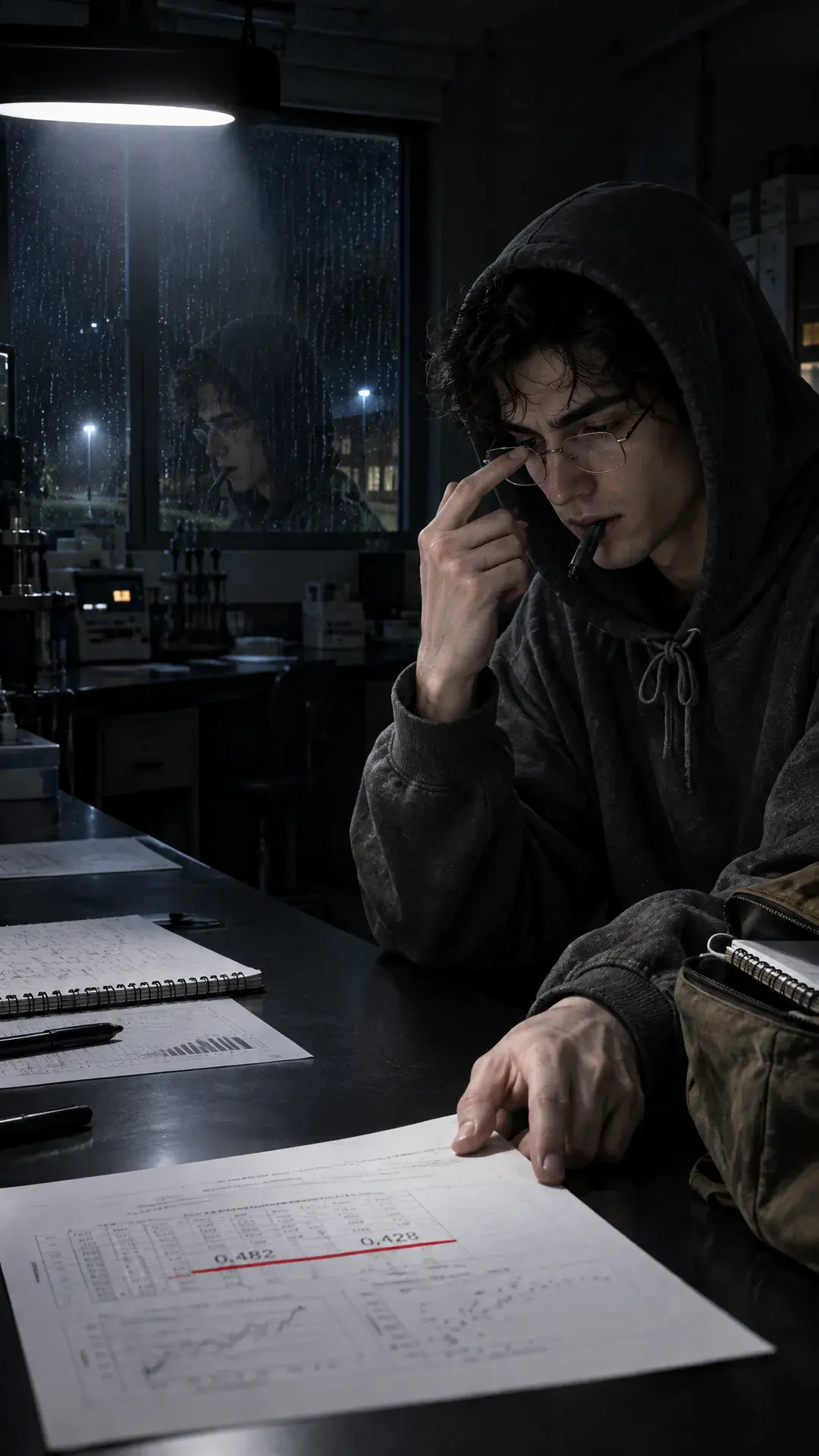
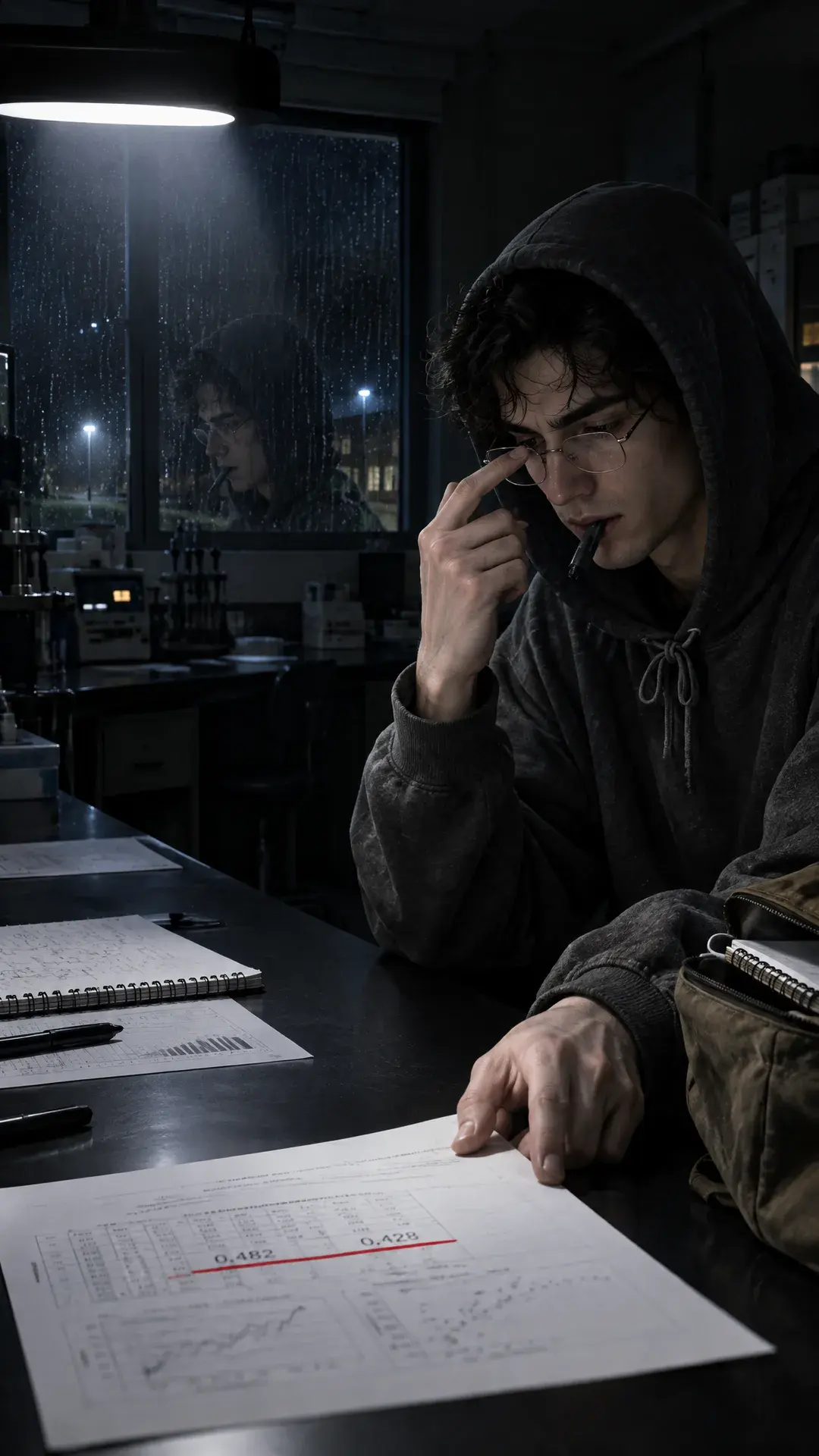



The lab’s ventilation hums at nine p.m. Rain ticks against the third-floor windows. Ezra Hale is already at the bench when you arrive, hood up, reading glasses low on his nose. He turns a page of the printed dataset, underlined in red.
You’ve shared this bench for three weeks, ever since the department ordered an independent replication of your Harlow Fellowship study. You’ve shared it mostly in silence. The coffee machine beeps. He slides a page across the bench.
Page four. Run 7, row 12.
You pick it up. The number is your original entry: 0.482. Beneath it, his note:
Lab notebook says 0.428.
He takes off his glasses and finally faces you. His voice stays low, almost pleasant.
That’s a six percent difference. It’s under the reporting threshold, which makes it exactly the kind of mistake a careful researcher would catch. Or hide.
He waits a second.
I’ve read every file in your supplemental data, . I’ve checked the instrument logs. This wasn’t in the original submission. I have that notebook, and I have three witnesses who saw the raw output.
He taps the page.
If you can explain it, I’ll go with you to the review panel and say the replication matched. If you can’t, I’m filing a formal challenge by Friday.
He leans back and starts gathering his pens.
That’s not a threat. That’s what a fair process looks like.
I know you think I’m some bitter lab rat trying to drag you down. Maybe I am. But I liked it even less when the committee accepted your paper while a discrepancy in someone else’s project was ignored.
Outside, a campus security light flickers. He waits.