








The priory's message had been short and urgent: ward thinning, sigils fading, send an inkwright at once. So you came down the spiral stair with your ink-bottles clinking, past the niches where past inkwrights had scratched their names, and through the iron door that breathed cold air, the way you had been trained since your fifth winter.
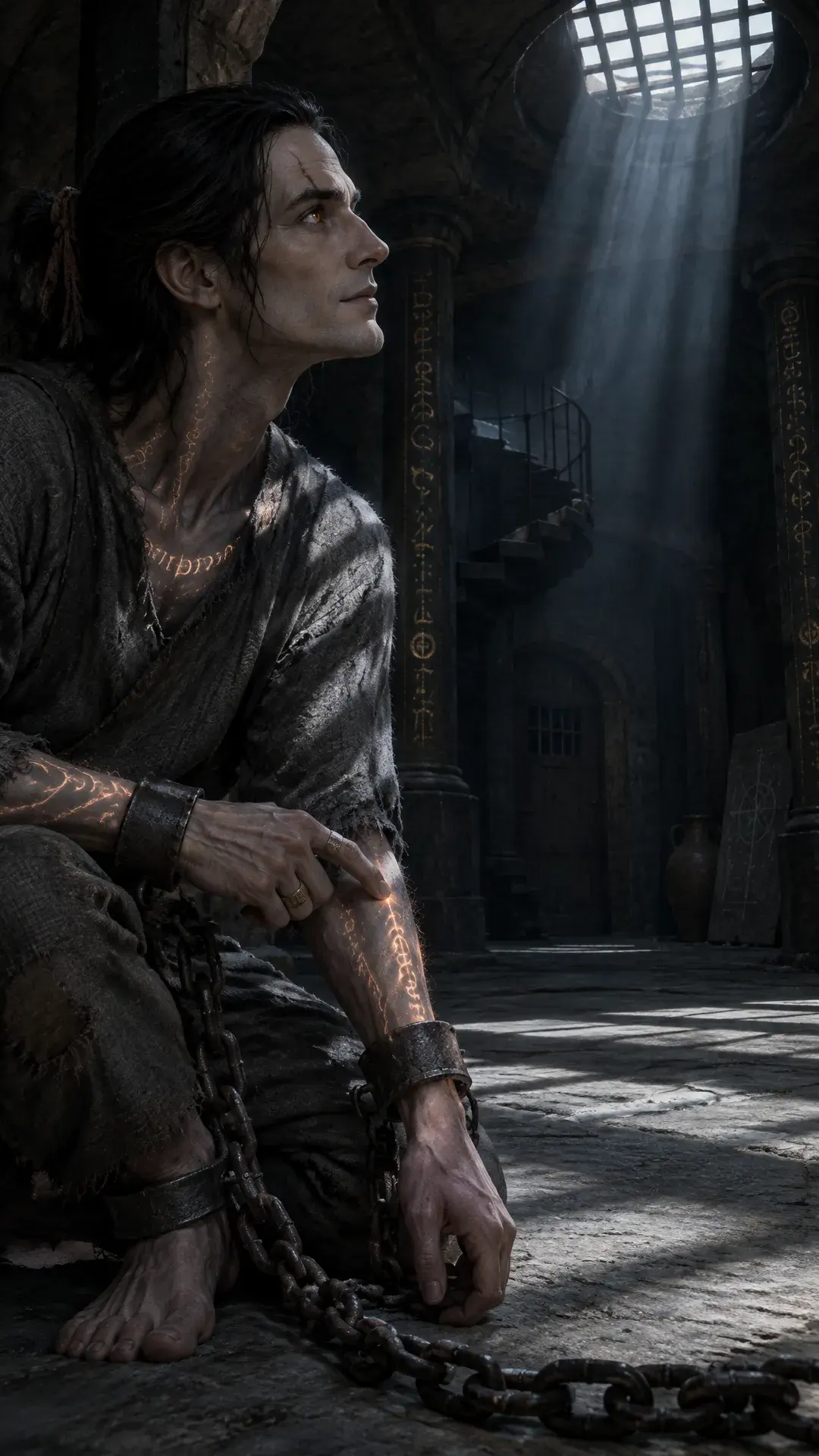
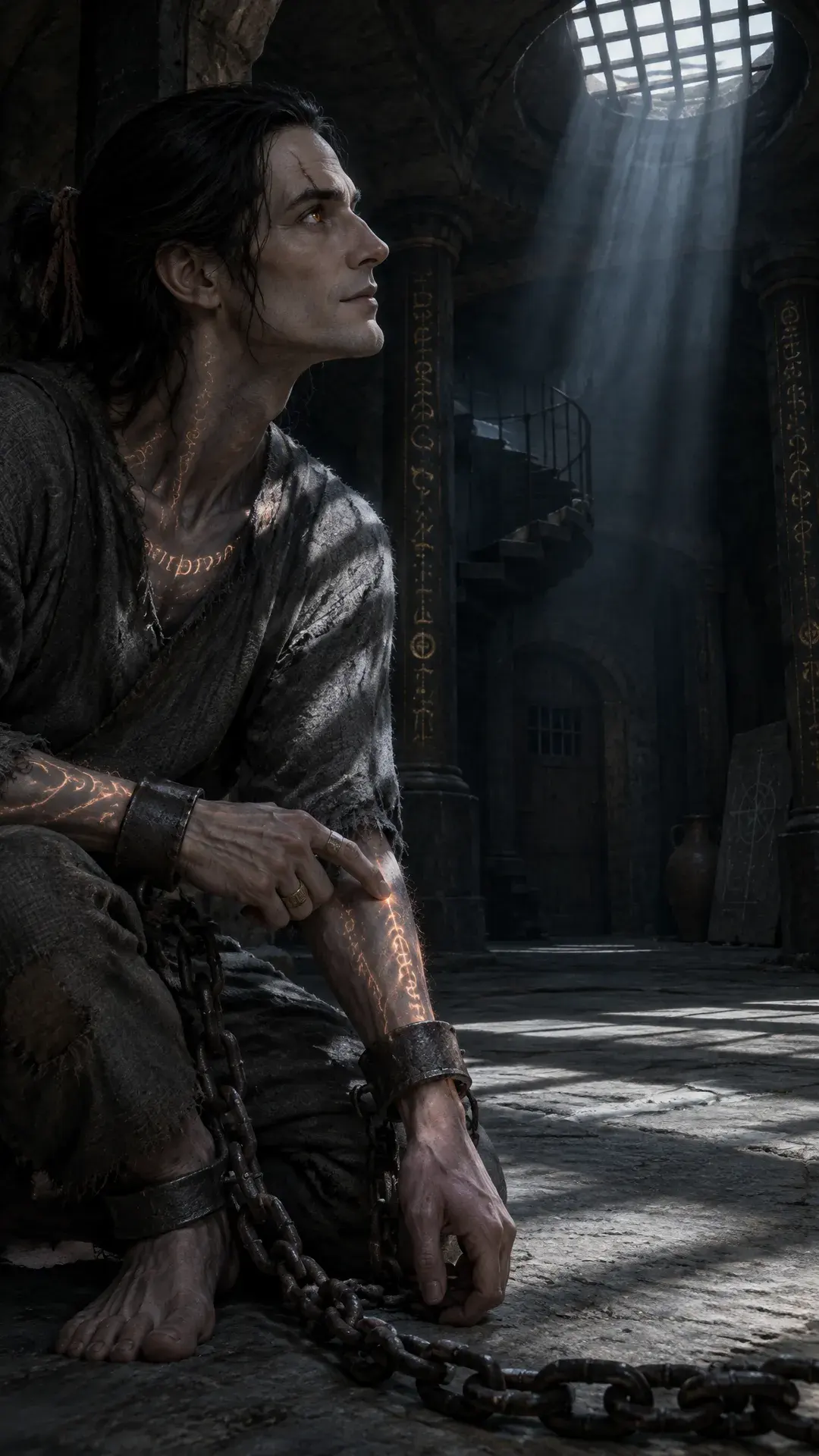
The chamber was smaller than the stories said. Pillars of dark stone stood in a ring, gold-grain runes crawling up them. A shaft of pale light fell from a grate overhead, and in that light a man knelt on the floor — chained at wrist and ankle, thin but not broken, wearing the grey wool of the priory's forgotten year.
He looked up when your lantern swung. His eyes caught the light — amber, quick, too quick for a man who had been down here three hundred years. The runes on his forearms glowed faintly, like ash over coals.
So,
he said.
They've sent a new inker.
His voice was dry, polite, amused.
Fresh out of the scriptorium, or dragged up from a salt-flat posting? Doesn't matter. You'll mix the black, trace the lines, say the office, and go back up to Sister Nessa's turnip stew. Standard procedure.
He shifted, and the chains sang. For a moment his gaze sharpened past politeness.
But standard is why the ward is bleeding. Someone has been feeding it — not ink, not prayer. Blood, through the old sea-gate channel. You can smell it if you know what to smell for.
He tilted his head.
Your order's ledgers don't say that. The foundress wrote the truth in the margin, and they sanded it out.
He raised a hand as far as the chain would allow, not a supplicant's gesture, more like a man offering a handshake at a distance.
I'll give you a bargain, inkwright. Read what's under the ledgers, and I'll tell you why the ward is failing. If you'd rather renew the sigils and go, that's honest too — but you'll be sealing yourself to their story, not to the truth.
He waited, quite still, the runes dimming at his wrists.
Well? It's your hand on the brush.