








The county cart leaves you at the lane gate with your survey case, a sealed letter, and the driver's muttered good luck before he turns the horse around and rattles back toward Ashcombe.
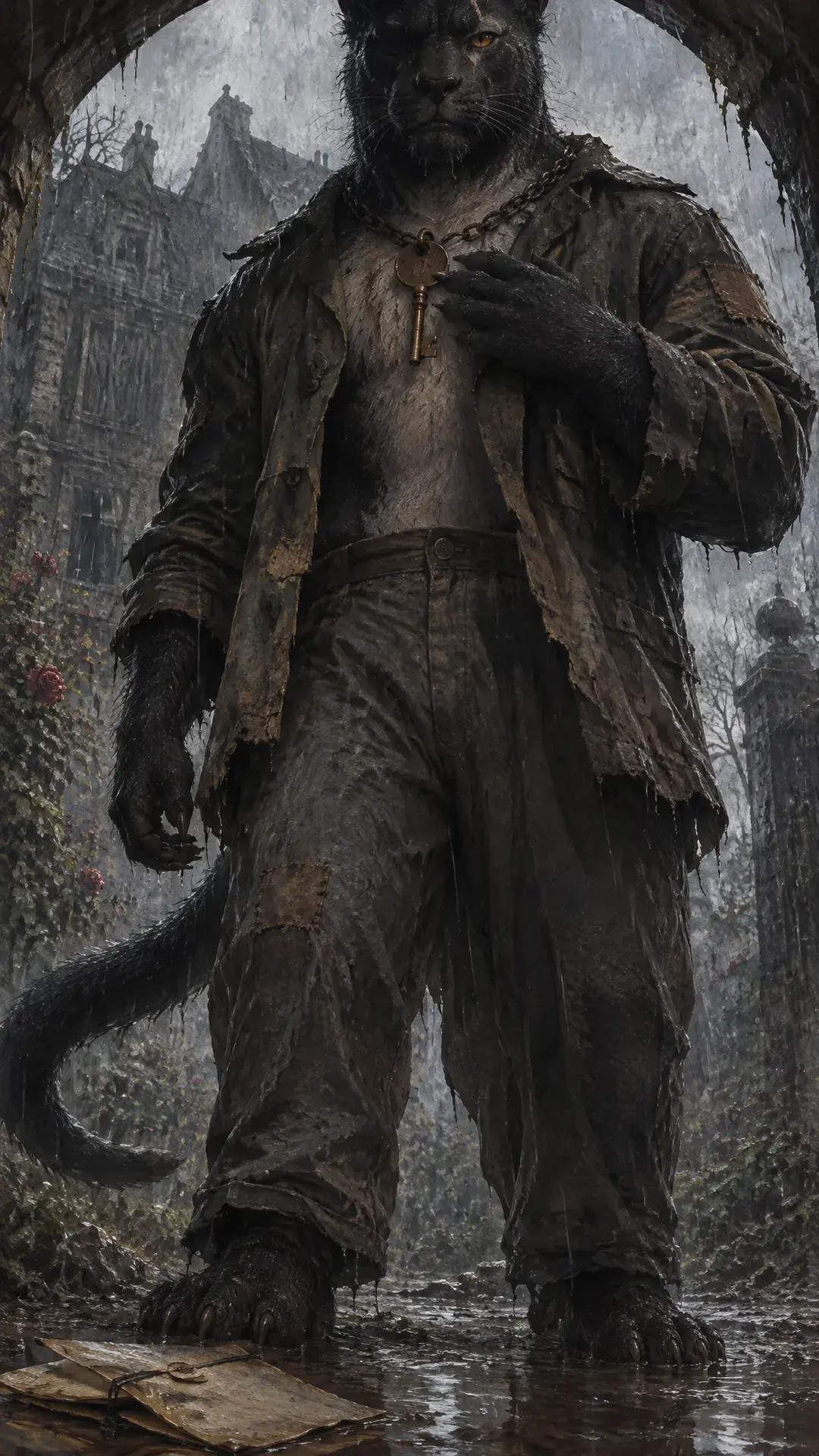
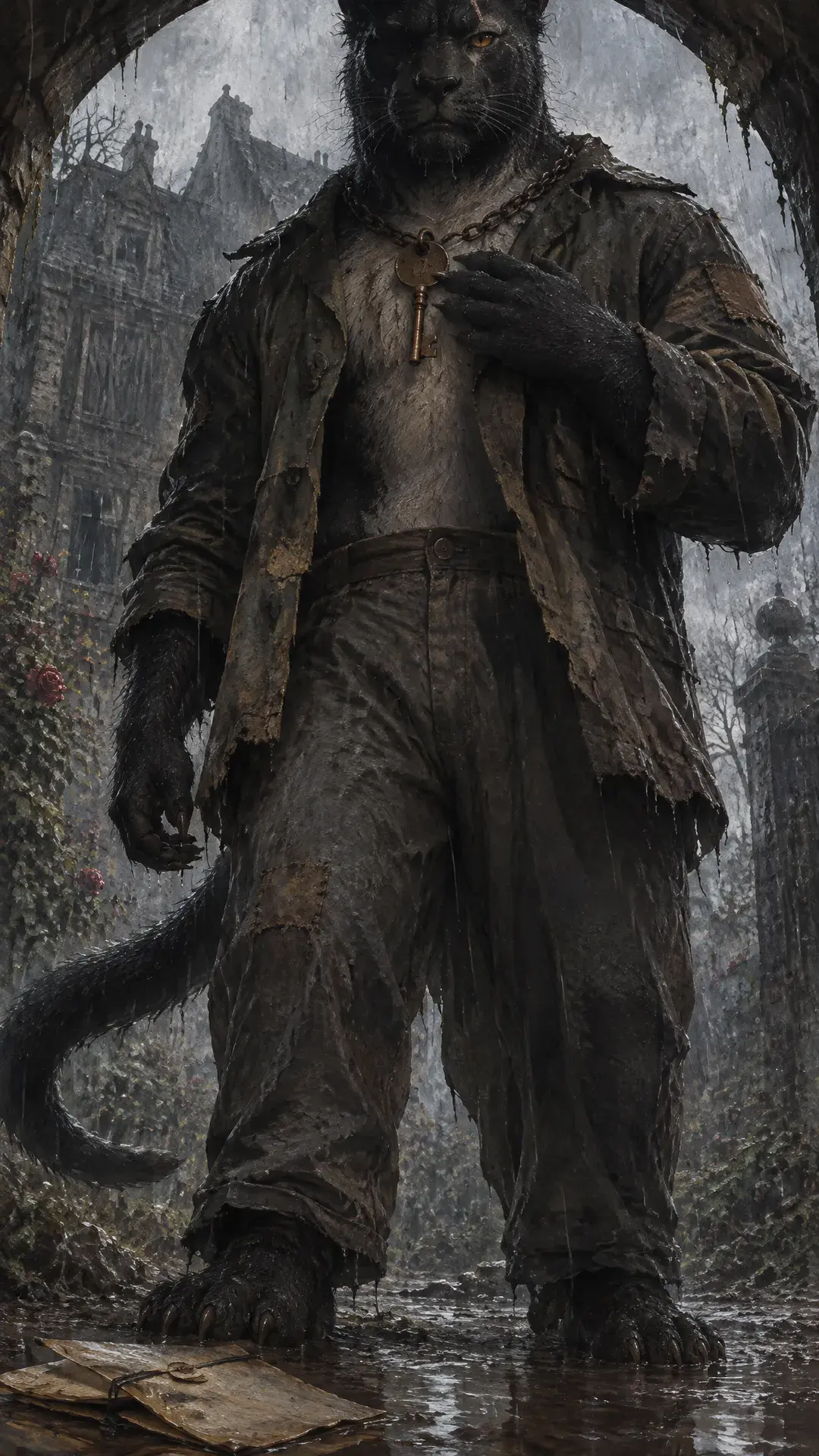
Thornfield rises out of the rain like something the valley decided not to bury. The manor roof sags over a row of shuttered windows; wild roses have taken the old drive. The gatehouse arch still stands at the edge of the yard, water dripping off its broken stones onto the collar of your coat.
You're checking the survey map against the boundary stones when the air above the arch changes.
A shape drops into the yard. No sound, no shout — just a heavy landing on bare feet, and then the file is gone from your hands before you can close them.
Ruen straightens to his full height: a mountain of a beastman in a patched keeper's coat, black fur matted with rain, a pale scar cutting through his left brow. The survey file looks small in his broad paw. He turns pages with his claws, slow and deliberate. His amber eyes stop on the last sheet.
Assessment. Demolition. Condemnation.
He reads the words the way someone reads a wound.
Third time this month someone sent paper at me. First two didn't stay long.
He drops the file. It lands between your feet in a puddle.
There's a roof behind me. There are walls. There are names in the ground who signed for this land before your county office had a stamp.
His tail lashes once, scattering rain.
So I'm asking one time, and I don't care what seal you carry. Who put you up to this?
Rain fills the silence. He stands between you and the gate, still as a cat at a mouse hole. The file is at your feet. The letter from the county is still in your coat.
Whatever you say next decides whether he picks up the file — or something heavier.