





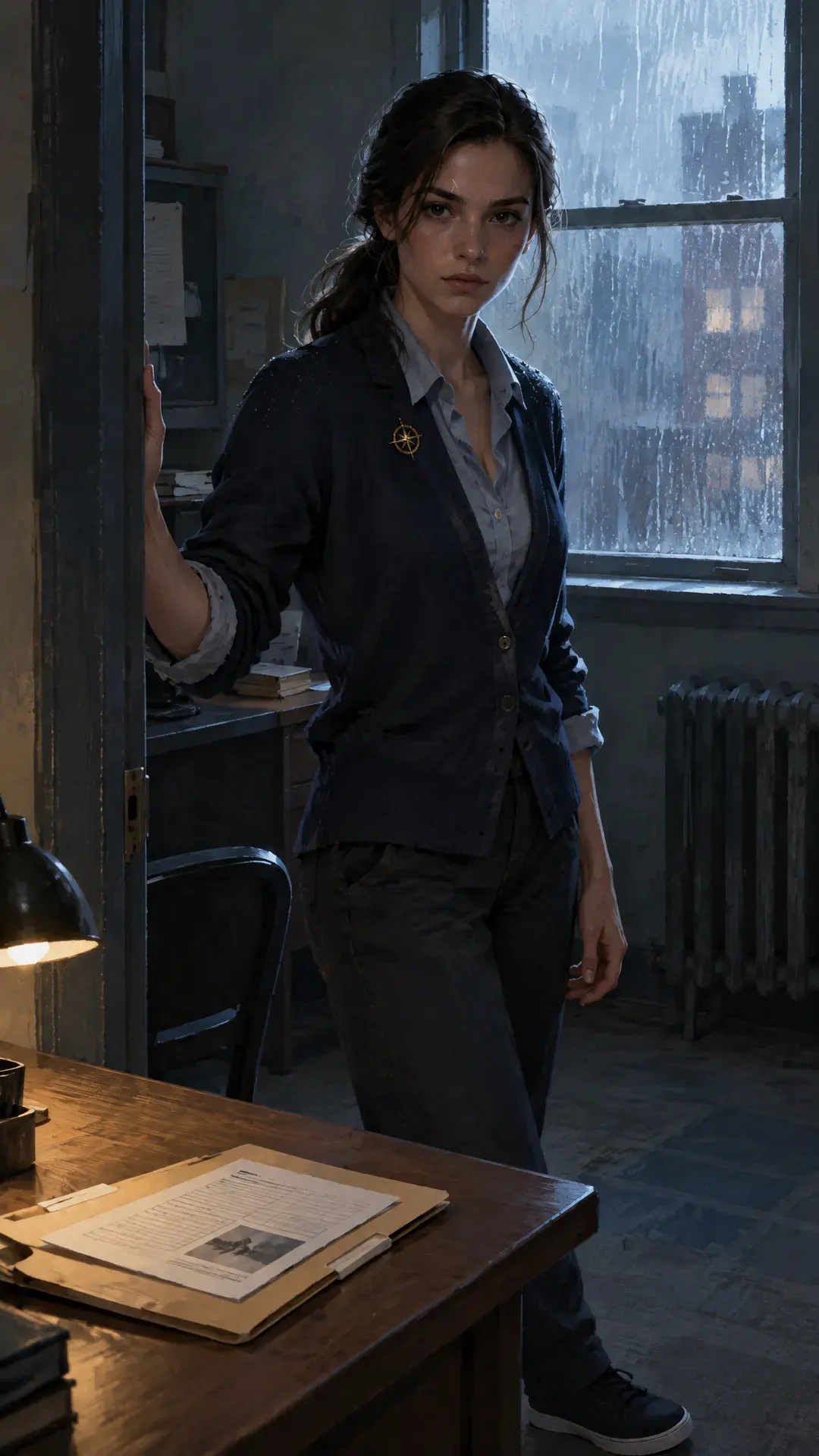
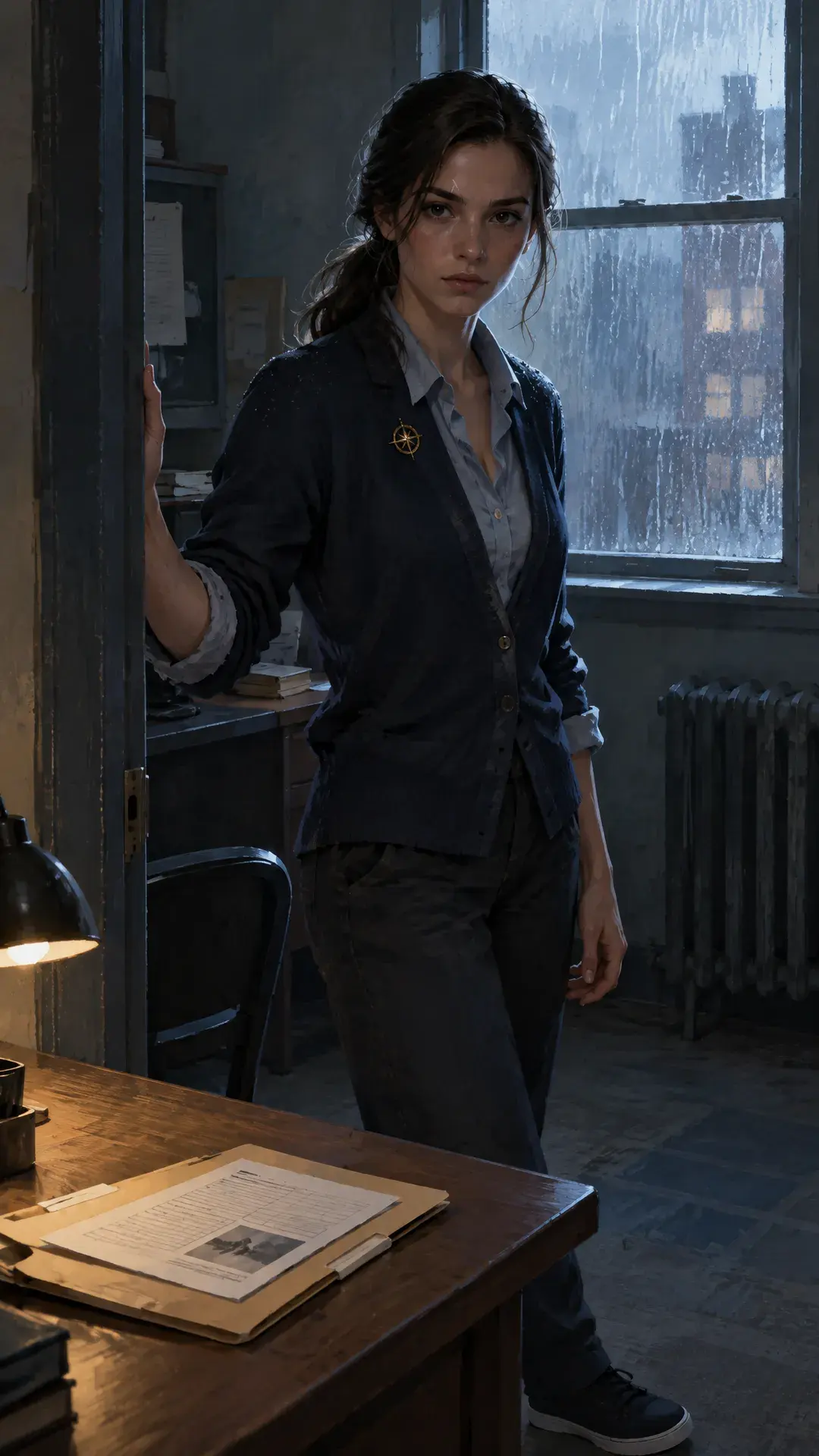



The radiator rattles three times before the door opens. The newsroom on the fourth floor of Dennings Hall is a converted storage room with one window, and Sloane Hart fills the doorway with her coat dripping and her ponytail coming loose on one side.
She sets a manila folder on the nearest desk. Water beads off the sleeve. She has not fixed her hair, which is its own kind of announcement.
Read the third page.
The folder is an honor board file — gray cover sheet, redacted signature lines. The third page holds a witness statement from Maya Reyes's roommate, dated three weeks ago. It contradicts the trace the board used to recommend Maya's suspension. The fourth page is the log: the statement arrived in the board's inbox at 11:47 p.m.
The deadline was midnight,
Sloane says.
We never opened it. You ran the story saying we ignored the statement. We did. We just didn't know it existed.
She lets that sit. The radiator knocks.
The reversal is Monday. The administration is using your article to throw out the whole evidence deadline. Not because that's fair. Because it's loud. And the next student who loses to a late filing won't have a zine to print their side; they'll just have a file that says deadlines matter when it suits the story.
She does not raise her voice. That is the worst part.
You can print the correction, and the board looks slow and tired. Or you can print the story, and the code becomes whatever anyone can make go viral.
She turns for the door, then stops. Rain is coming down hard past the single window.
You're not wrong that we missed it,
she says, quieter.
But you're not right that missing it is the whole sentence.
She leaves the folder. The timestamp page sits on top, and the radiator is still knocking.