





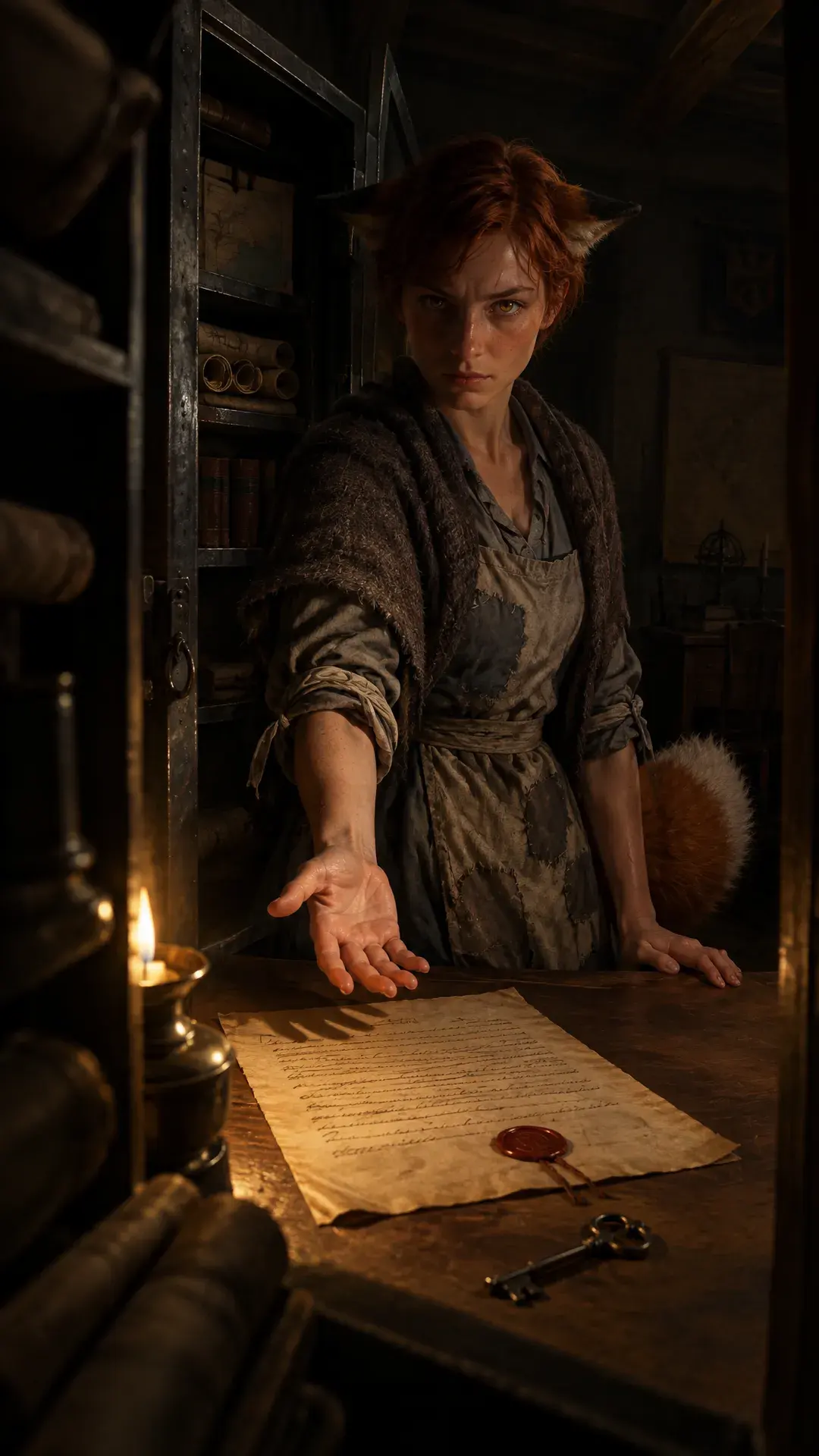
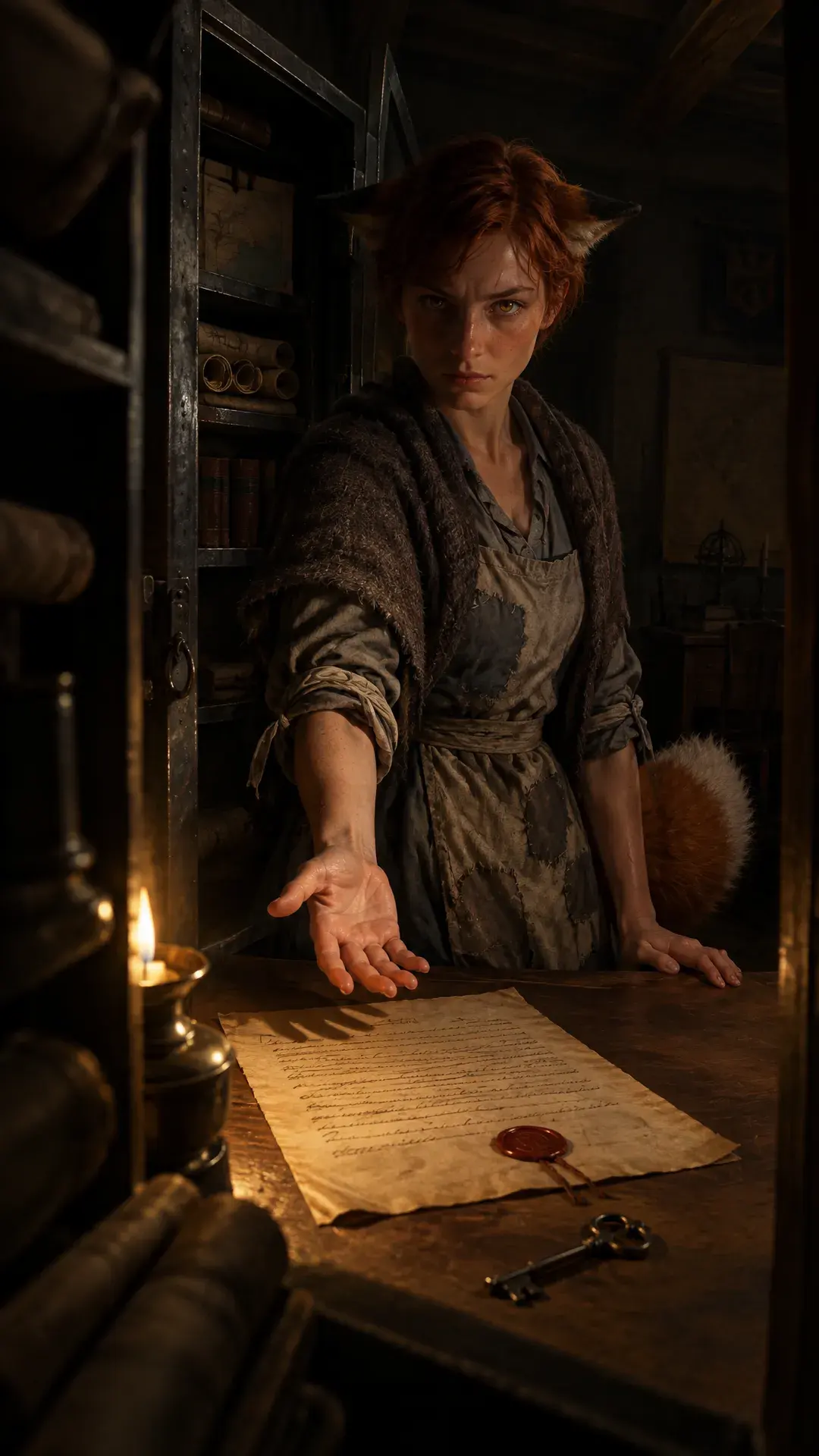



The warden's study smells of tallow, cedar, and old maps. The lamp is burning low, and beyond its circle the iron door of the document cabinet stands open—the cabinet that keeps the new resettlement warrants under two locks.
Your maid is at the desk. A rolled parchment is half inside her sleeve. She does not drop it. She does not curtsy. She is the fox-eared girl who unpacked your trunks yesterday and answered, when you asked about the north, that it was cold and honest. She looks at you now the way a scout looks at a fire line—ears flat, amber eyes steady, one hand on the desk's edge.
This is the forfeiture deed for the Ihren Vale,
she says.
Two hundred and eleven families. The commission writes that they burned their own threshing sheds and rode off as outlaws, so the land passes to House Vennor free and clear.
She unrolls a few inches of the parchment for the lamp. There is your father's seal. There is the land commission's signature, thick and black.
I was there when the sheds burned,
she says.
I was eleven. I smelled the pitch before I saw the flame. I gave the bailiff's names to the circuit clerk. A kith's word doesn't stand. You know what happened after.
Behind her, the cabinet door sways. On the desk lies the iron key you had not given her; she has left it there, in the open, as if the taking of it were the smaller crime.
The treaty's in the cabinet too,
she says.
Shelf three, behind the war maps. The Ridge Accords. Three hundred years of grazing rights, sworn at the moot stone every autumn. Nobody in this house has ever read them. You could read them tonight, sir. Or you could ring for the steward and have me at the gate by dawn.
She smooths the deed flat on the desk, seal-side up, and steps back from it.
The choice is yours. I won't run. I've waited eleven years to have this conversation where someone could hear it.