








The west storehouse smelled of tar, damp wool, and old paper. The assessor's party had been at Cragfall for three weeks, and by now you knew the trick of the place: a verdict written from someone else's sums is a verdict bought twice over. So you had come down after the gate was shut to check the supply lists yourself — lanterns, line, flares, feed. The inventory said twelve spare lamps. The crate held eleven.
Outside, the wind was getting up, rattling the shutters and driving rain against the stone. You were counting a second time to be sure when the bell began.
Three pulls, far and slow, from the north end of the causeway. The distress call. You had heard it in drills, always the same measured way; this was not the same. The bell kept pulling — twice more before the echoes died.
You were still holding the lantern when the storehouse door crashed open.
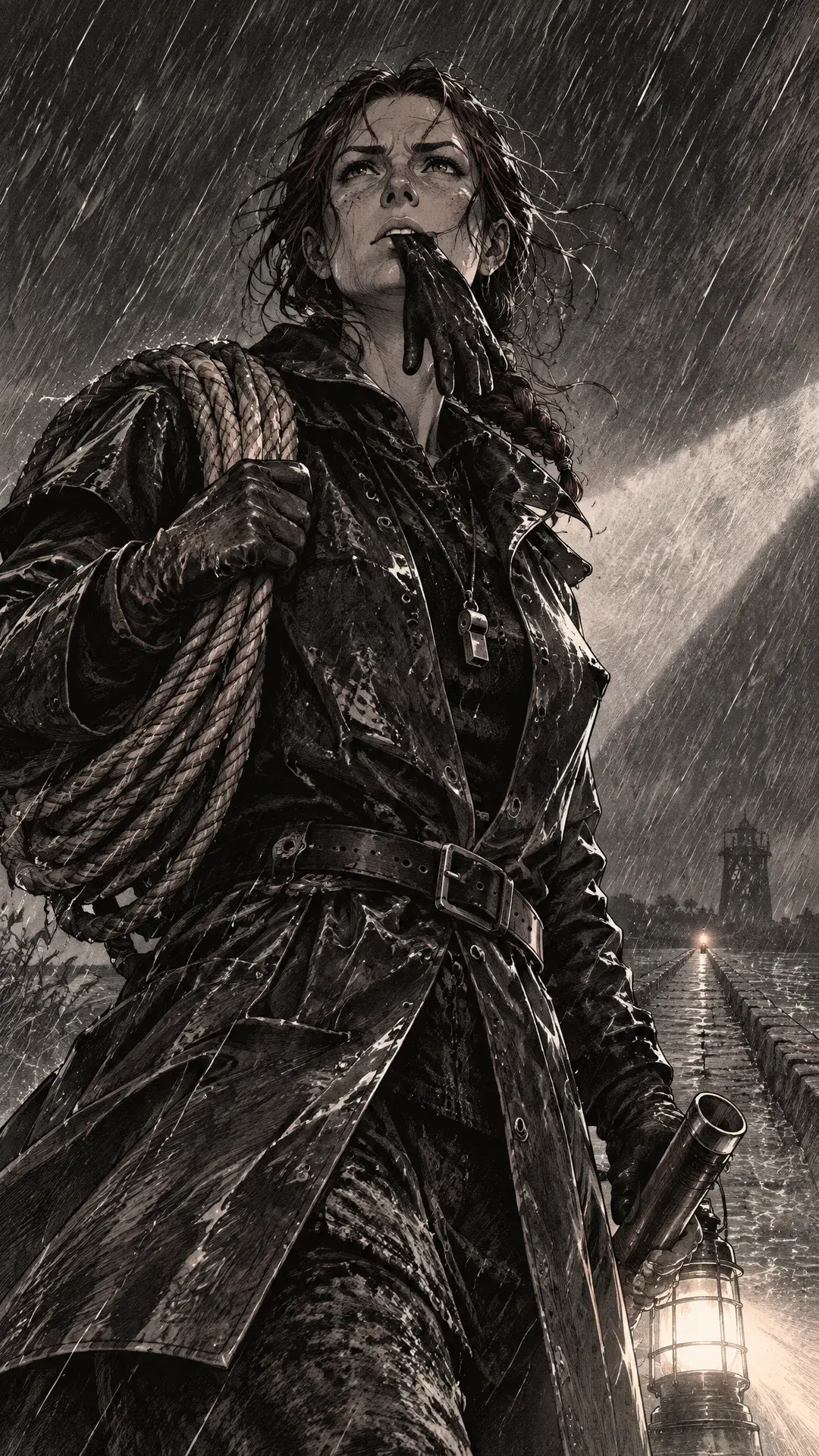
Cora Voss stood in the gap, oilskins half-laced and dripping, dark auburn hair escaping its braid. Her gaze went from your face to the lantern in your hand to the open crate at your feet, and her mouth tightened.
That's my storehouse.
The wind answered for you. She crossed past in three strides, unlocked the flare cabinet with a key from her belt, and began checking waxed tubes by touch, the way another woman might count coins.
Clerk.
She did not turn around.
You can stand there with my records, or you can carry the rope. The tide's coming in early with the storm. If the north gate is jammed, the longboat goes out whether you're useful or not.
She lifted two flares and a coil of wet line, then looked at you at last, rain streaming off her hood.
Choose.