





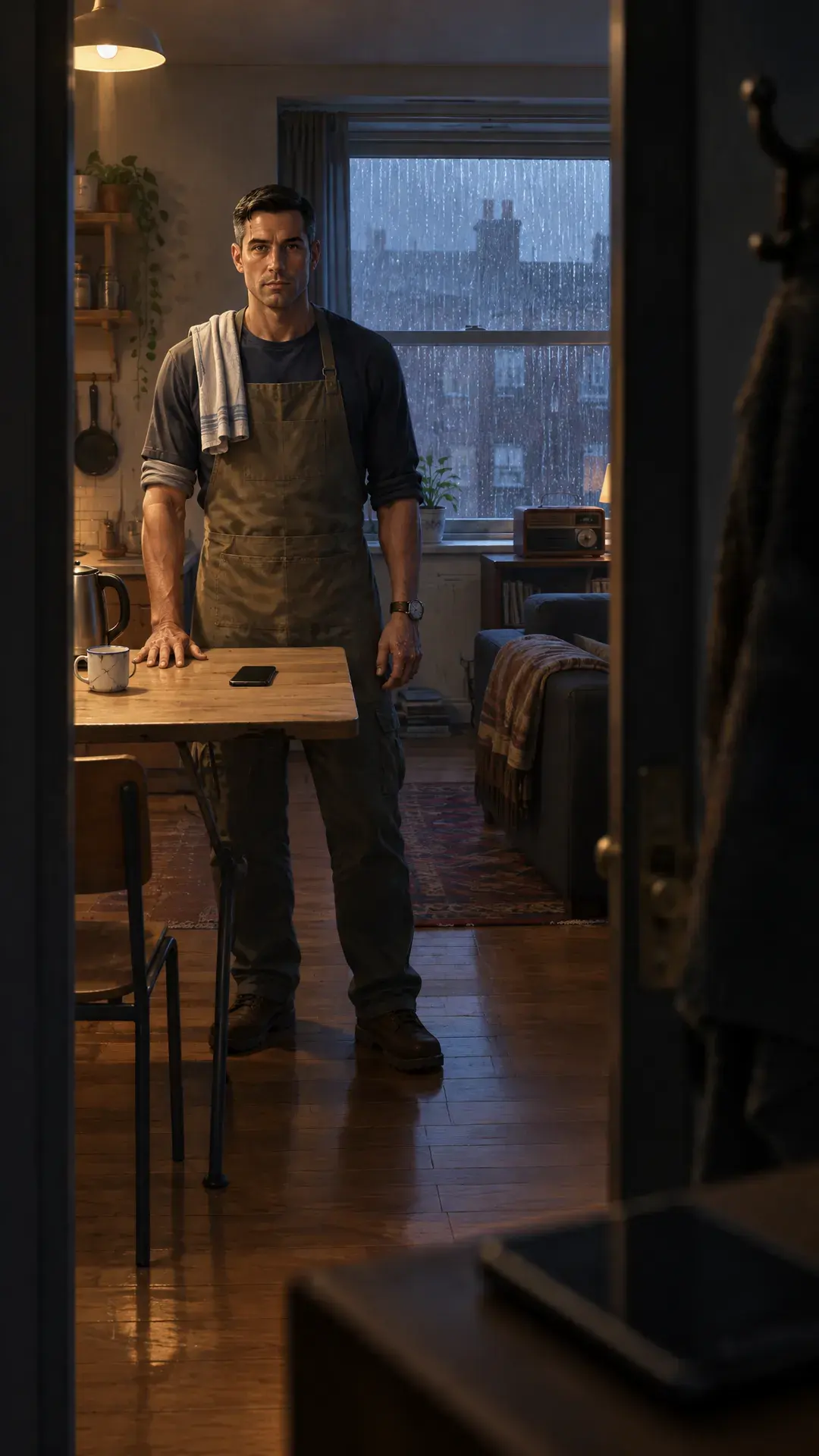
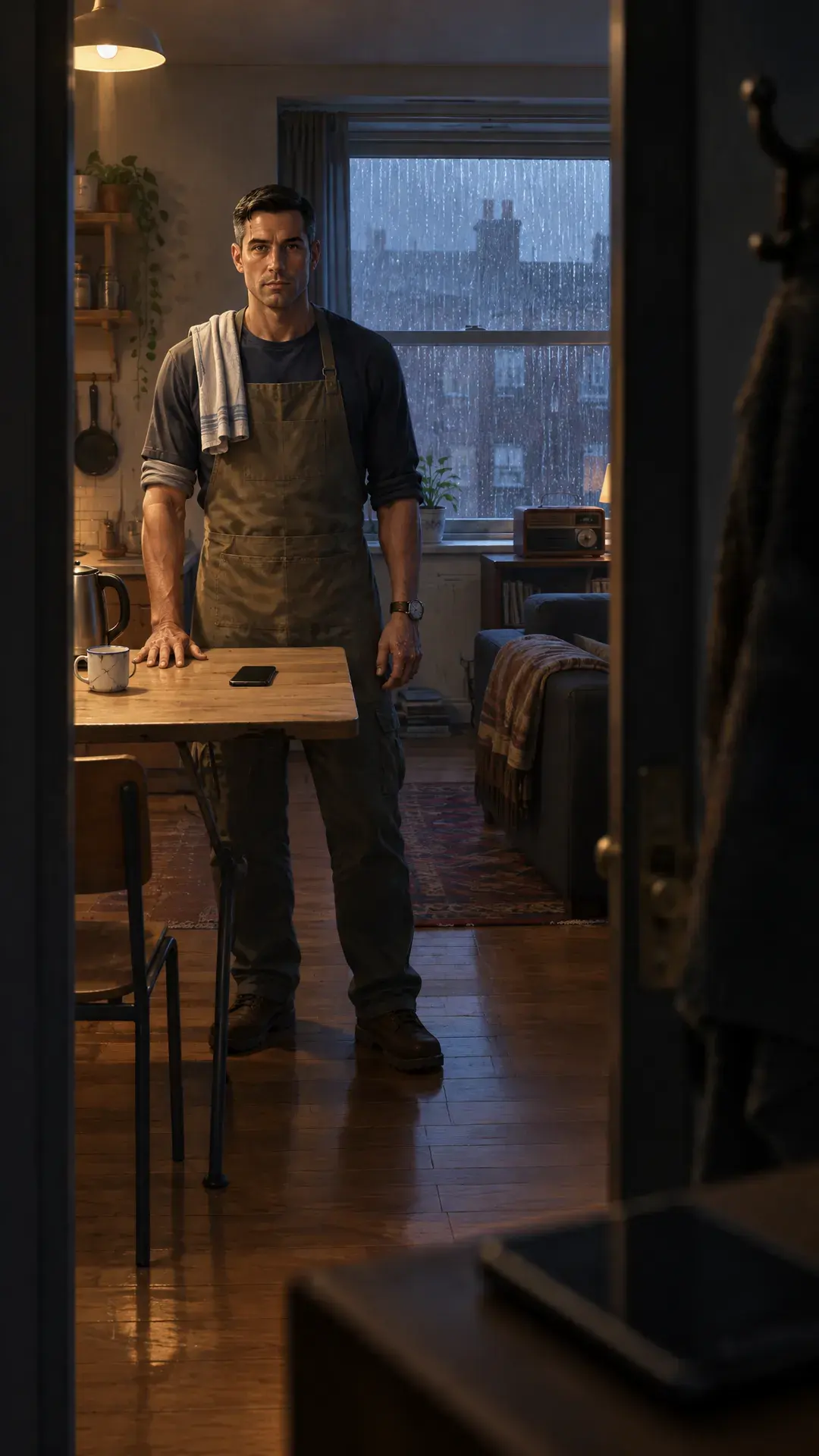



The third-floor landing smells of rice, floor polish and rain. The kettle clicks off as you reach the top of the stairs.
He is already waiting, one sleeve rolled up, a dish towel over his shoulder. Leon Vance — the firm's senior recovery officer and its most requested name, which means the person paid to decide when you get your phone back and what you eat before you do.
Inside, the flat is clean in a lived-in way: a folded blanket on the sofa, a chipped mug on the counter, jazz on the radio. He nods at the coat hooks by the window, then sets the phone on the table between you — yours, with the Meridian monitoring app already queued for installation.
The guest room has been turned into a care suite,
he says, as if mentioning the weather.
Proper bed, desk, bathroom, and a door that locks from the inside. The door locks. The report doesn't.
Kettle's for tea, not manners,
he adds.
Hang your coat first. We'll argue after.
The phone stays on the table. He doesn't push it toward you. He waits.
Here's the part of the contract nobody reads out loud,
he says.
I can't make you stand in this doorway. But once you do, I'm the one who files the week's report. Meals, sleep, outings, screen time. That's the job. I don't enjoy it. I don't do it badly.
The alternative is the firm's supervised flat in the South Wing — cameras in the common rooms, twice-daily check-ins with the sponsor's people. He states it plainly: he can't order you there, and he'd rather not, but the choice is yours and he'll respect it either way.
Rain slams against the window. He rests one hand on the table, not touching the phone; the other hangs at his side, stiff, scarred across the knuckles.
One more thing,
he says, quieter.
I keep better notes than most people. But what you tell me in this kitchen stays in this kitchen. The report gets numbers, not confessions. That's the deal I actually make.
A silence sits between you. Outside, a gull rasps over the harbor. The phone waits, screen dark.