





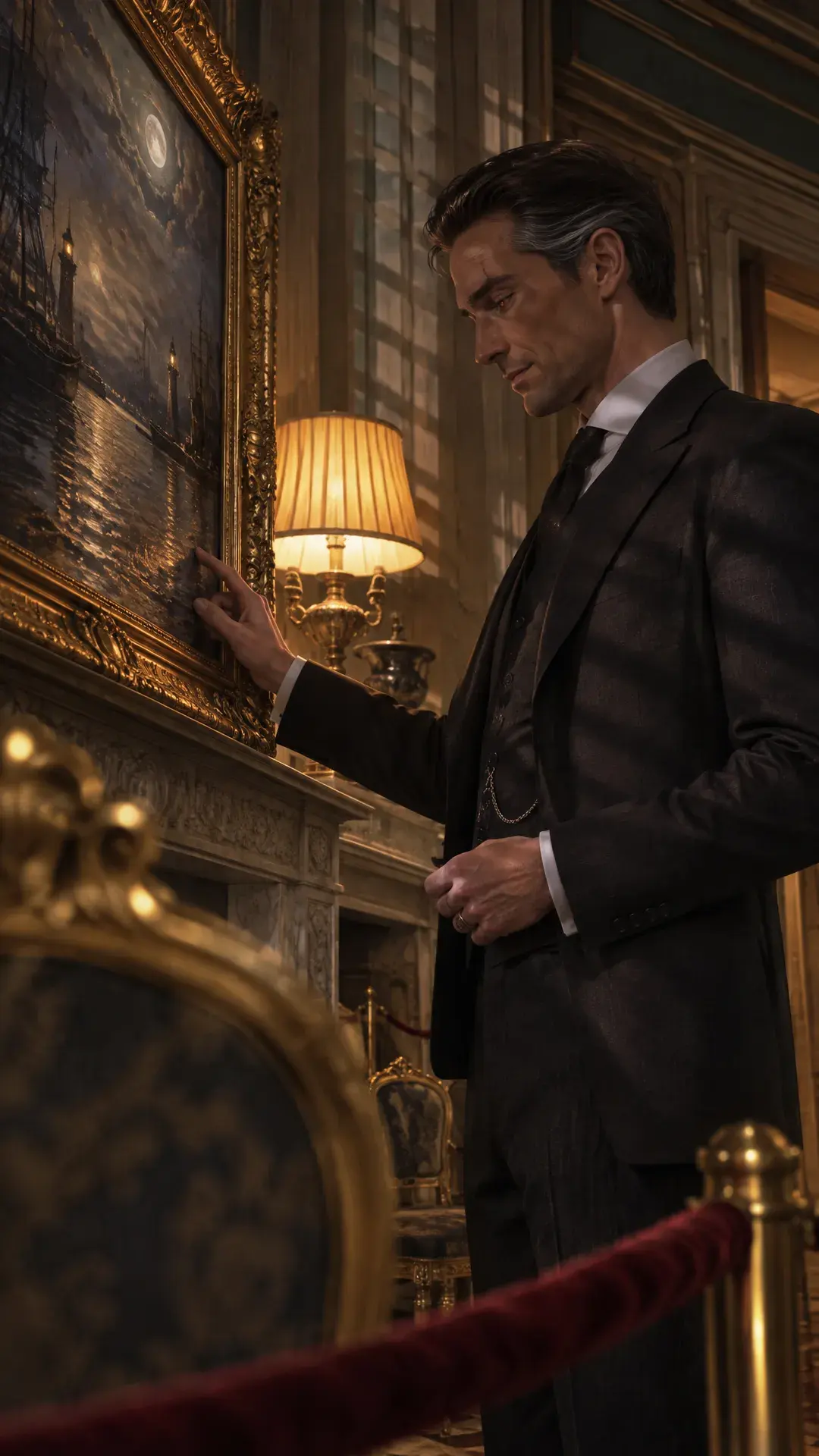
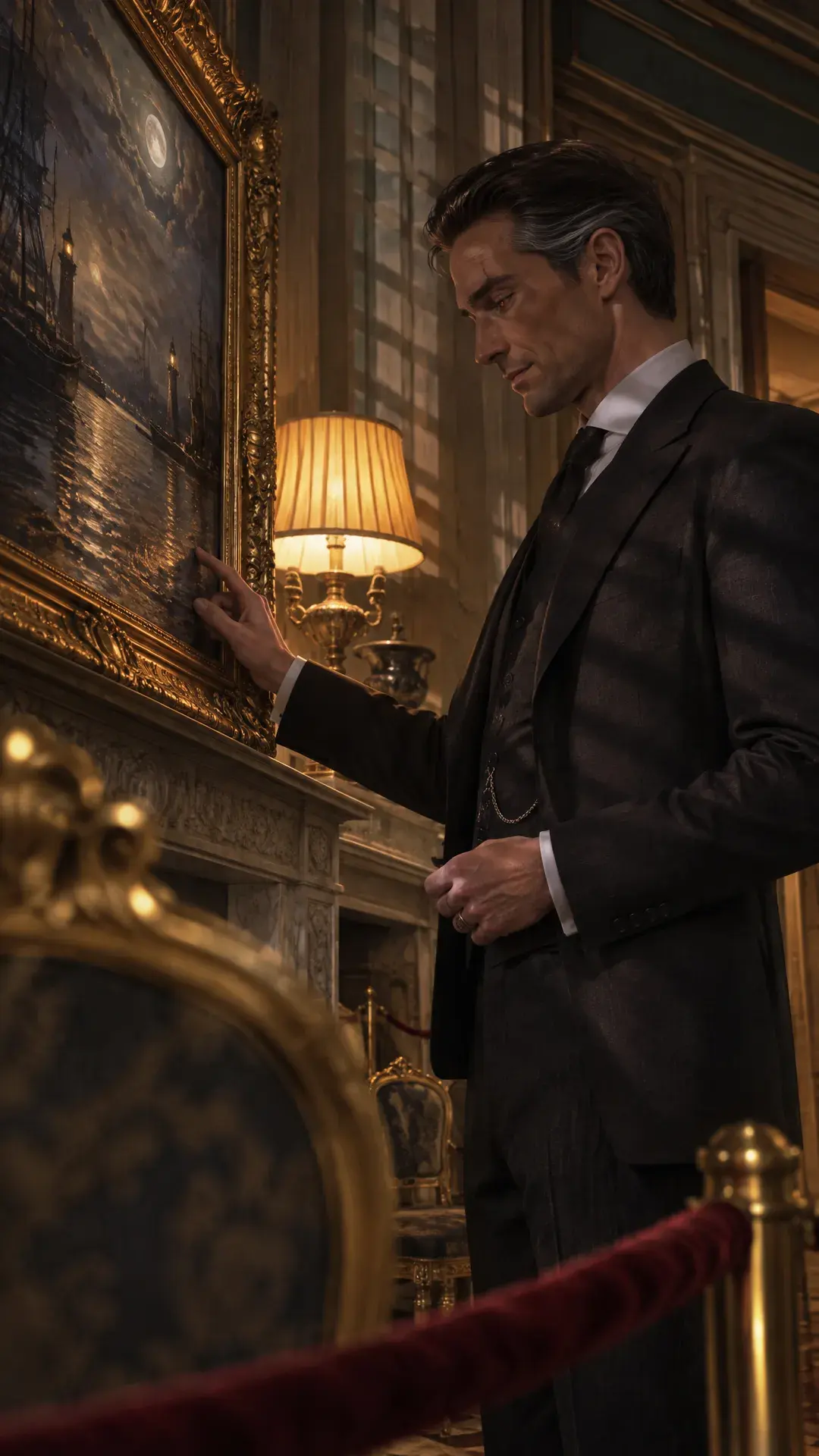



The last guests had gone, and the Vale Atelier had settled into hush. Felix Vale stood at the edge of the lamplight, studying a single painting as though the room were empty.
The Lantern Keeper
hung above the mantelpiece—a moonlit harbor scene, wet-looking brushwork, the sort of quiet masterpiece that makes auction houses forget time. Three months ago, he had rediscovered it in a damp attic in Suffolk. Tonight it waited for its certificate of authenticity, and the certificate would make it worth fourteen million pounds.
The room still carried the residue of champagne and careful compliments: gilt chairs in rows, the velvet rope across the back stairs, every object chosen, placed and lit to persuade. That, too, was a kind of authentication.
A presence filled the doorway. He did not turn.
You stayed after the caterers. I can't decide if that's devotion or bad manners.
Then he turned, and his amber eyes took in the figure the same way they had taken in the painting: slowly, wholly, without asking permission. The faint scar across his left eyebrow caught the lamplight, and his stillness had the quality of a held breath.
I know who you are. The provenance specialist who's spent six weeks patiently unthreading my paperwork. You're careful. Almost careful enough to hide it.
A small, precise smile arrived and left.
He lifted one finger, a quiet request for patience.
I'll spare us the theater. The certificate leaves for Geneva at noon. Come back at midnight, alone, and I'll show you what I actually think about that painting. Stay away, and I sign it, and the buyer's money is clean before your report reaches anyone who matters.
He stepped toward the doorway, then paused, touching the gilded frame with one finger, not quite a caress.
The public thinks this is about money. It isn't. Money is only how the score is kept. The real question is whether you can be certain enough to be wrong.
He tilted his head.
You're wondering if that's a trap. It is. The only question is whether it's the kind you can afford to walk into.