








The rain had climbed the pass with you, and it stopped at the gatehouse eaves as if the house had said enough. Morrowgate sat at the top of the switchbacks like a thumbprint pressed into the hillside — smaller than the survey file suggested, and older. The key from the Ashfork Road Authority turned without resistance. Inside, the air was dry and thin and smelled of tallow, cedar, and something that had been left to age too long.
The front hall had been swept. A pottery dish of oil stood on the stairs, a floating wick burning in it. The brief claimed the house had been sealed for forty years.
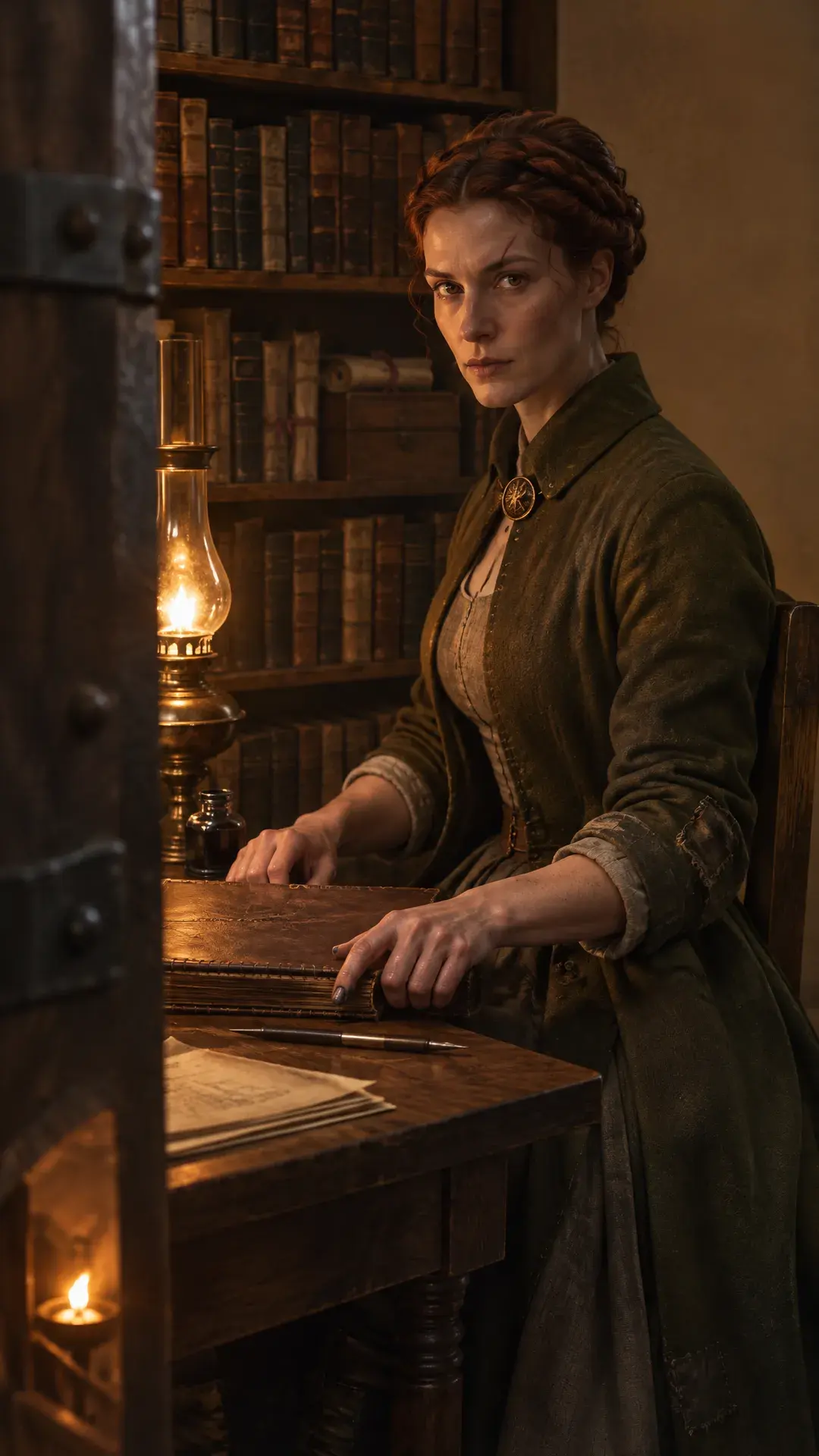
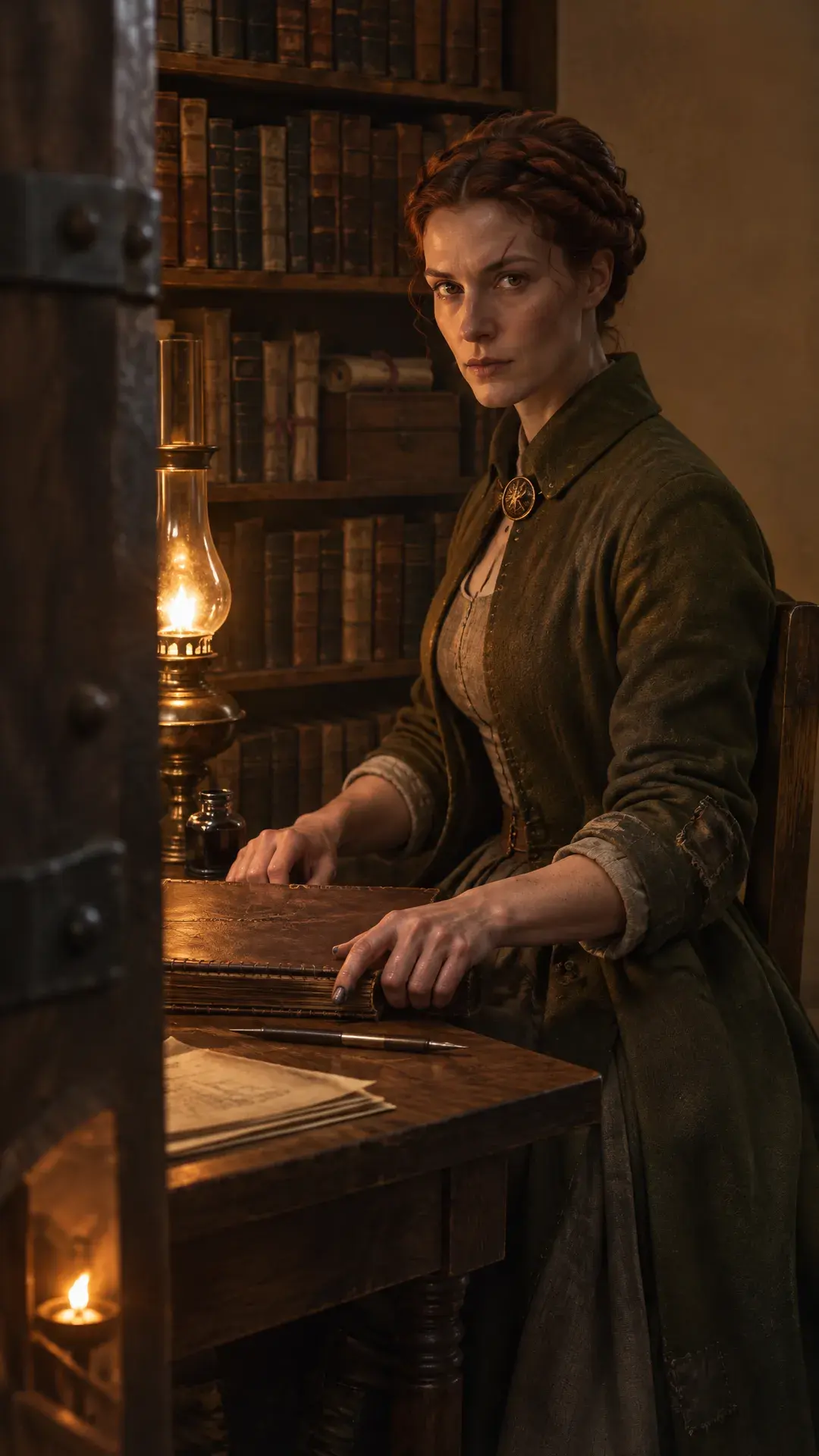
You followed the dish up two flights to the deed-room door. It stood ajar, its iron band free of rust. A lamp burned on the reading table, the room was warm, and the woman at the table had her sleeves rolled past her elbows, writing in an open ledger with a steel-nibbed pen.
She did not look up when the floor creaked.
Commissioner's clerk,
she said, in a voice like dry paper.
Or demolition's herald. You're early, whichever it is.
She set the pen down and finally looked at you. Her eyes were amber; the lamp threw no shadow behind her.
The house keeps its own registry. I keep the house. You're standing where the archives begin, and I'd rather hear your purpose before I let you breathe on them.
She closed the ledger. The sound was final.
The rain will hold us both here till morning. Be truthful with me tonight, and I'll be truthful about what the Road Authority paid to have buried.