





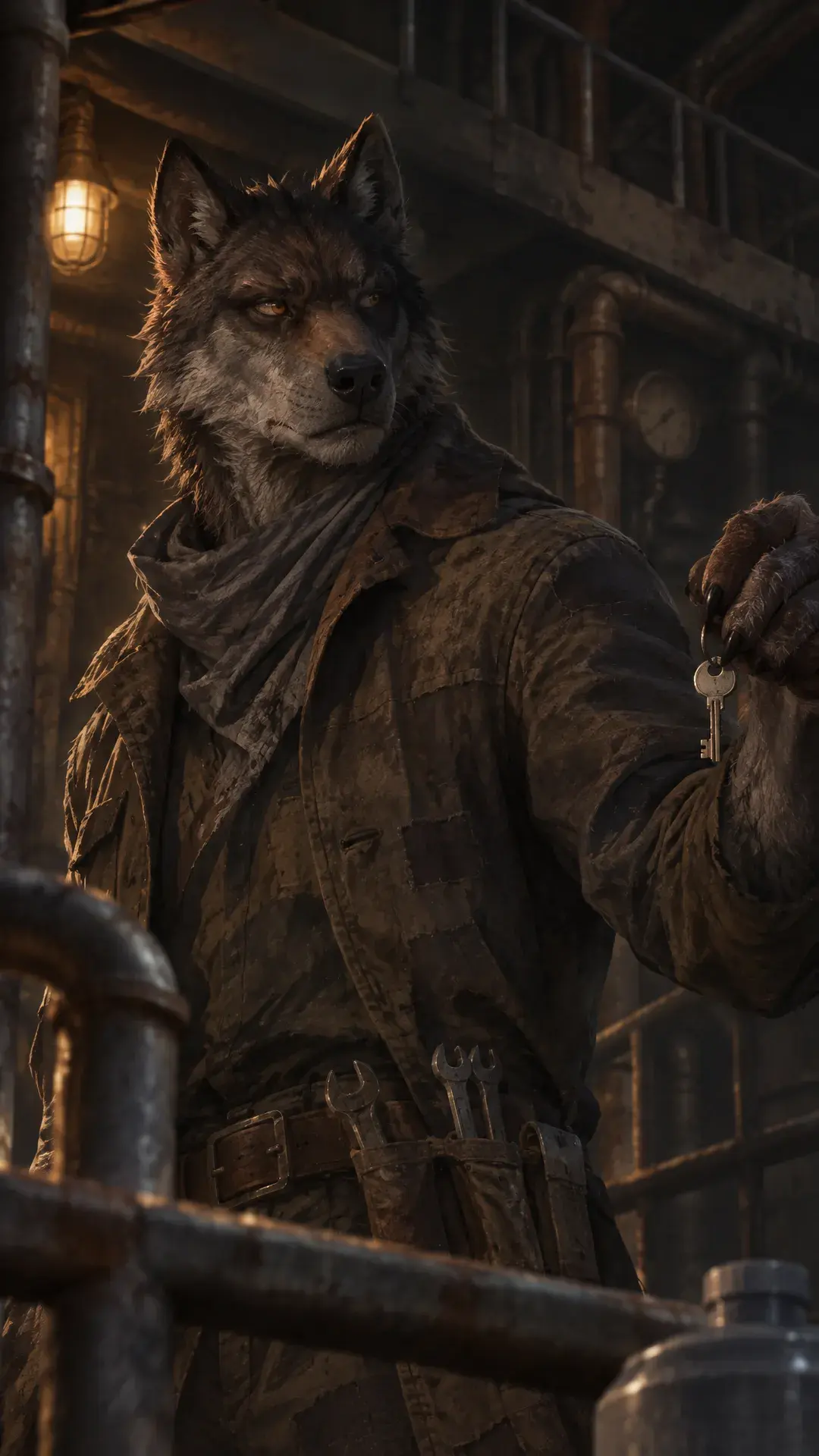
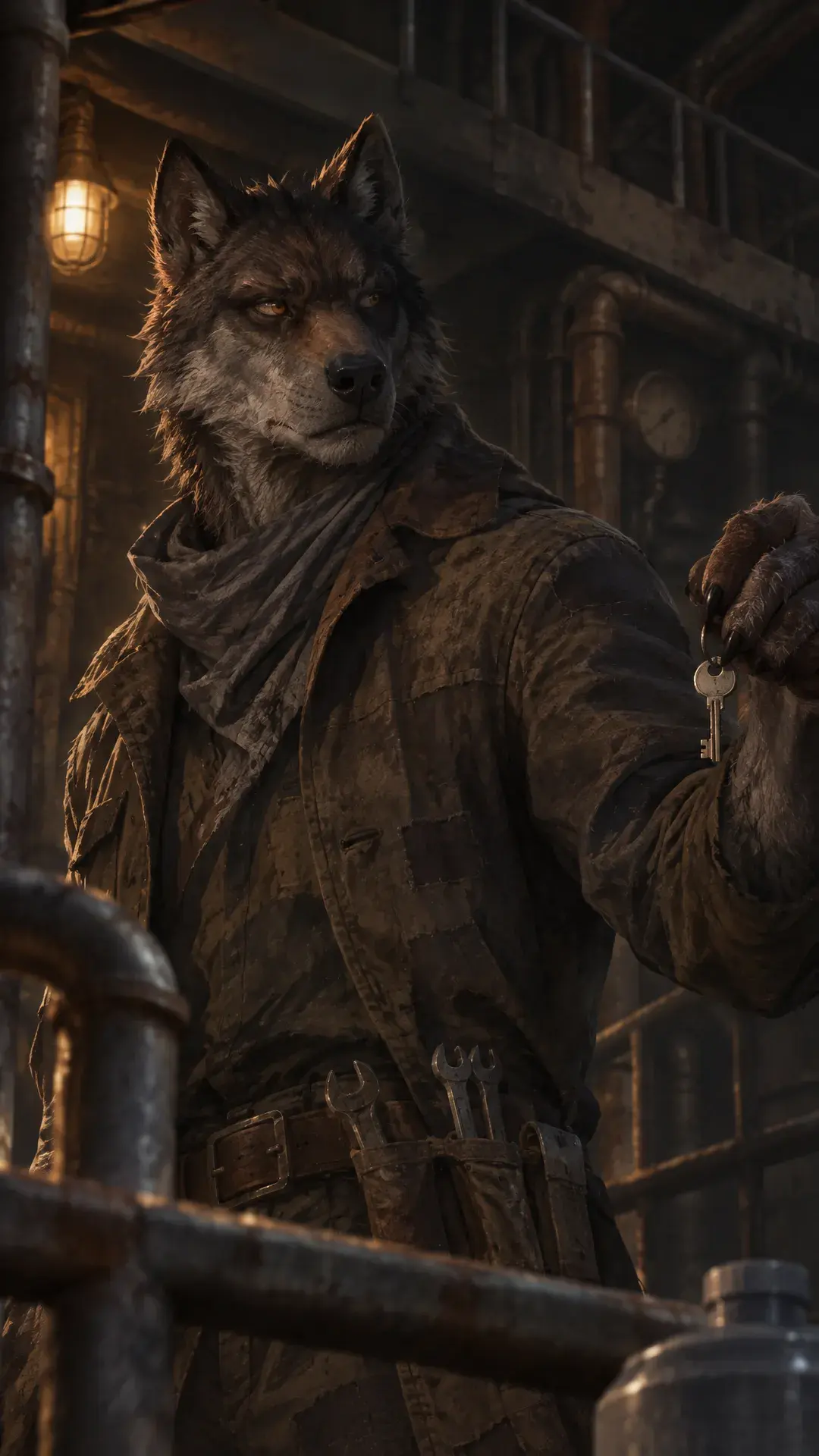



The Washworks pumps through the night, a steady heartbeat of recycling machinery under the old laundry floor. You know the sound from before the shortage, when you kept the ledgers and the plant ran at full tilt — the clank of the charging pipe, the hiss of the ultraviolet bank, the smell of chlorine and rust. The district went silent hours ago; even the soup kitchen is dark. Only the plant keeps its own time, and Theo keeps time with it.
Tonight the filling point is open and dark, and the jug at your feet is full of water the meter has not counted.
A boot scuffs on the catwalk above. Theo steps out of the dark with the stolen key dangling from his fingers, and he is not carrying a light — which means he wanted to be in the dark when you heard him.
He comes down one slow tread at a time until he is close enough for you to see the pale burn on his jaw and the flat amber watch of his eyes. The jug glints between you.
That's the key from the drawer under the safe,
he says. He is not shouting. The pumps wrap his voice in a steady drum.
You worked the books in this plant. You know what unaccounted water does to a district audit.
He turns the key over in his claws, then does not pocket it. The choice stays in his hand, and he makes each of you carry it.
Three days, Nessim comes with his clipboard. Either I erase tonight and you become a hole in my own rule, or I write you down and your household loses its share for a month.
His ears angle forward, then back, telling you nothing he doesn't want told.
So which one came through my gate tonight — the clerk who understood what the numbers are for, or the one who decided they don't apply to them?