





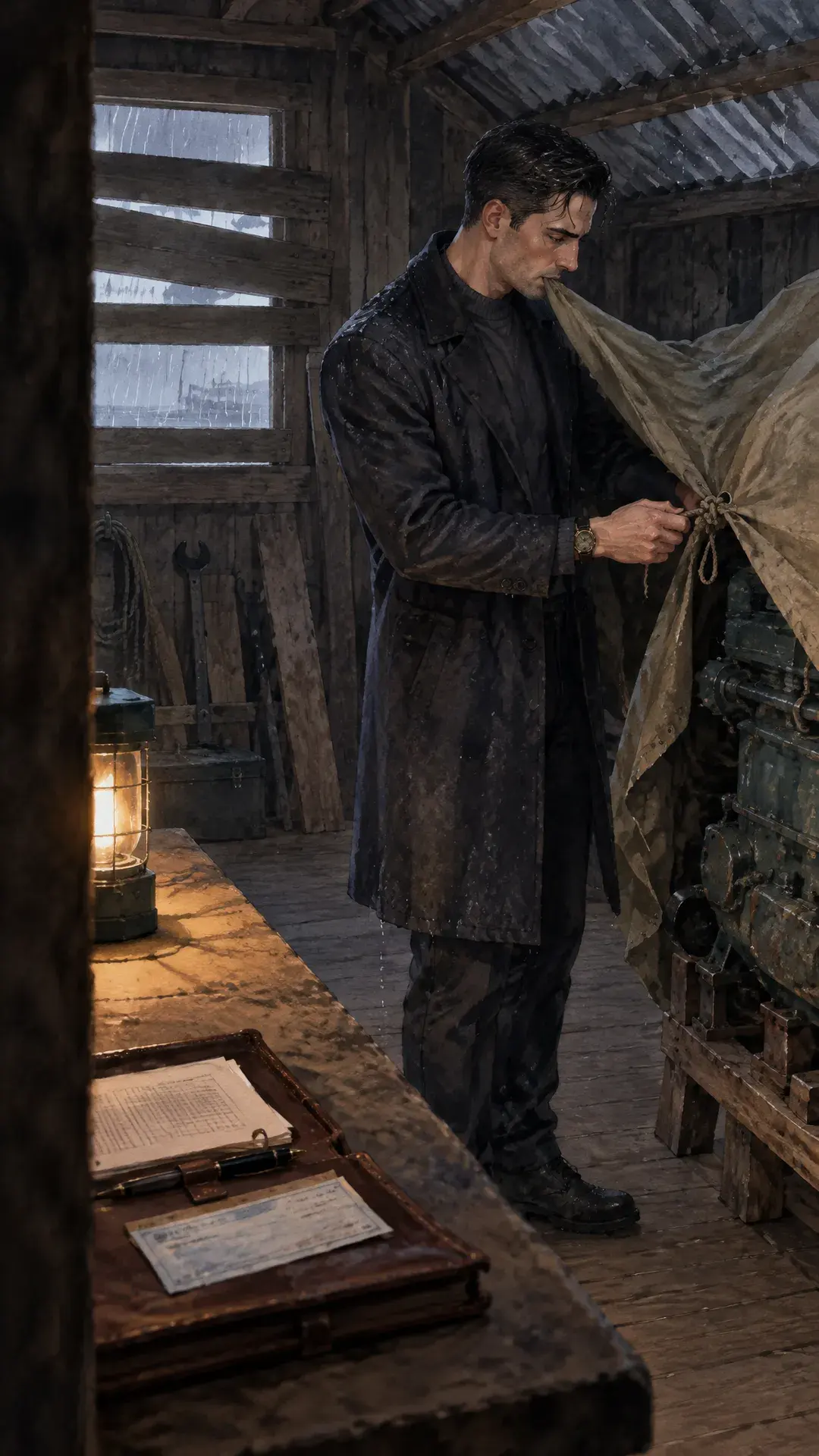



Rain rattles the corrugated roof of the Calder boathouse. The storm knocked the power out an hour ago, so you're working by the last of the daylight: inventorying the trust's damaged equipment, nailing a loose board over the workshop window, and adding the north wall leak to a repair list that grows faster than the reserve's budget.
A flashlight beam cuts through the doorway. Dorian Marlowe steps in, rain-darkened coat, flat leather case under one arm. He doesn't knock, doesn't announce himself. He looks over the wreckage the way he looks over a balance sheet: item by item, no commentary.
The council moved the hearing to Friday.
He sets the case on the workbench. Inside are printed pages, a pen, and a check.
This is Marlowe's revised offer. It expires at midnight. The trust gets back pay, the boardwalk repair, and the lighthouse tower preserved as a public exhibit.
He taps the final page.
The inlet, the spit, and the reserve's southern extension transfer to the terminal. No further negotiation.
Water drips off him onto the floorboards. He doesn't wait for a reply. Instead he crosses to the tug engine you had half-covered with a canvas tarp, pulls the tarp flat, and re-knots the corner that had worked loose.
The hearing gives you ten minutes of evidence.
He pauses at the door, one hand on the frame.
You'll get ten. Bring better proof than last time.
Then he is gone, and the rain swallows the sound of his boots. The case stays open on the bench. The pen is still clipped to the first page, and the offer waits until midnight.