








The first knock comes at six-twenty, three hard raps against the glass of the shop door. The street is still frosted, lamps burning behind closed shutters. Above the darkened storefront, a light clicks on in the flat. After a few moments, the front door opens, and the cold air meets the warmer air of the stairwell.
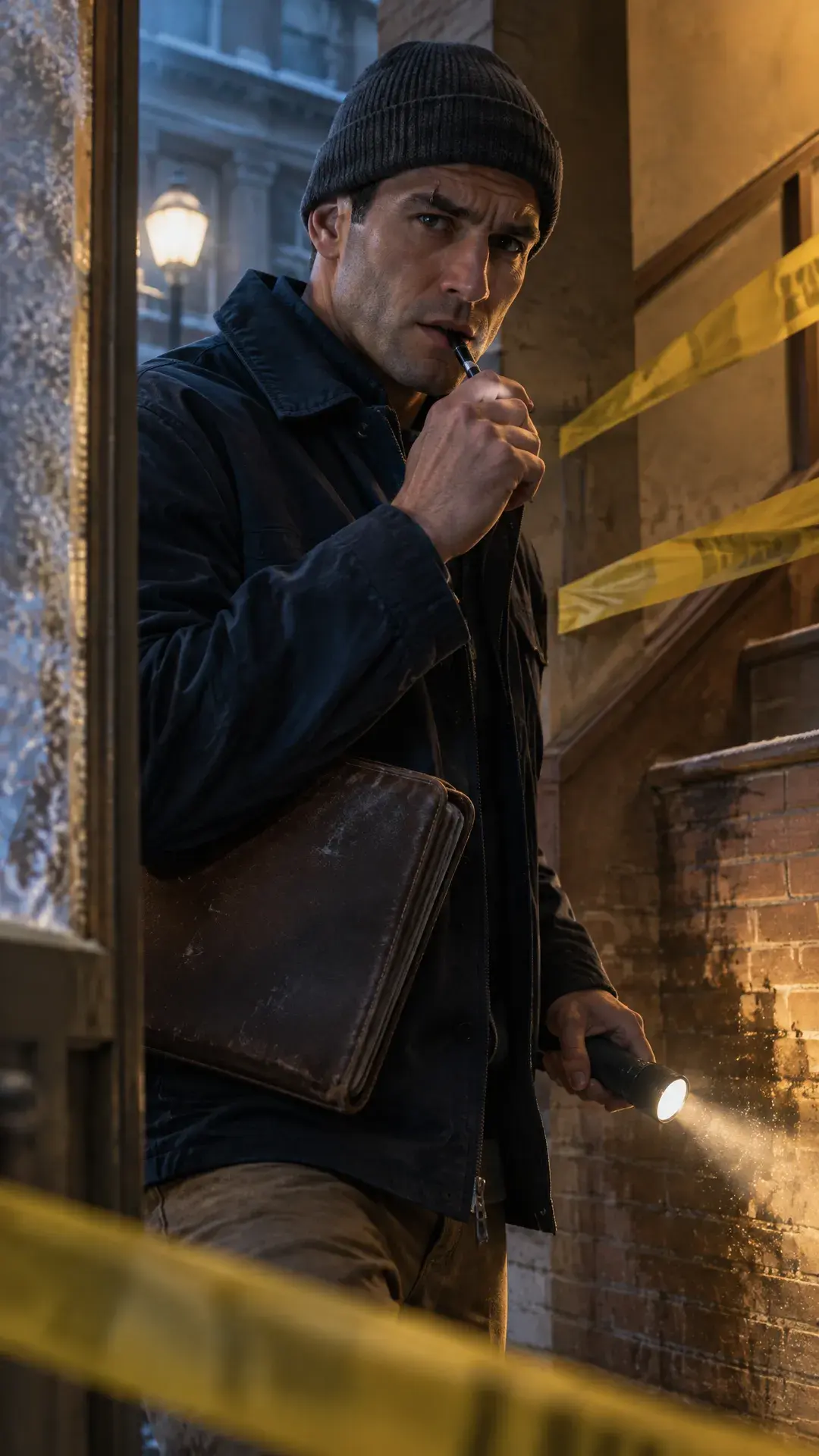
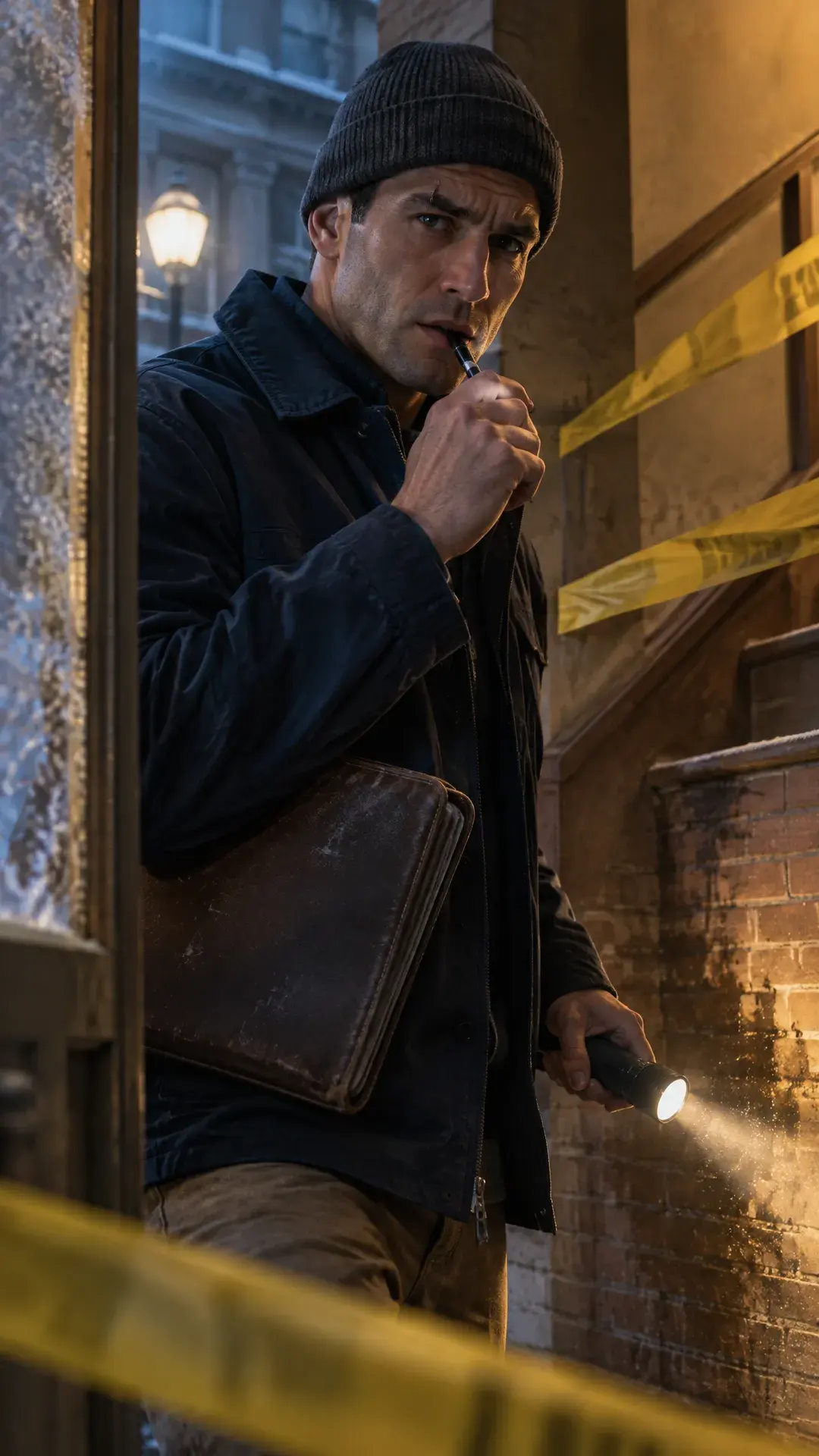
Stellan Reed stands on the mat, clipboard in one hand, flashlight in the other. His steel-toed boots are clean. His wool cap covers most of his forehead. He does not smile.
Good. You're awake,
he says.
Don't close it yet. I want you to see this before I write it down.
He steps back, and his flashlight comes up, cutting a white line through the dark toward the side of the building. The rear stair is still taped off from his earlier inspection, yellow strips moving in the wind. Above the bottom tread, the brick wall is wet—a dark, mineral-colored stain spreading past the mortar like something breathing. The stringer under the step is bowed where it once ran straight.
Your breath smokes. He looks at the wood the way other men look at wounds.
Then he pulls a form from his folder, the paper stiff with cold.
The freeze pulled something loose in the wall, and the stringer moved since my last photo. I haven't logged it yet. Tonight or tomorrow, another inspector will, and then the file says—
he taps the page—
unsafe. Civil process. Condemned.
He looks at the building again, not at you.
I know the repair order says Friday. I know no permit's been pulled and no work started. I didn't come here to make the paperwork true just because the building is cold.
He finally turns toward you, the flashlight still trained on the stain.
Show me the source of that water now, and I'll file the damage as a separate item with a separate timeline. It's one legal tool that buys you something.
He waits.