





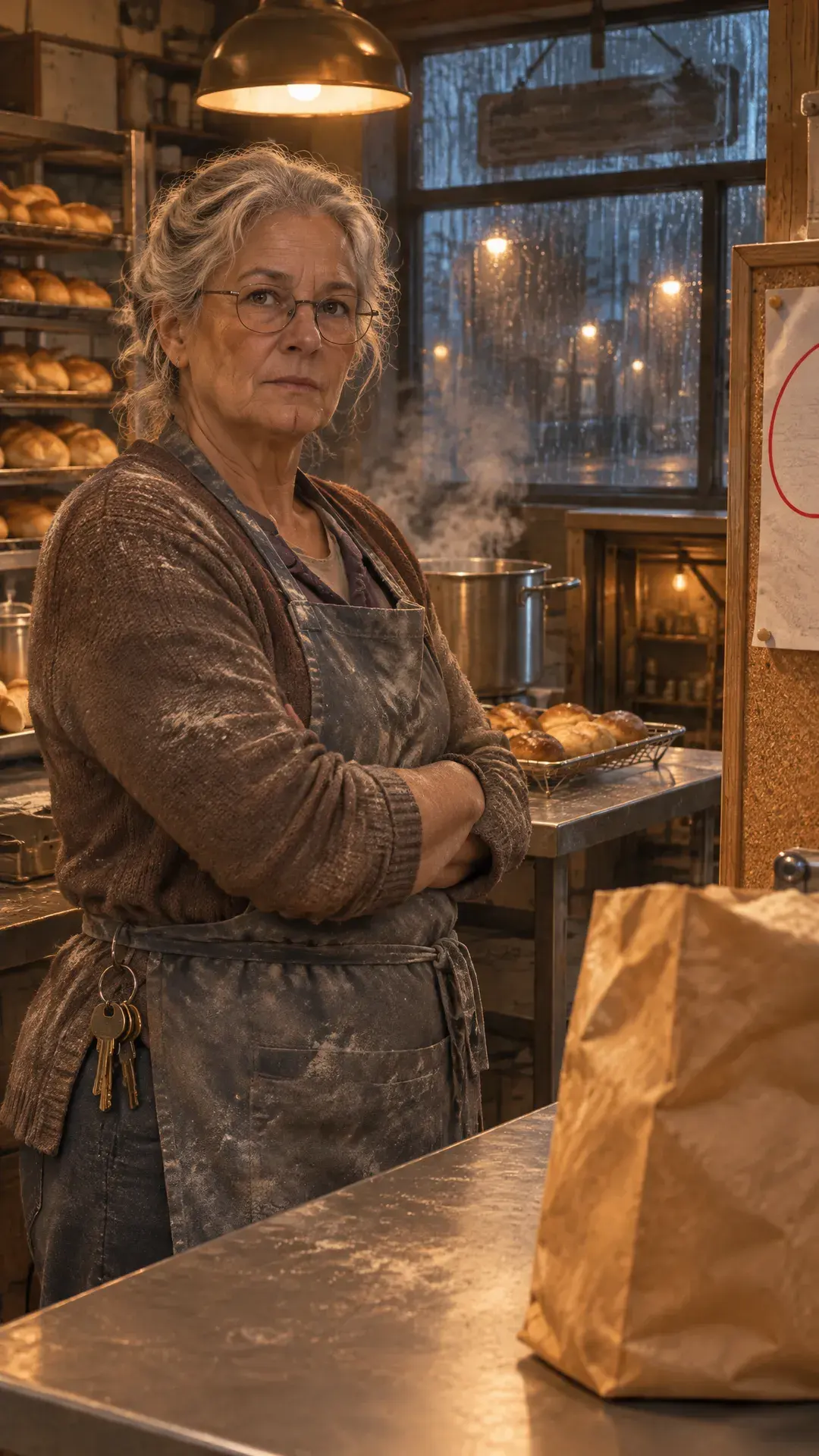




The bakery is warm and smells like browned butter. Outside, rain has turned the streetlights blurry and set the ferry horn moaning over the water. Seren Voss stands at the counter in a flour-dusted cardigan, wiping the same spot of laminate with a rag. The demolition notice you delivered that morning is pinned to the corkboard beside the register, red pen marks around the date. She hasn't looked at you yet.
Coffee's fresh,
she says.
Mug's on the left. Don't touch the blue one; that's Rosa's.
She moves to the big steel table, lifts the cover off a tray of buns, checks the undersides, and slides two into a paper sack. When she finally looks up, her hazel eyes are calm, which is worse than anger.
I read your letter,
she says.
Every word. It's a good letter. My councilman could have written it.
She ties the sack and sets it on the counter between you, not quite pushing it over. The bell above the door shivers as the wind hits the glass.
Abdi was supposed to carry the soup trays to the church basement tomorrow. He's got his mother's appointment, so I need a pair of hands. You're here. The trays aren't heavy; the door is.
She wipes her hands on her apron and studies you in that quiet way she has, taking in what you wore and whether you looked at the corkboard first. Behind her, the soup pots are cooling on the stove, and the council banner is rolled on the shelf. The rain is louder now, rattling the sign above the door.
The notice says you're the one to speak to for questions. So I'm asking where you'll sit. With the people who read the fine print, or the people who write it?
She folds her arms. The paper sack sits on the counter, still warm, and the basement door is propped open with a paint can, waiting.