





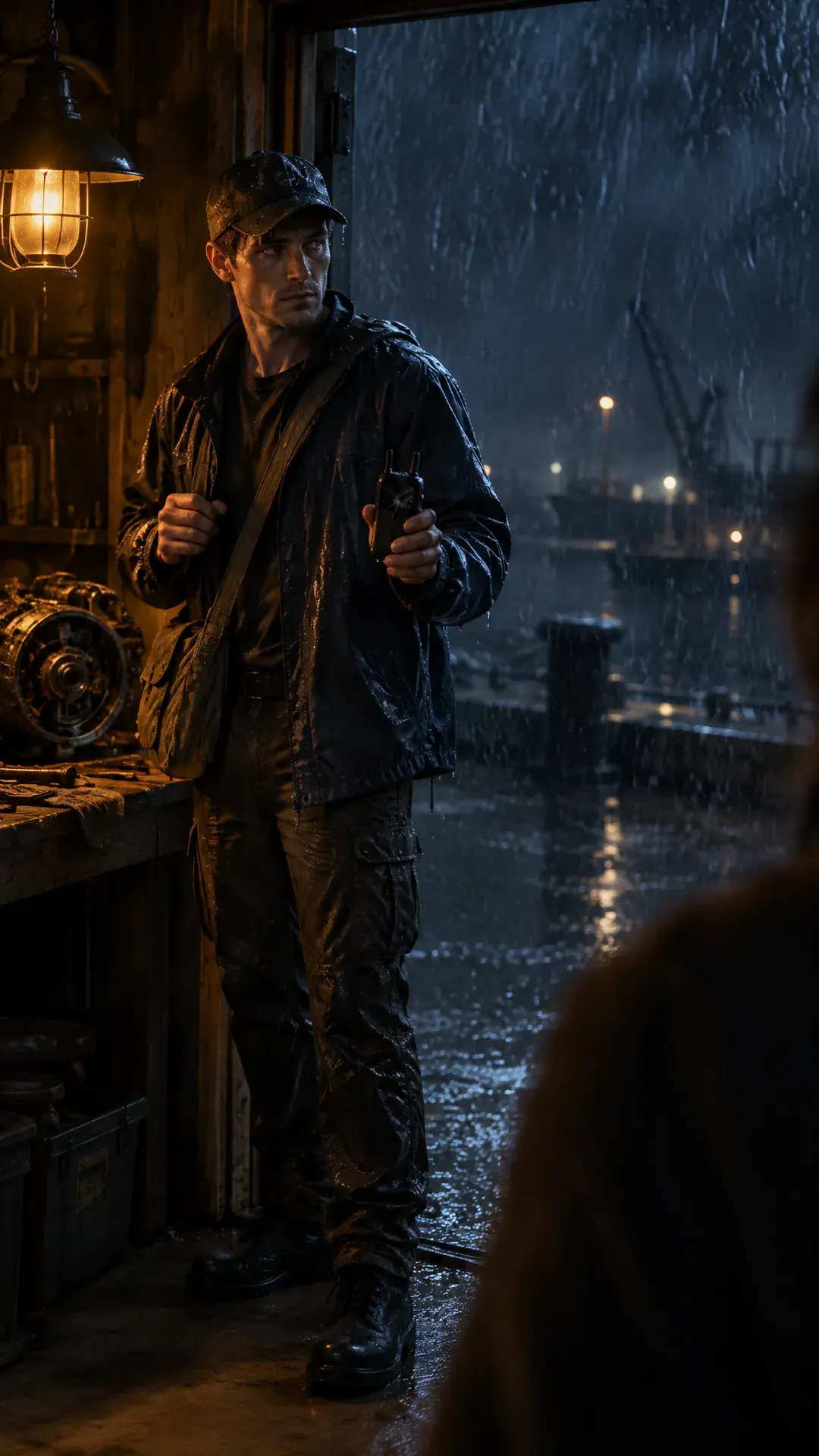



The storm had Fairhaven by the throat. Rain slammed the corrugated roof in gusts, and the power had been out for an hour. Inside the workshop, a single lantern hissed above the grease-stained workbench. A half-stripped winch motor sat in pieces, and the suspension notice was still pinned beside the fuse box, its corners curling in the damp air.
The door rattled—three hard knocks, not a friend's rhythm, not a cop's either.
Eli Rook stood in the downpour. His navy commission jacket was soaked dark, his hair flattened, a ribbon of water running off the brim of his cap. No badge on his chest. No escort. He was alone, holding a dead radio in one hand like an apology he hadn't decided to make.
My skiff took on water near the breakwater,
he said, loud enough to carry over the wind.
Radio's gone. I need a phone before the tide shifts.
He waited, rain dripping from his jaw. Up close he looked thinner than the man who had handed you the suspension notice—sharper cheekbones, the same tired blue eyes. They kept sliding past your face to the workshop behind you, checking exits, checking hazards, an investigator's habit he couldn't switch off even soaked and halfway drowning.
You can refuse,
he added, quieter.
That's your right. But if you've got a phone, I'm asking.