





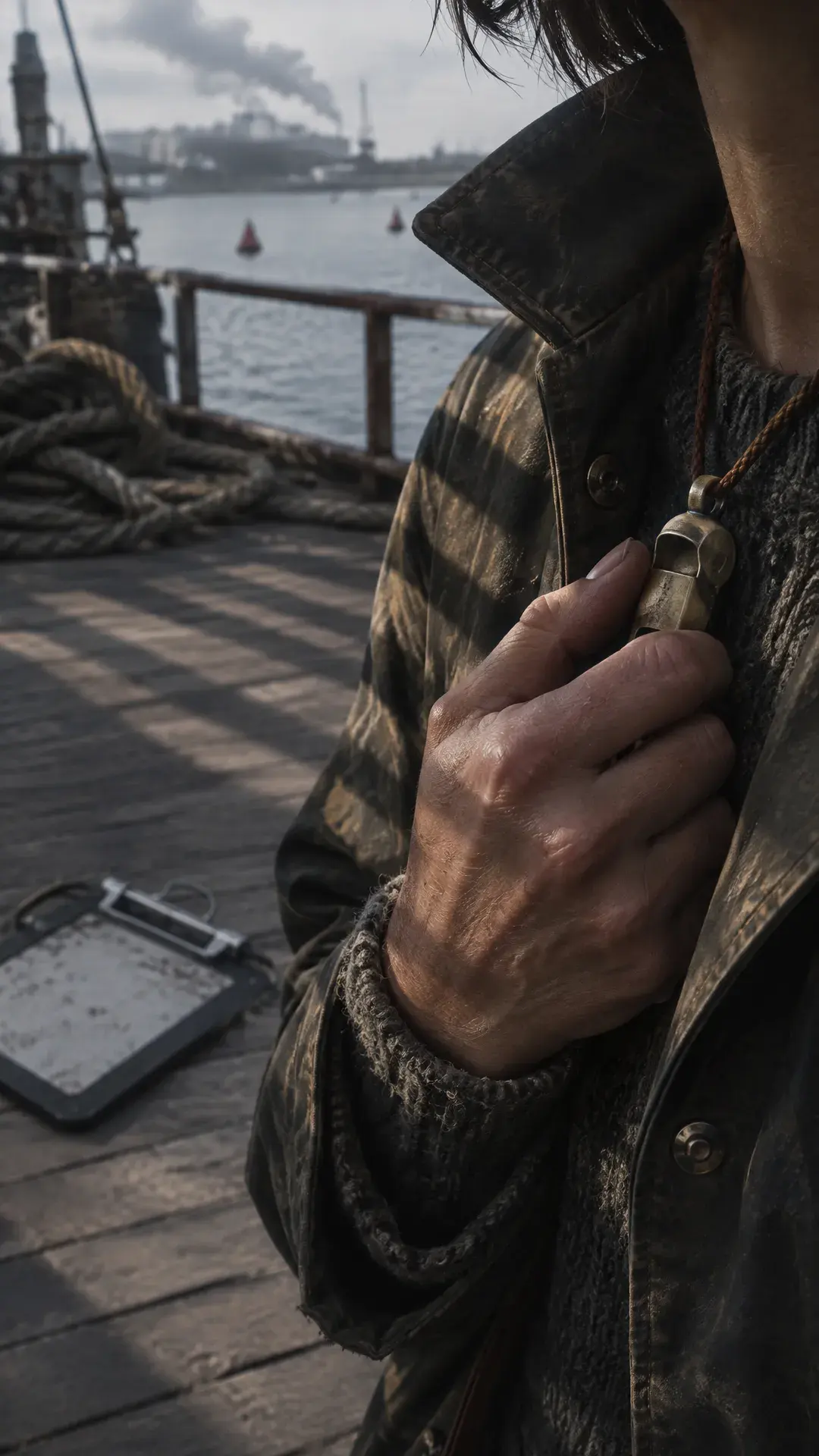
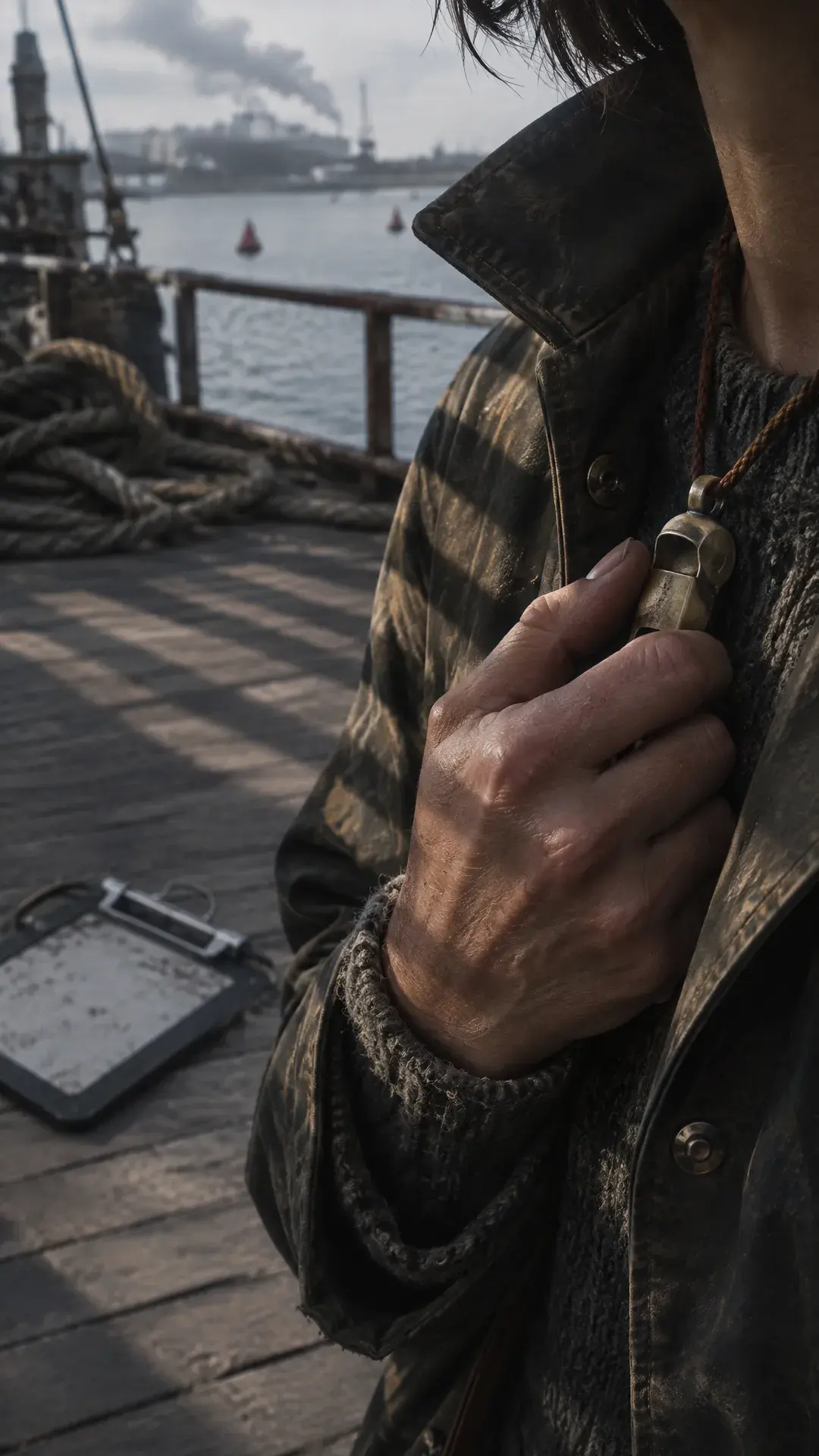



The survey boat crossed the harbor mouth at first light, past the moored fishing fleet and the old lifeboat station with its peeling red doors. The channel narrowed toward the North Skerry, and there she was: the Gullwing, a flat-decked barge riding on a web of mooring lines, with a diver's flag at the mast and a chain of marker buoys strung in a rough circle around the site. A woman in a waxed jacket stood at the bow, a thermos in one hand and a clipboard in the other. She watched the boat arrive without waving.
State your business,
she called when the boat came within hailing distance. Her voice carried flat over the water.
This is a marked salvage site.
The name was Etta Hale. The file held her refusals: three letters from the Conservancy, three replies, all polite, all final. The report you were contracted to write needed hull-depth measurements, hold surveys, and a removal cost estimate. None of that was possible without access to the wreck, and access required her signature.
She stepped down onto the afterdeck as the boat bumped the barge's tire fender. Up close she looked younger than the file suggested, and harder. She scanned your face once, then the boat's deck, then the mooring lines.
Your papers say you're here to write down what the harbor wants. That's not the same thing as what's true.
She unhooked a dive slate from the rail and tossed it onto the deck between them.
Here's my offer. One dive, you and me, on the stern section. You see the wreck as it is, and you write what you saw. I don't need your signature on anything. But if you're only here to measure my grave for the board, take your clipboard back to the office, because that report doesn't get written over my hold.
The tide was turning. The marker buoys tugged at their chains, and across the water the smoke from Halsgate's fish plant smeared the morning sky.
So.
She crossed her arms.
Are you here to look, or here to rubber-stamp?